

Style · The DragSale journal
Wigs and Accessories for Drag Beginners: Start Small
Choose a first wig you can fit, handle and care for, then let a small number of accessories support the look. This guide helps you compare fibre information, inspect the cap, test jewellery in motion and pack delicate pieces separately. Start with a manageable routine instead of buying a large collection or guessing about heat styling.


Wigs and accessories for drag beginners should make a first look easier to repeat. Choose one manageable wig, check its fit and fibre instructions, and add only the accessories that support the character. You do not need a large collection to start.
This guide covers selection, rehearsal and care, not advanced adhesive work. Pair it with the starter-kit guide and the first-time transformation walkthrough if you are building the whole look.
Check the fit of drag wigs
Read the seller’s measurements and return conditions before ordering. Next, compare them with your measurements as the seller directs. A size name alone may not tell you how a particular cap will fit.
At a fitting, check the hairline, ear area and back of the cap. The wig should remain comfortable during ordinary head turns. If you need to keep tugging it into place, pause and work out whether fit, setup or the chosen style is the problem.
Avoid assuming tightness equals security. Choose a suitable fit and ask a qualified wig supplier for help when needed.
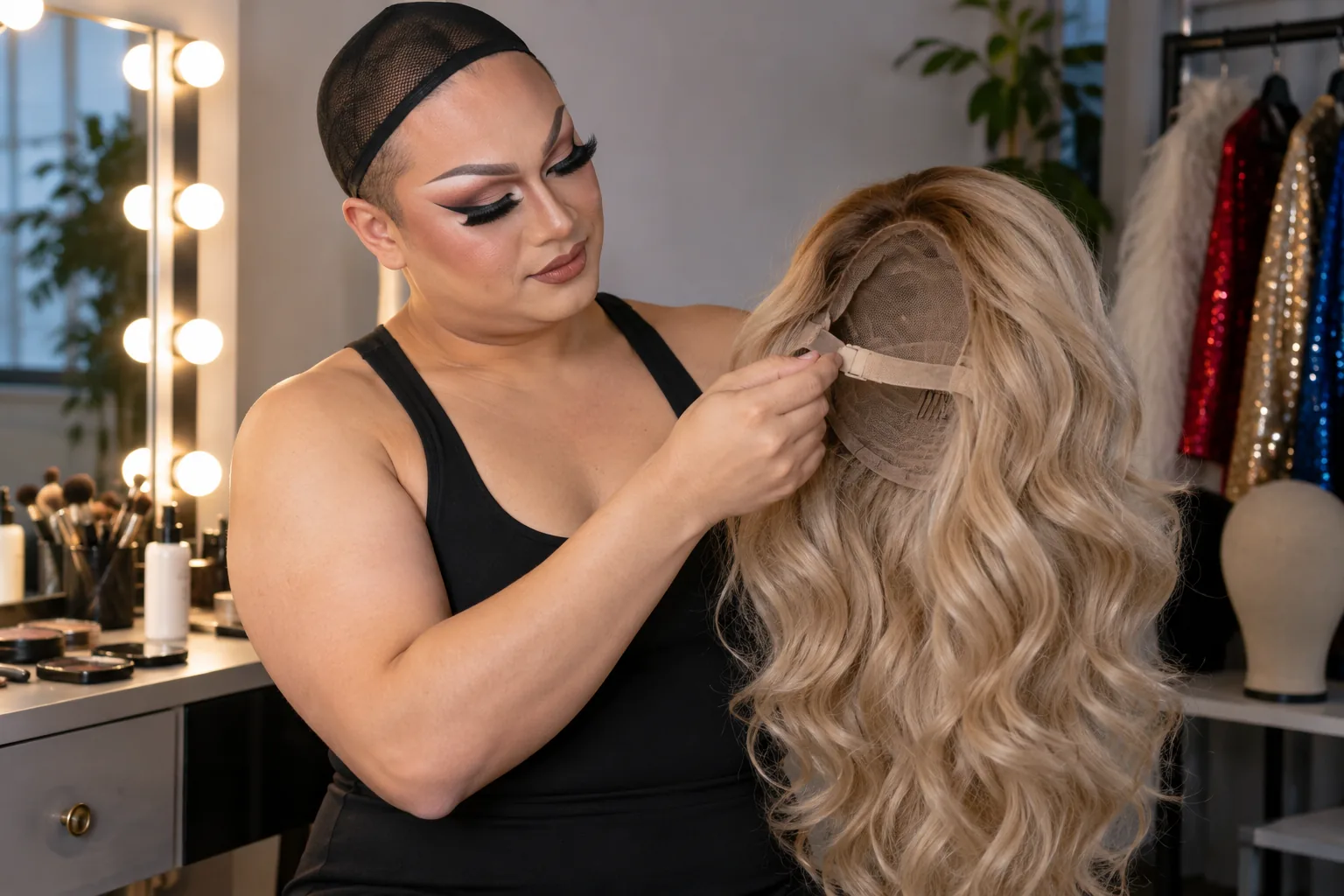
Identify the fibre in drag wigs before styling
First, keep the product description and care instructions. Traditional synthetic, heat-friendly synthetic and human-hair pieces do not all take the same treatment. Therefore, never infer heat tolerance from how realistic the hair looks.
For example, Jon Renau’s synthetic care guide separates its fibre categories and care products. Those are instructions for that manufacturer’s pieces, not a universal recipe for every wig.
If fibre information is missing, ask the supplier before using heat or a new product. A low price does not make trial-and-error damage a useful starting method.

Keep your first drag wig setup simple
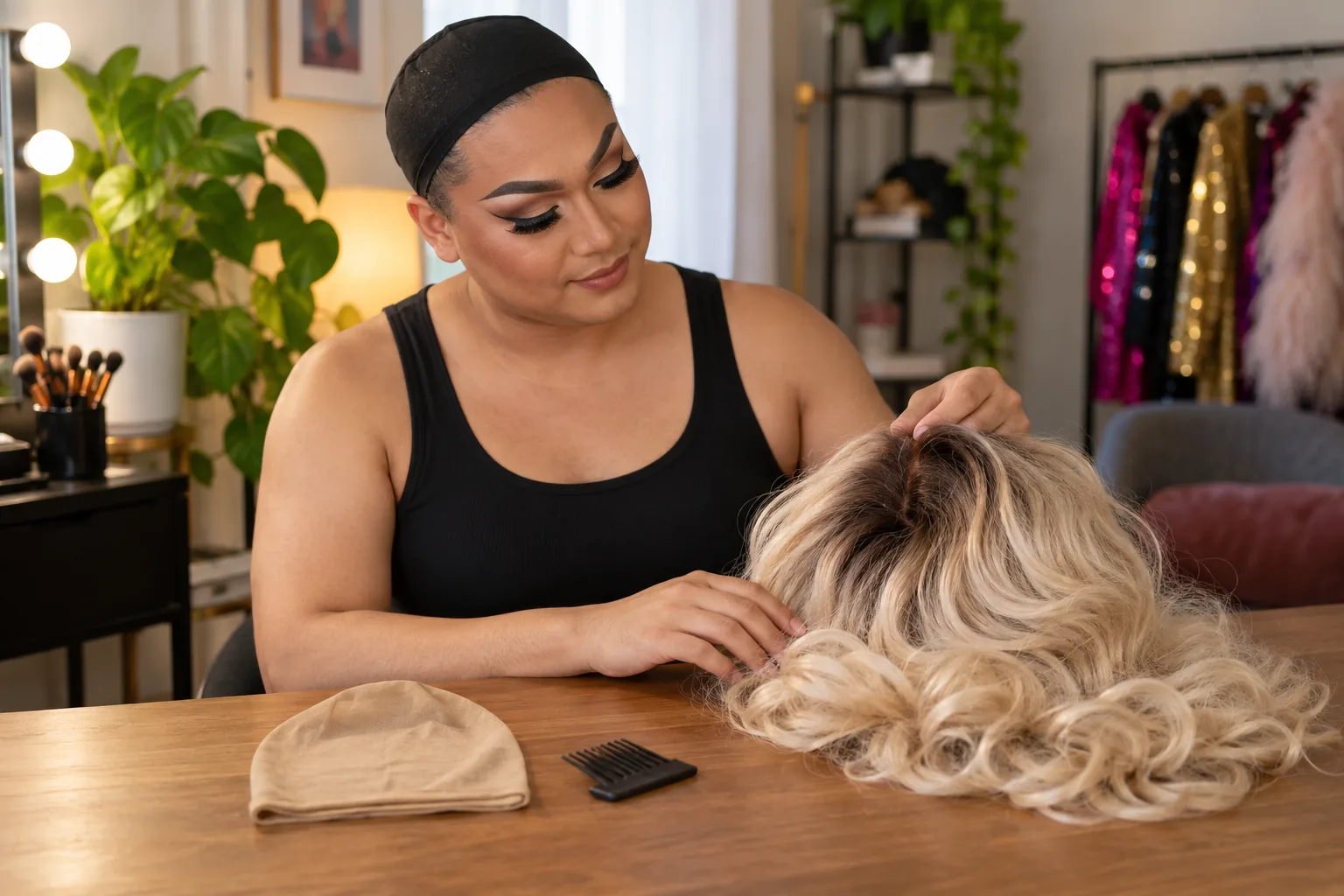
First, set out the wig, any suitable cap and the tools the maker recommends. Then practise placing and removing the wig without rushing. Keep jewellery and sharp costume trim away from the hair while you work.
Beginner drag wigs are easier to learn with when the style suits the task. A short or moderate-length style may require less handling than a very long tangled piece, but your needs and the actual construction matter.
Adhesive is not an automatic requirement. If a product is part of your chosen setup, follow its intended use, removal instructions and any relevant skin warnings. Do not improvise with household glue.
Give accessories one main role
First, ask what each accessory adds. A hat can extend the outline; a necklace can mark the focal point; a glove can support a character gesture. If an item has no clear job, try the outfit without it.
Next, look from audience distance. Several small shiny pieces may merge into visual noise. A single larger, well-chosen element can be clearer without needing to feel heavy.
Keep your face, movement and costume in the same plan. The aim is not to cover every available surface with decoration.

Test weight, edges and contact points
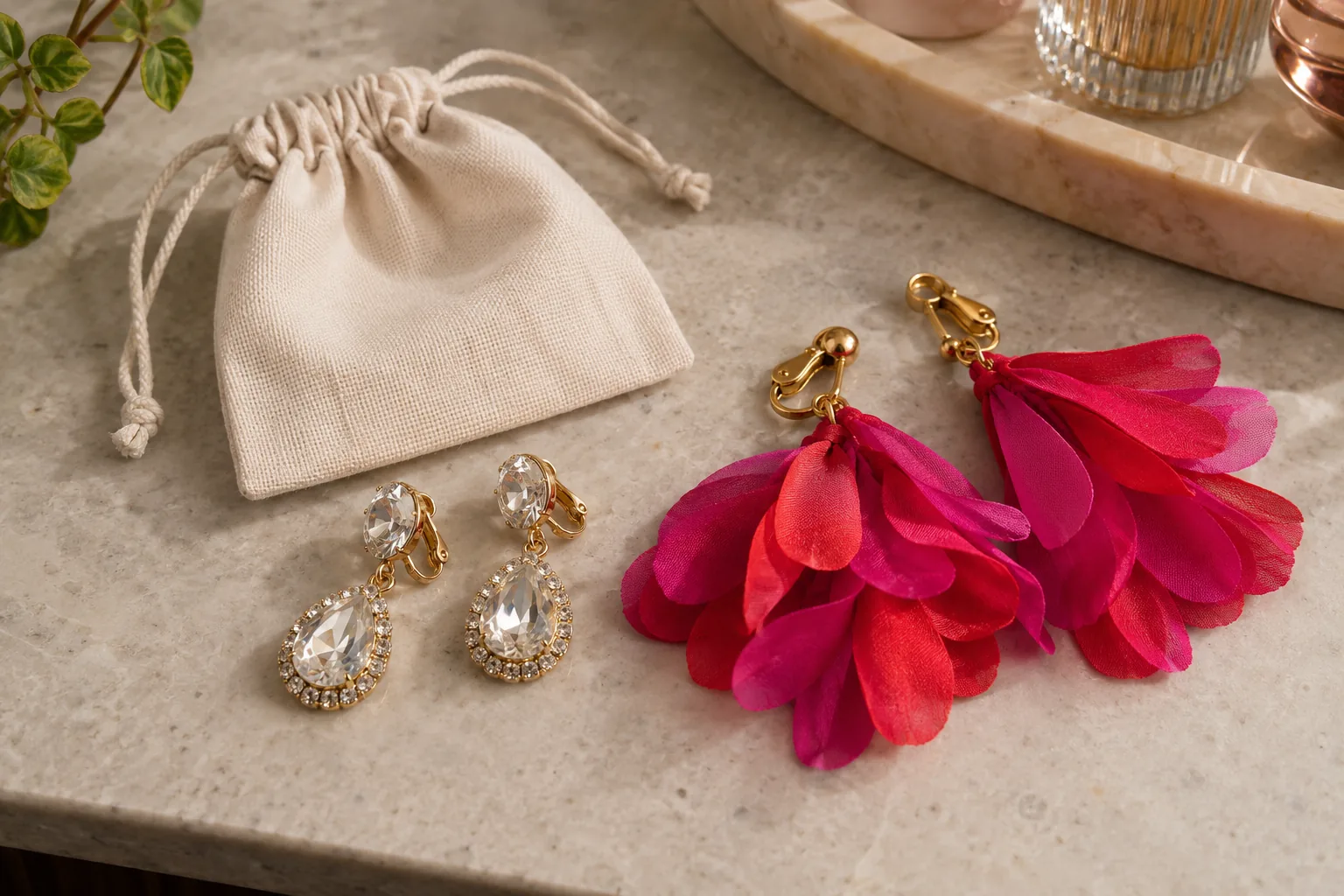
Next, try jewellery with the actual wig and clothes. Then check whether earrings catch hair, a necklace rubs a collar or a ring makes a prop harder to hold. These problems rarely appear when each item stays on its own display stand.
Recent posts
The latest stories and guides from DragSale.




Keep the first test short and easy to stop. If an item hurts, irritates or becomes unstable, remove it and find a better option. It does not become a good fit because the photograph looks impressive.
Before buying, check the fastening and materials described by the seller. Costume jewellery is not one standard construction.
Rehearse the complete look
Wear your beginner drag wig and accessories for the movements the act needs. Turn your head, speak, sit and take ordinary steps. Next, check the look from the side and back.
For a lip-sync, practise the full number rather than testing only a still pose. If hair covers an expression or an accessory makes noise, change the styling before adding more rehearsal speed.
Record one practical improvement. Then repeat the same test so you know whether that change helped. You do not need to replace every piece at once.

Pack wigs and accessories separately
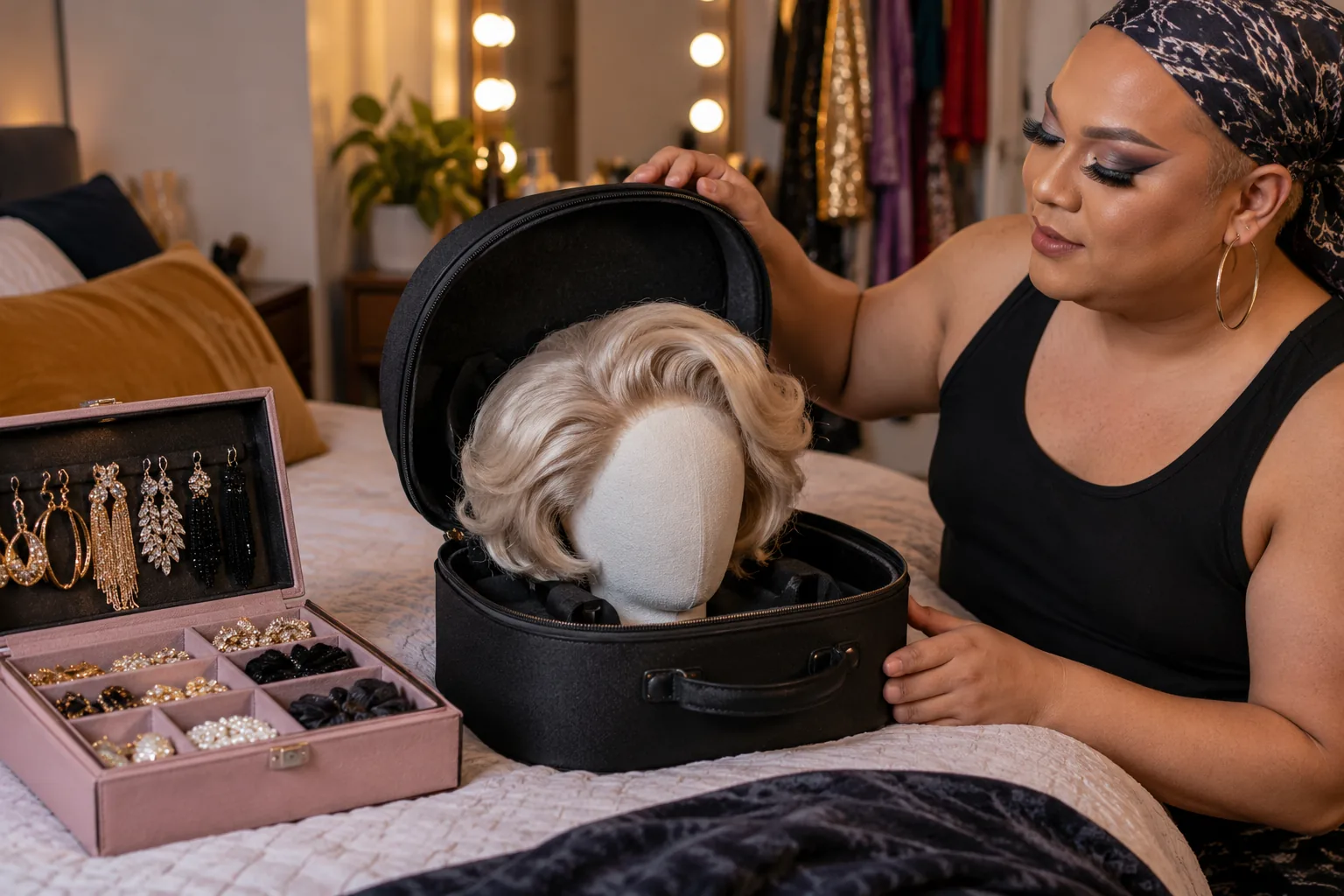
Use a suitable support or carry method for the wig’s style. Keep it away from jewellery, hooks and exposed fastenings that could tangle the fibres. Next, put small accessories into separate pouches or compartments.
| Item | Packing question |
|---|---|
| Wig | Can it keep its shape without rubbing against rough trim? |
| Earrings | Are the pair and fastenings together? |
| Necklace | Can it lie without knotting or catching fabric? |
| Hat or headpiece | Is it supported rather than crushed? |
Include the care information with your kit notes. This is especially useful if someone else helps with packing.
Build a care routine for drag wigs
Follow the maker’s washing, drying, detangling and storage instructions for the exact fibre. Some pieces need a particular comb or technique. Therefore, a tutorial for a different wig may not suit yours.
Let appropriate items dry before enclosed storage, and inspect accessories for damage after use. Then keep repairs separate from ready-to-wear pieces. A broken fastening should not return to the main pouch unnoticed.
Treat care time and storage space as part of the buying decision. Beginner drag wigs that you can maintain are more useful than dramatic pieces you cannot keep ready.
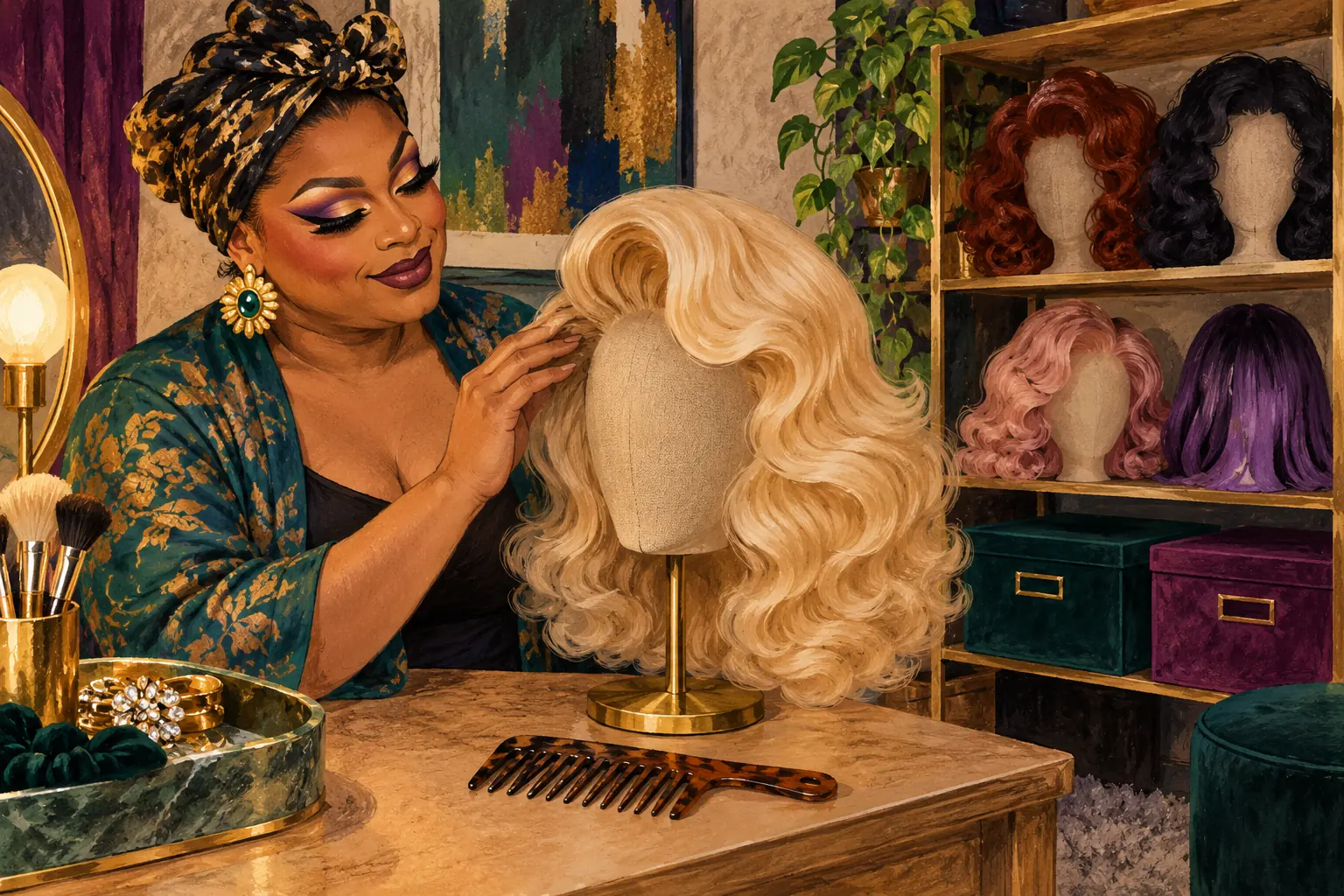
Questions about your first wig and accessories
Do beginner drag wigs have to be lace-front?
No. Construction is one choice among fit, appearance, care, cost and how you plan to wear it. Match the piece to the task rather than assuming one label is always best.
Can I heat-style a synthetic wig?
Only when the maker identifies that piece as heat-compatible and provides suitable instructions. Do not assume all synthetic fibres behave alike.
How many accessories should I buy?
Start with the small number that completes a usable look. Try combinations at home before expanding the collection. The first-look cost guide can help you plan a limit.
How can I tell if the look is too busy?
Photograph the full outfit from a little distance. Then remove one accessory and compare where your attention goes. Keep the version that makes the intended focal point clearer.
The images show fictional generated adults and original illustrations. They are not tested-product evidence or manufacturer endorsements.
Find your next guide
A useful answer to the next question.




Recent posts
The latest stories and guides from DragSale.