Style · The DragSale journal
How to Build a Signature Drag Look Without Copying
Develop a recognisable style through a character brief and a few repeatable design choices. Learn how to credit references, compare colour and scale, and carry one visual idea across different garments. Use photographs, movement checks and small revisions to build a look that feels intentional without copying another artist’s identity.

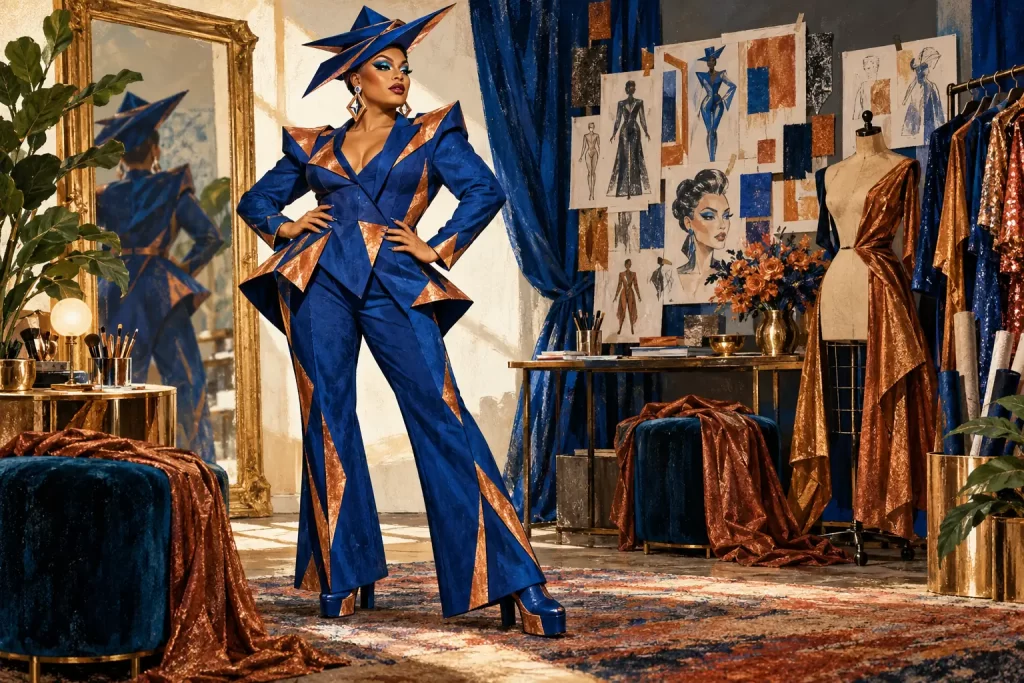
A signature drag look is a set of design choices people can recognise across different outfits. Start with a character idea, choose two or three visual anchors and test them in more than one setting. You do not need to copy a famous artist or buy a whole new wardrobe.
This guide turns a loose mood into a repeatable look. If you are new to the complete process, start with the first-look guide. Then use the style section for clothing and performance follow-ups.
Give your signature drag look a character brief
First, write a sentence about how the character behaves, not only what they wear. “A precise, slightly absurd host who treats a small room like a grand theatre” gives you choices about gesture, texture and proportion.
Next, name three qualities the clothes should communicate. These could be sharp, playful and controlled. However, avoid collecting so many adjectives that every possible outfit fits the brief.
Choose an action too. A look for seated storytelling may need different details from one built around quick movement. As a result, the character and the act should help each other.
Research principles for your signature drag look
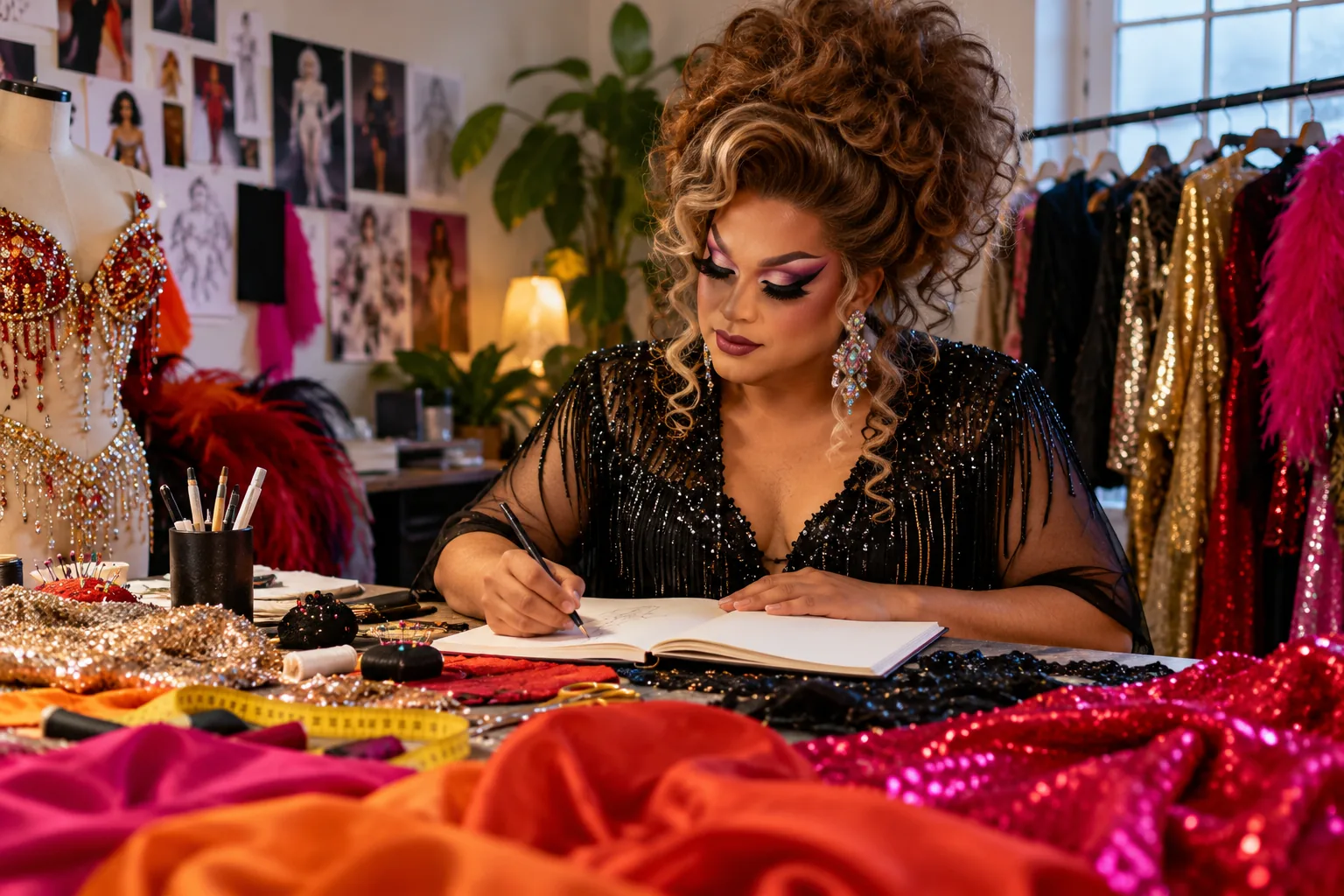
First, keep a small reference board. Include sources beyond drag: a building’s repeated lines, a fabric texture, a leaf shape or a film’s colour relationship. Next, record where each reference came from.
Ask what you want to learn from it. Strong shoulders are a design principle; copying another performer’s exact suit, makeup and entrance is a much larger borrowing. Credit does not automatically turn a close copy into an original character.
For a practical method, use the character-research guide. It can help you turn references into choices you can test.
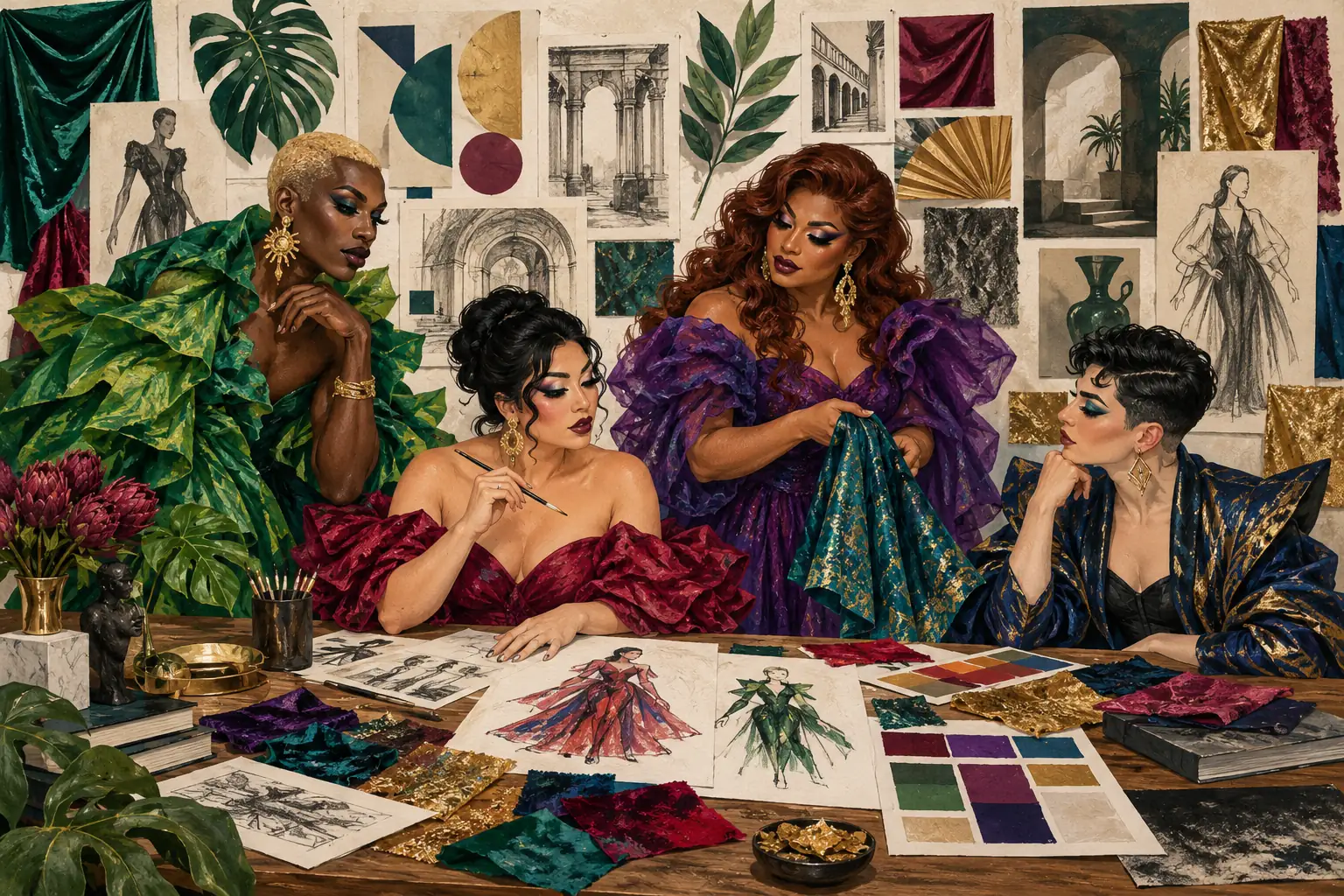
Give your signature drag look recognisable anchors
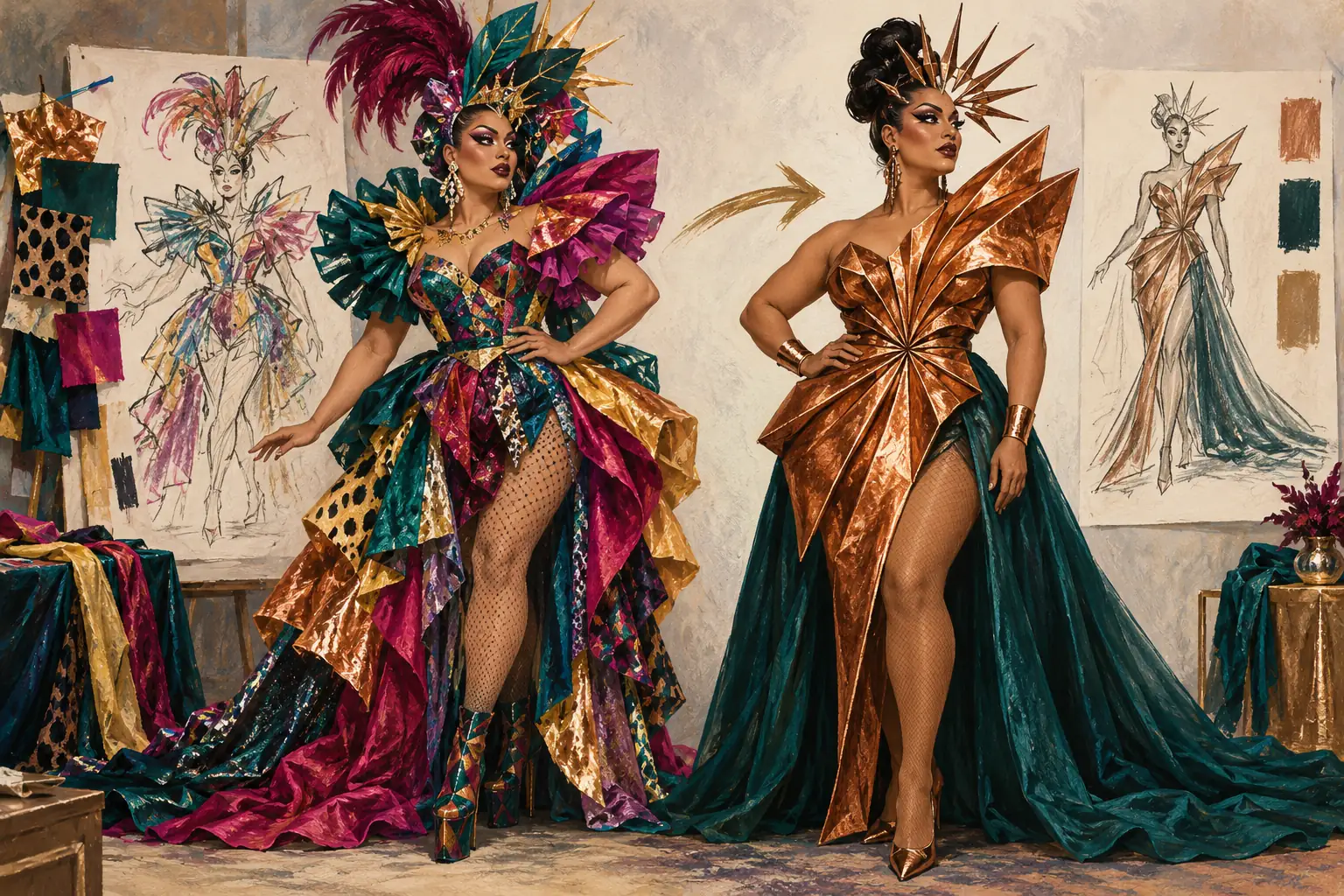
In practice, an anchor is a choice you can repeat without making every outfit identical. For example, it could be an angular collar, a copper accent or a particular way of using a cape.
Next, check whether each anchor works on a small scale and a large scale. For instance, a fan-shaped detail might appear in a lapel for a quiet set and in an outer layer for a bigger stage.
Do not force every anchor into every look. A signature drag look needs a family resemblance, not a uniform that prevents you adapting to the room.
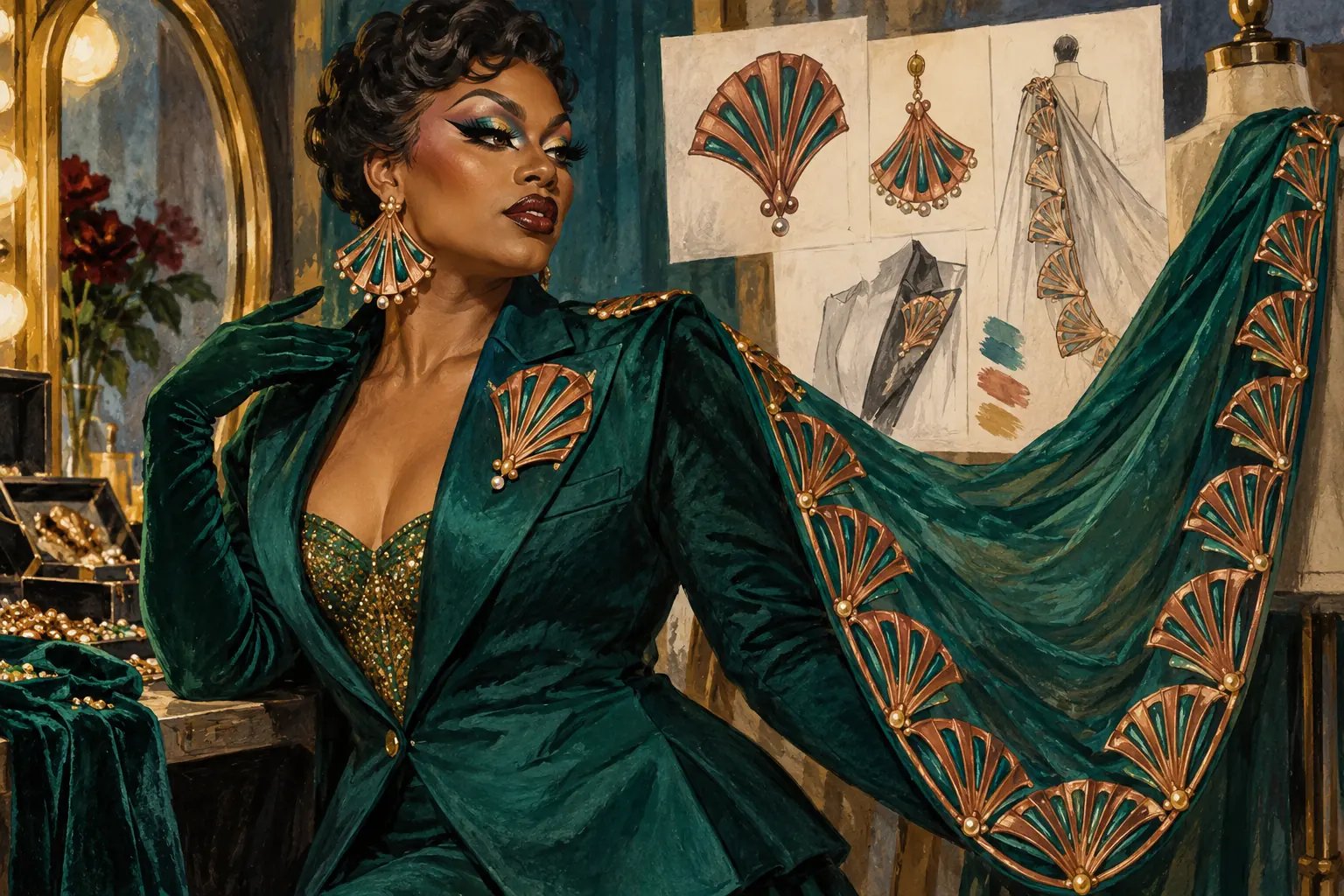
Choose colour for your signature drag look
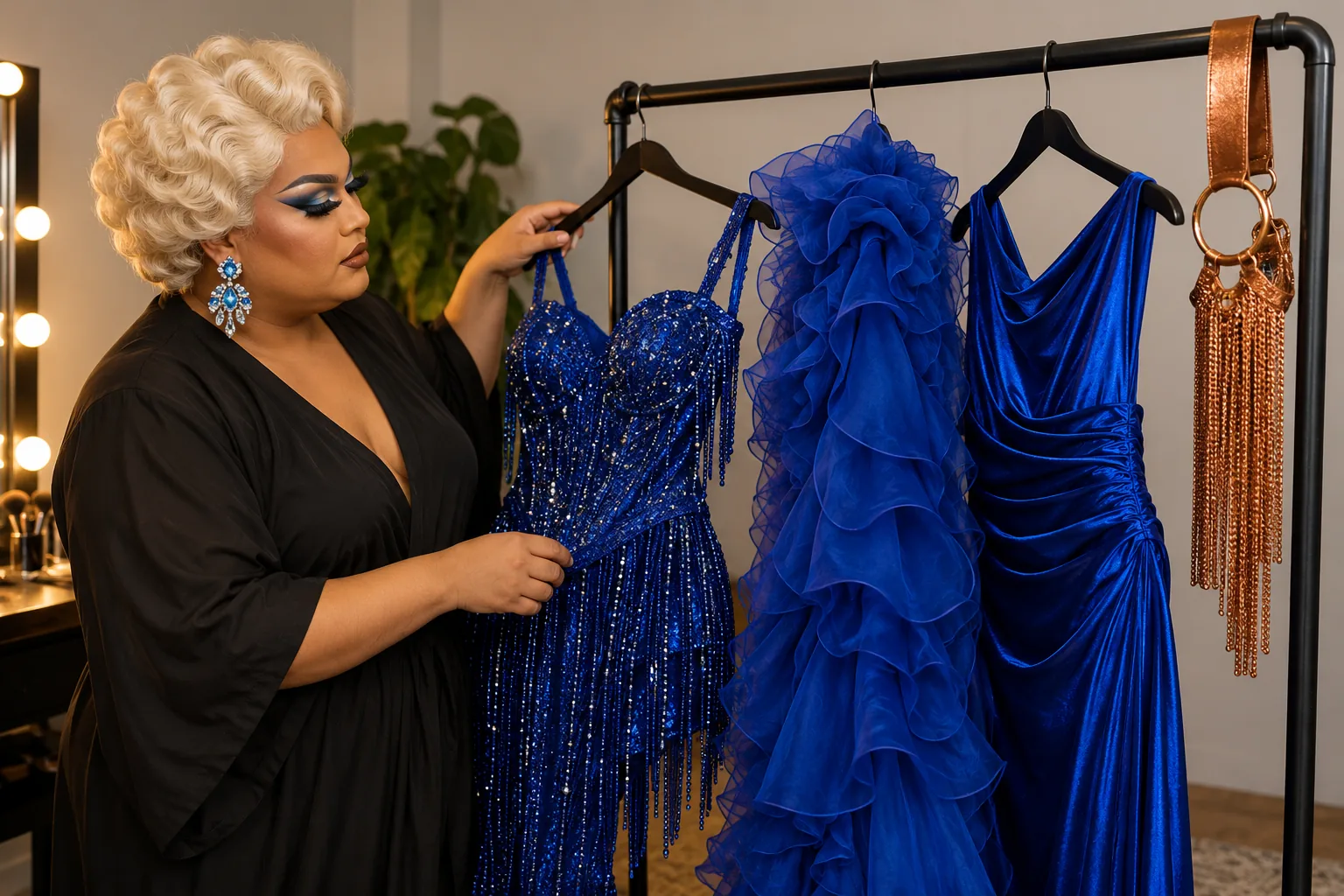
First, choose a main colour and one useful contrast. Then compare actual fabric, trim and makeup together. Screens and product photographs are useful starting points, but they do not settle how materials behave beside each other.
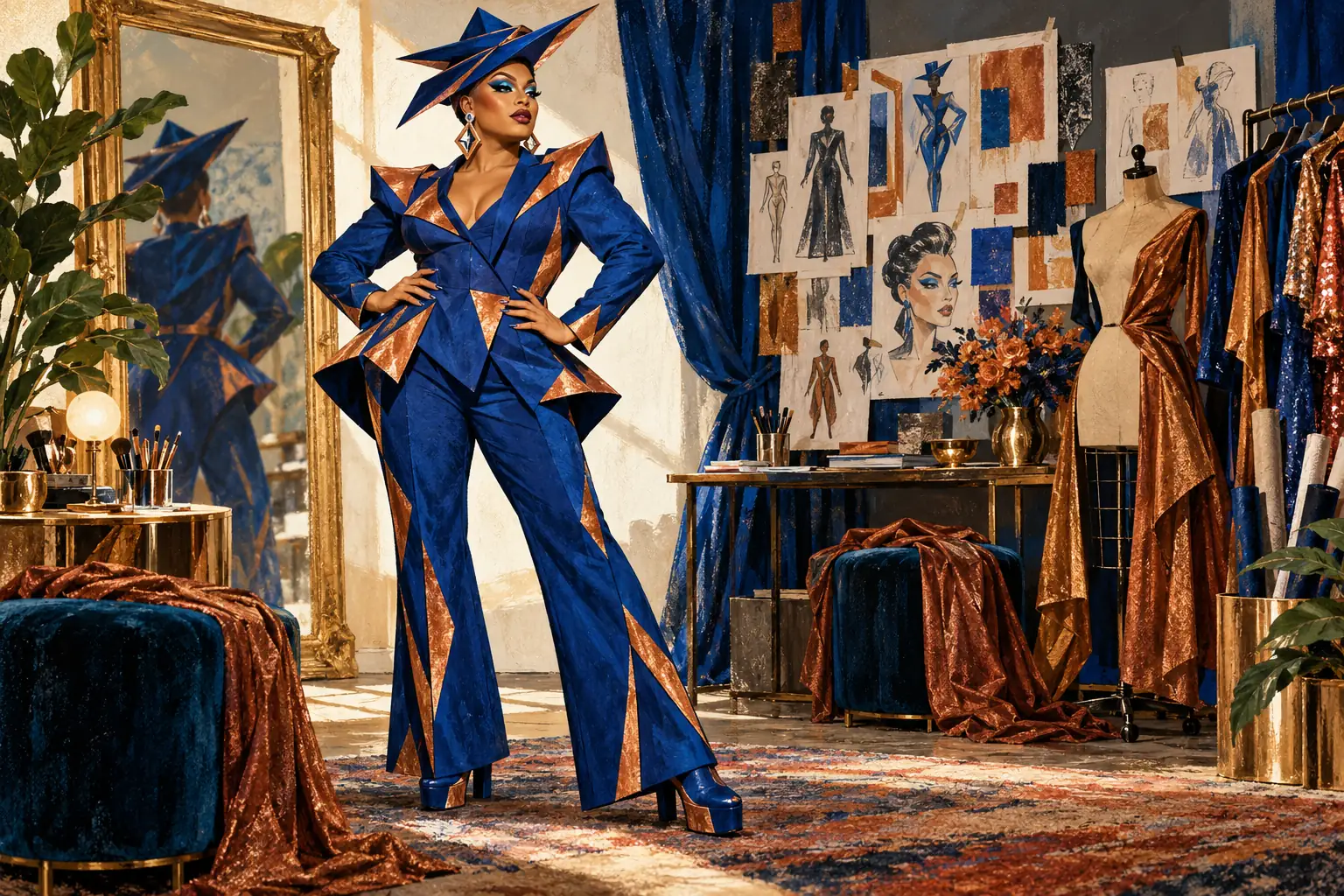
For example, cobalt with copper can connect several looks through one clear relationship. The combination is only an example, not a rule about which colours suit a person.
Also check availability and care. A palette that depends on one hard-to-replace fabric may be less practical than a broader family of shades you can source again.
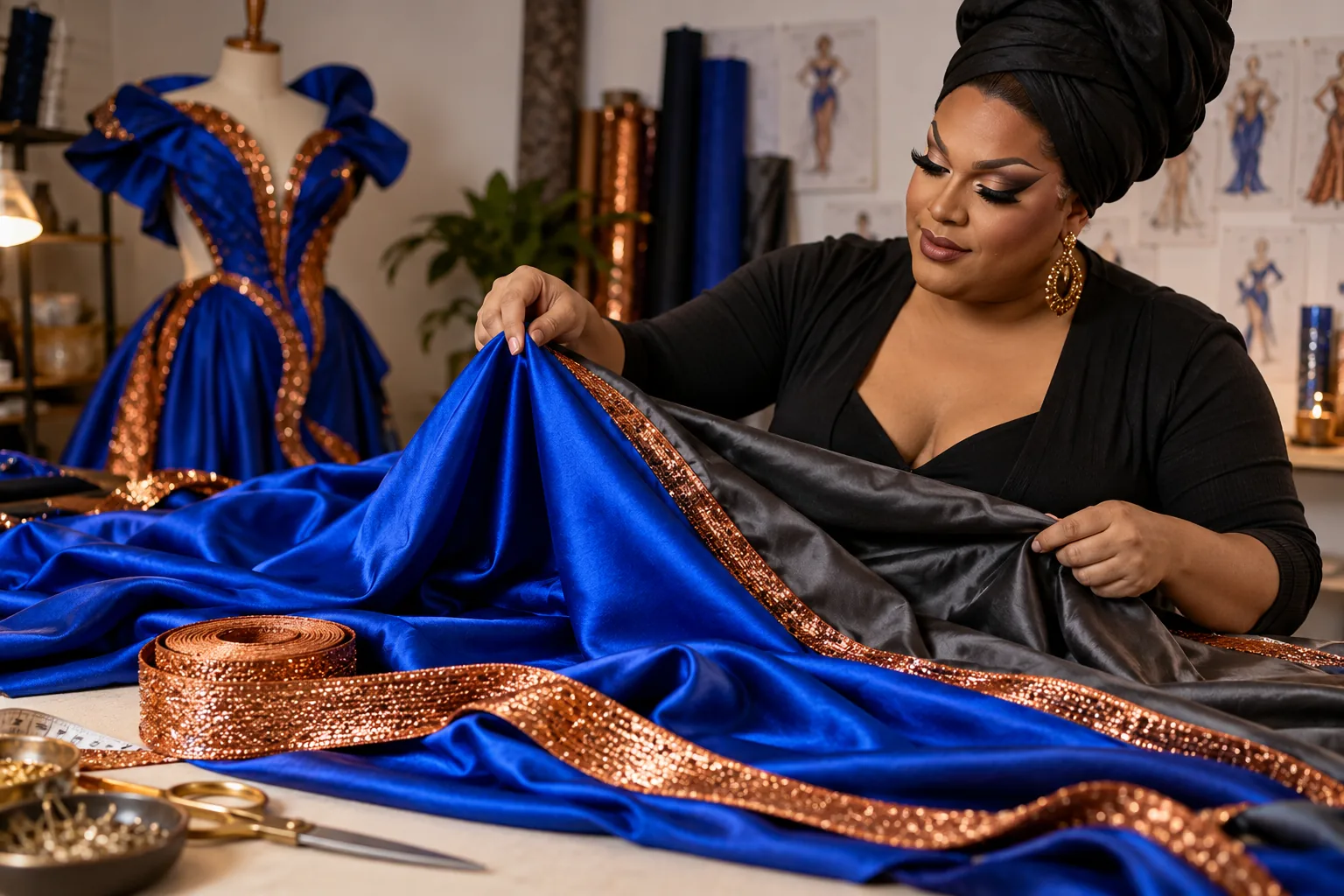
Test the scale of your signature drag look
Next, try the detail at audience distance. A small collar may disappear across a room; an oversized one may block a movement or hide your expression. Therefore, test the actual job rather than deciding that bigger always means stronger.
Recent posts
The latest stories and guides from DragSale.




Photograph two versions from the same distance and angle. Next, ask one question, such as “Which version keeps the face as the focal point?” This gives you a clearer comparison than taking unrelated selfies.
Keep the useful variation even if it is not the most dramatic one. Readability can matter more than sheer size.
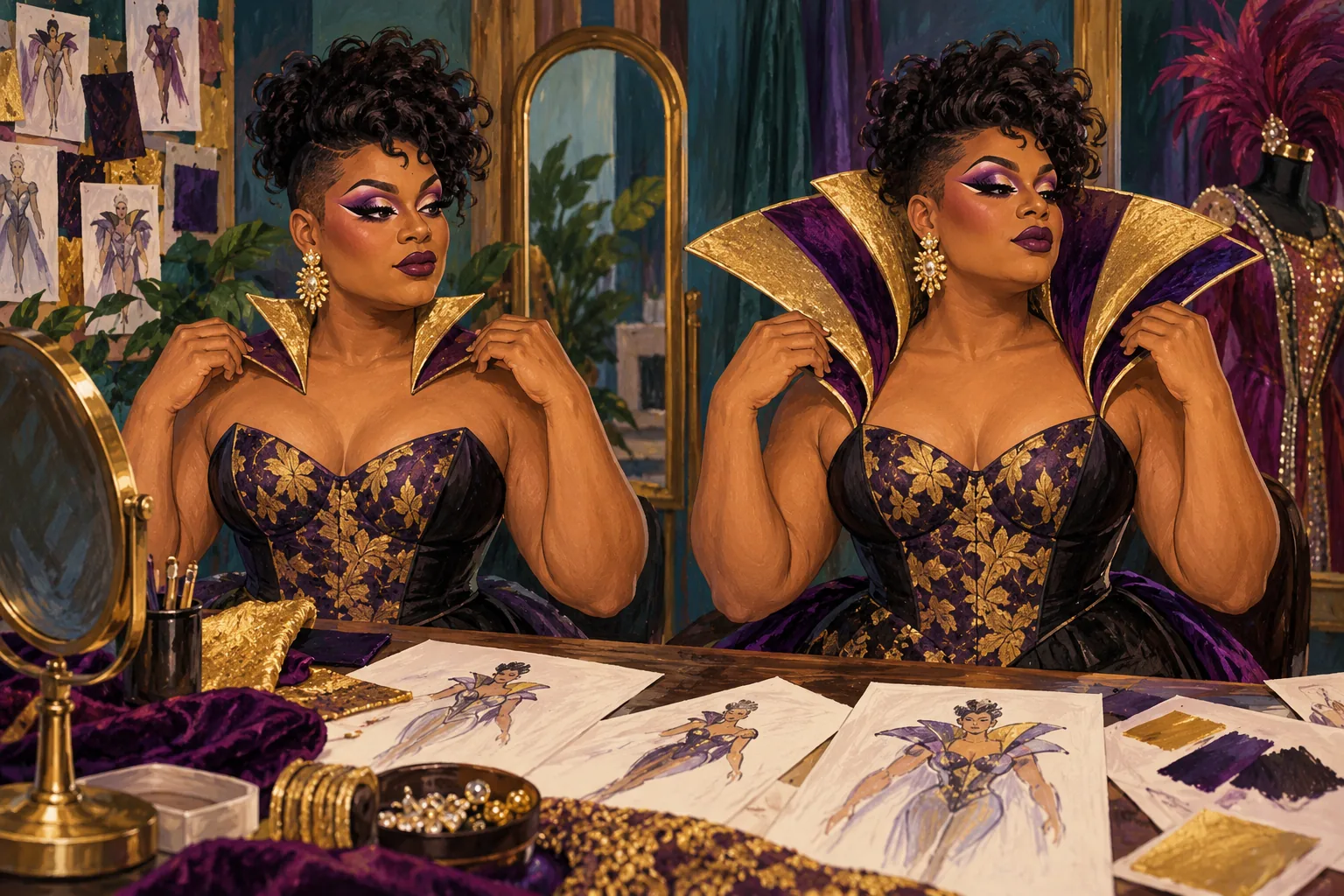
Make the idea work across different garments
First, build a small set around what you already own. A jacket, plain base and removable outer layer may give you several settings for the same visual idea. Then use the accent or shape to connect them.
| Setting | Keep consistent | Adapt to the task |
|---|---|---|
| Small hosting room | Accent colour and collar line | Reduce bulk around a microphone |
| Standing stage number | Character outline | Allow the planned movement |
| Promotional portrait | Main motif | Check detail at portrait distance |
| Travel-heavy booking | Colour relationship | Choose manageable packing and care |
A signature drag look becomes useful when you can wear it, maintain it and return to it. Therefore, it should not exist only as a costly sketch.
Review with useful photographs and feedback
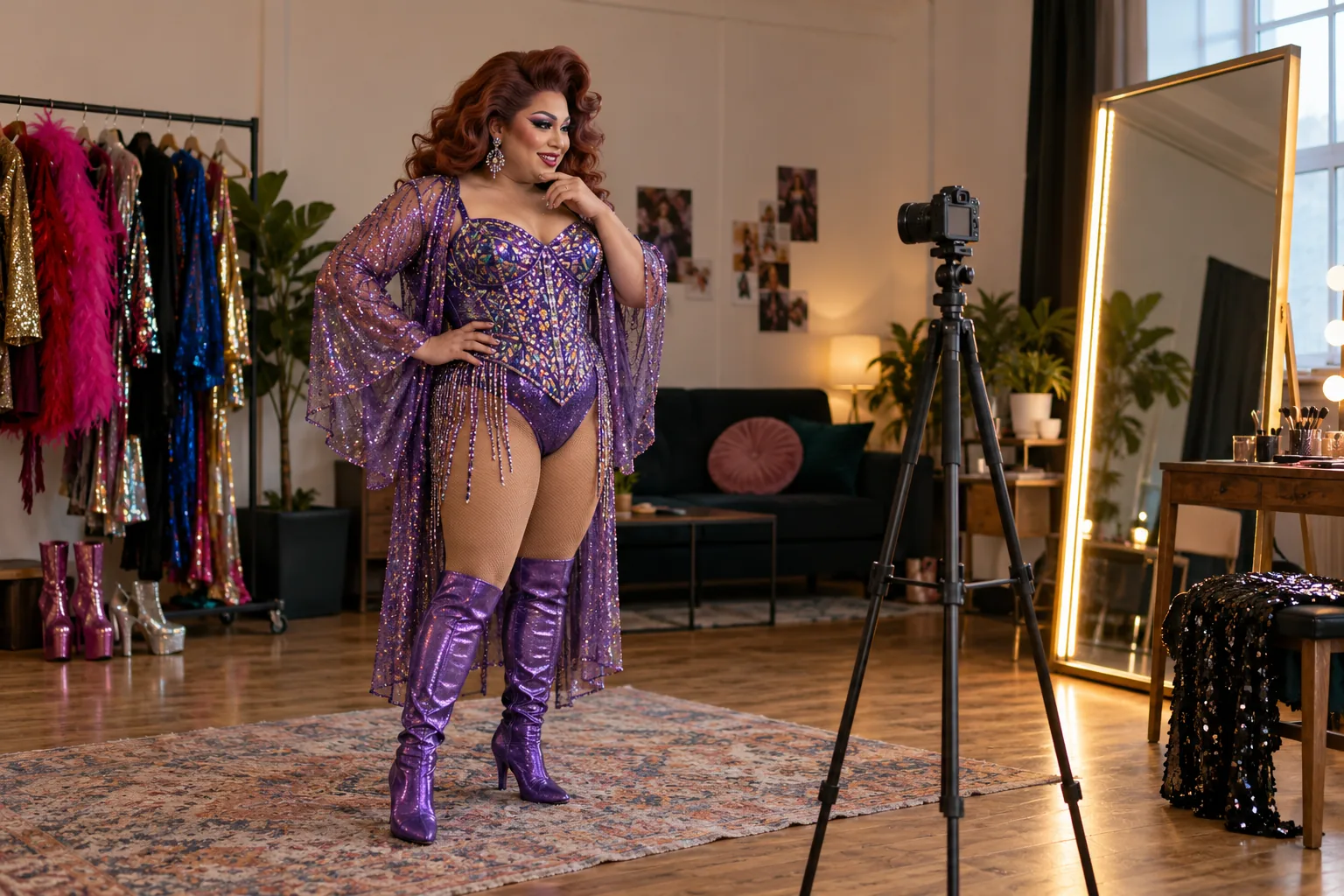
Next, take front, side and back views in the full outfit. Next, check an ordinary movement recording rather than relying on a still pose. Notice where your hand repeatedly adjusts a sleeve or the hair hides a facial cue.
Ask a trusted person a specific question. For example, “What did you notice first?” can reveal whether an accessory is overpowering the character. However, one person’s taste does not become an objective rule.
Keep notes about context. A look that reads well in a portrait may need changes for a dim stage or a seated act.
Edit one thing at a time
Finally, choose the smallest useful revision. Remove one accessory, shorten one sleeve or simplify one trim line. Then repeat the comparison with the same lighting and distance.
Save a short record of the version you kept and why. Over time, this becomes your own design reference rather than a folder of unrelated inspiration images.
For cleaning, follow each garment’s label. The GINETEX care-symbol reference explains common symbols. It does not replace specific advice for a mixed-material costume.
Questions about a signature style
Must a signature drag look use identical makeup?
No. For example, a repeated colour, line or mood can connect looks while allowing different makeup choices. Instead, keep the part that supports the character rather than repeating everything automatically.
Can my signature drag look change?
Yes. After all, a signature is a useful pattern, not a lifetime contract. In addition, keep notes about why a new choice works so the style develops deliberately.
What if my references are too close to another artist?
Step back from the full outfit. Identify the underlying principle and explore different materials, scale, movement and context. Then credit the reference where it remains relevant.
Should I spend more to make the look recognisable?
Not necessarily. In fact, consistent editing may do more than another purchase. Use the cost-planning guide to decide which missing piece would make the current look usable.
The visual examples are fictional AI-generated scenes and original illustrations. They do not portray or endorse a real artist.
Find your next guide
A useful answer to the next question.


Recent posts
The latest stories and guides from DragSale.