

Style · The DragSale journal
Budget Drag Fashion Ideas: Make Each Piece Work Harder
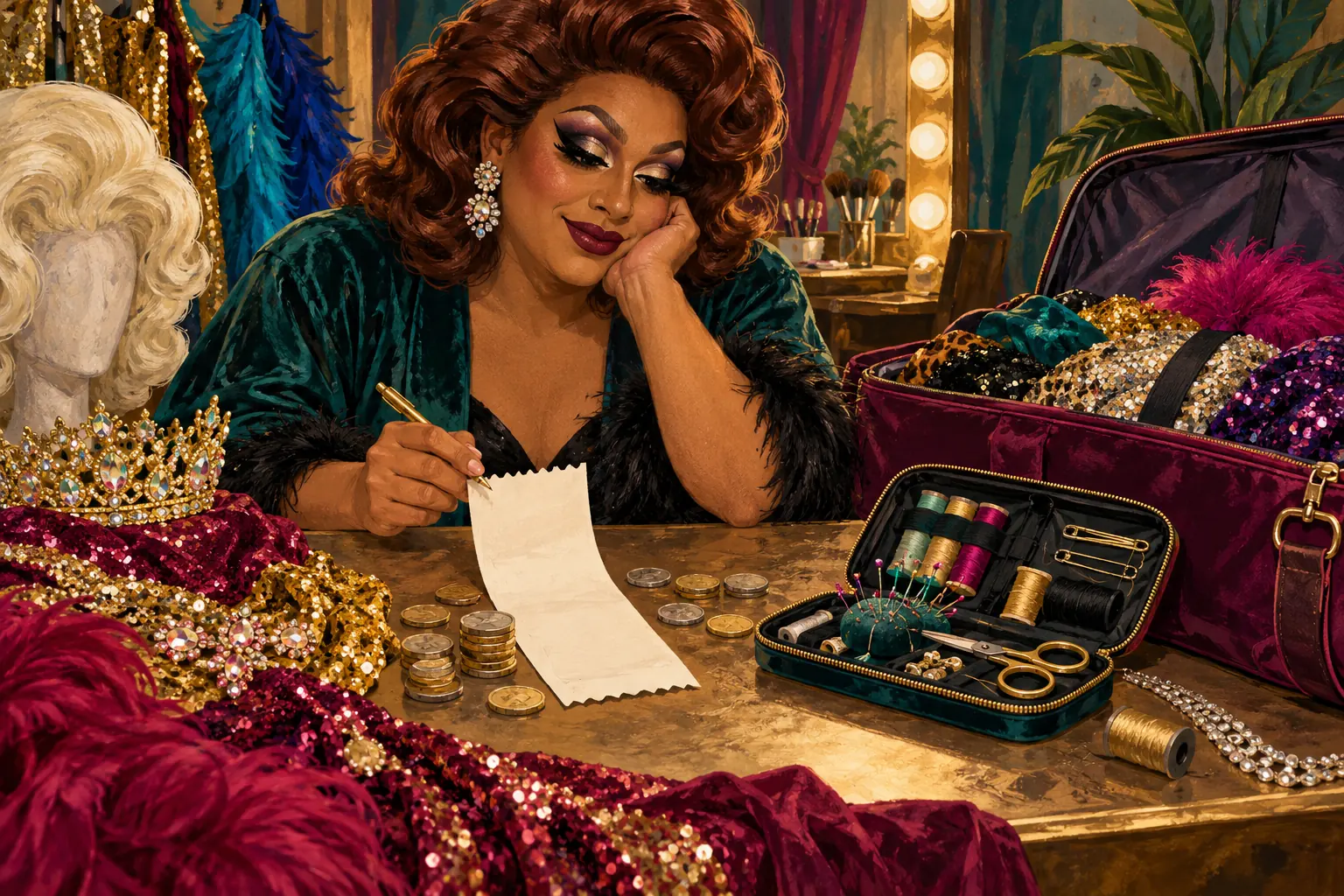
Spend on the missing job in a complete outfit, not simply the lowest price tag. Audit your wardrobe, inspect secondhand pieces and compare purchase, repair, delivery and care costs before committing. Explore repeatable combinations, clear borrowing agreements and manageable repairs, with an explicitly illustrative cost example.

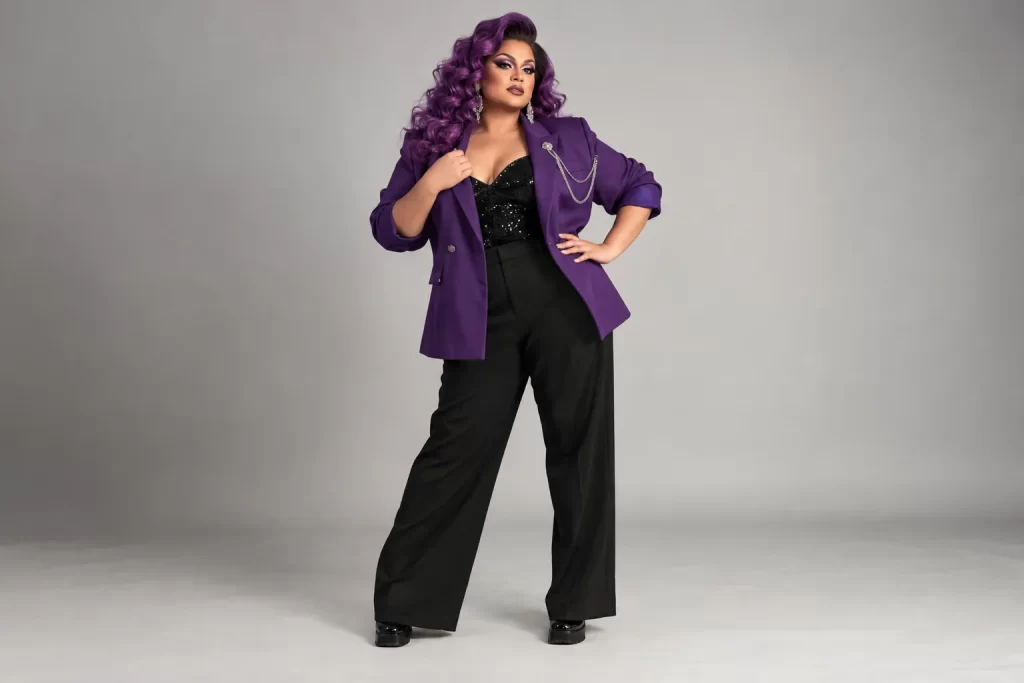
Budget drag fashion starts with a complete usable look, not the cheapest item on a shopping page. Check what you own, identify the missing job and include alterations, travel and care in the cost. Then buy only what improves the working outfit.
This guide offers a planning method rather than live prices or tested-product recommendations. For the wider first-look costs, use the starting-drag budget guide. For supplies beyond clothes, see the starter-kit guide.
Begin budget drag fashion with a wardrobe audit
Lay out the pieces you could actually use. Next, sort them into ready, repair or alter, and unsuitable for this look. A damaged item is not ready just because you already own it.
Write the job of each piece: reliable base, strong outline, focal detail or weather layer. Then identify the gap that prevents a complete look. This makes a shopping list more useful than “buy something dramatic.”
Keep a separate list of future ideas. A bargain for an imagined act does not have to become today’s spending priority.
Prioritise fit in budget drag fashion
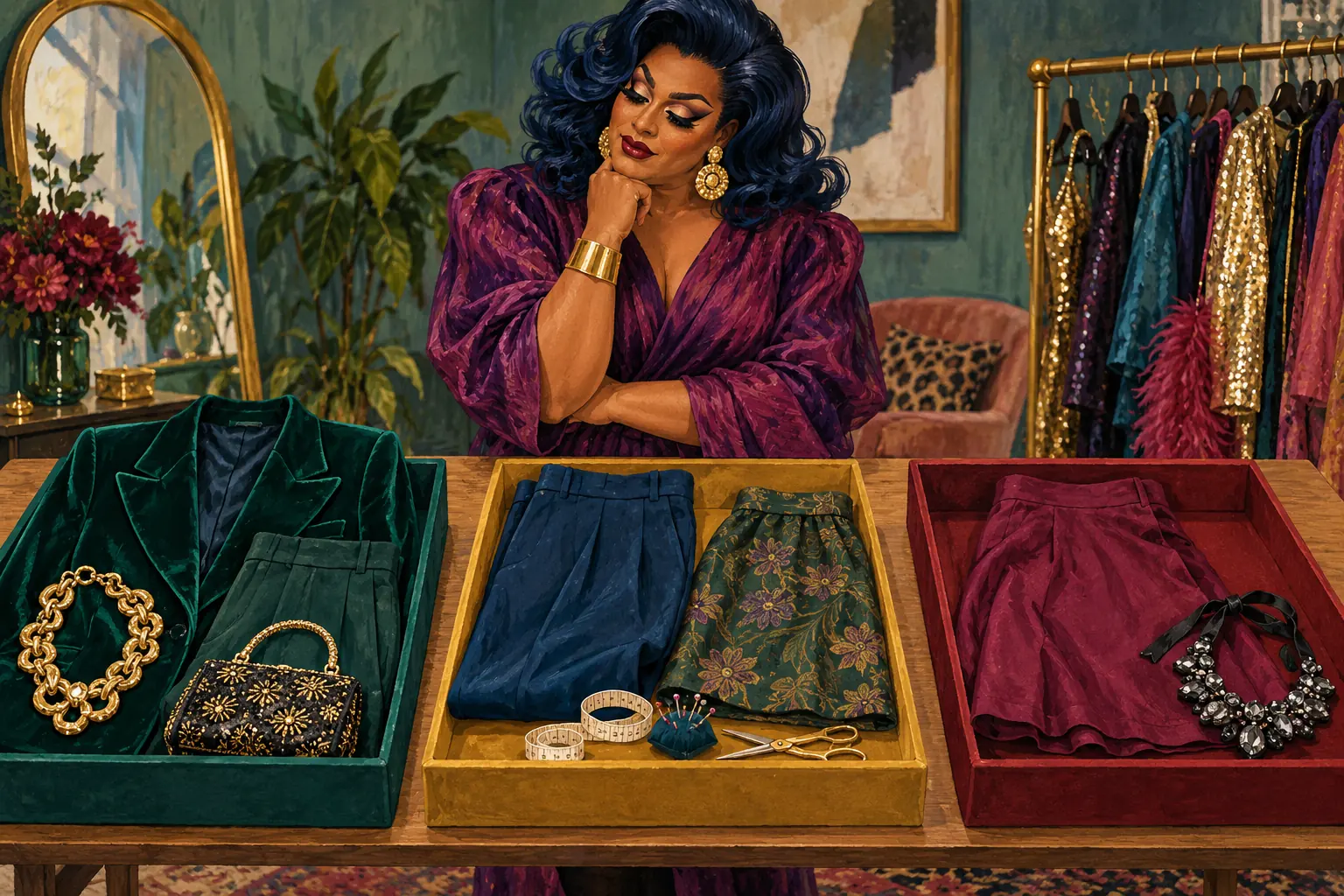
Try the whole outfit with the intended shoes and underlayers. Next, check the shoulder, waist, hem and ordinary sitting position. A simple piece that moves well may be more useful than a heavily decorated one that needs major work.
Ask what an alteration would involve before buying. Shortening a plain hem and rebuilding a lined shoulder are not the same task. If you cannot do the work, include a suitable service’s quote in your decision.
Budget drag fashion should reduce waste, not create a pile of projects you cannot finish.
Inspect secondhand budget drag fashion carefully
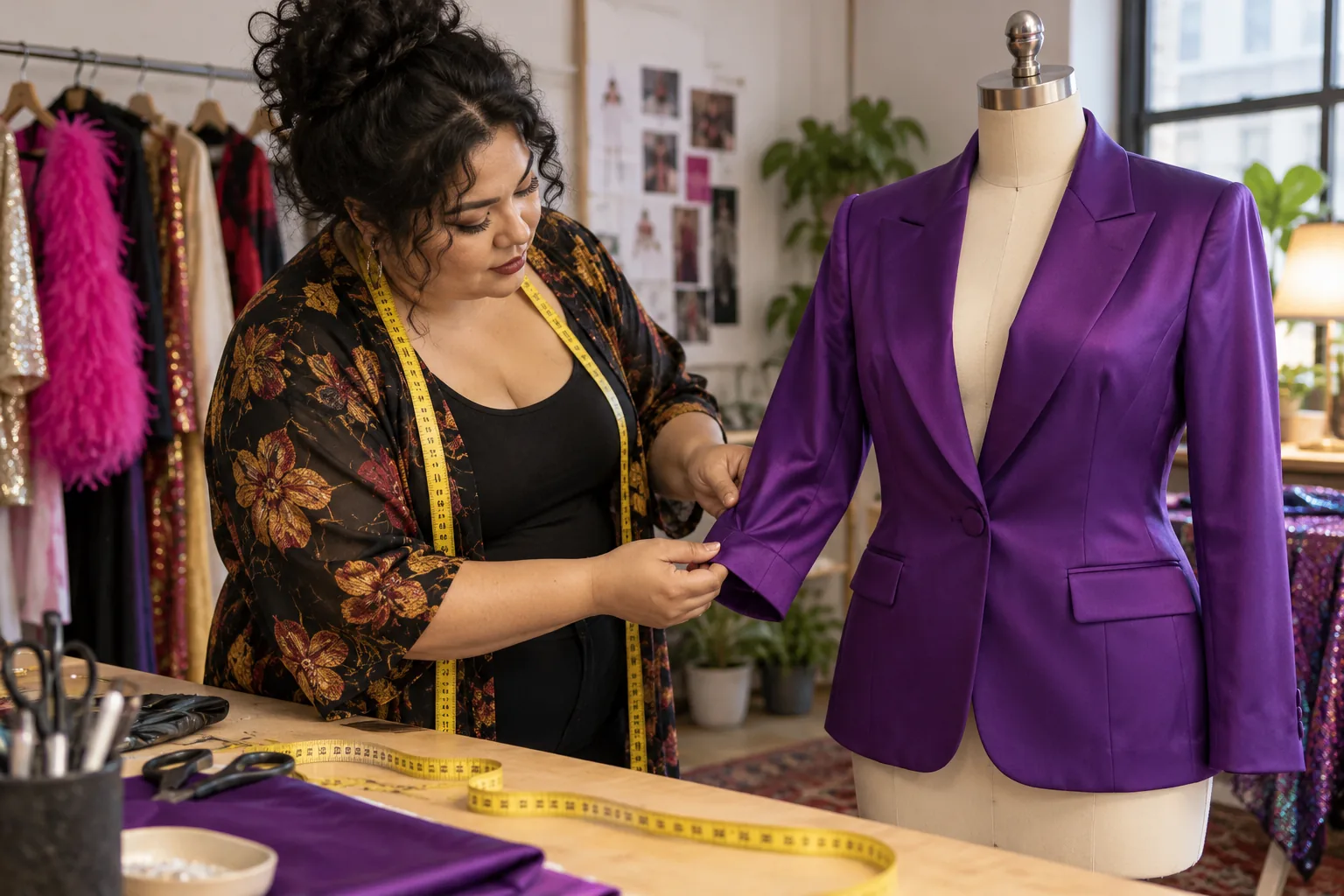
Check seams, lining, fastenings and signs of damage. Then inspect fabric under ordinary light rather than relying on a dim fitting area. Look for missing trim and areas that may catch or pull during movement.
Read any care label and return conditions. A low purchase price may be less useful if the piece needs specialist cleaning or cannot tolerate the alterations you planned.
Also check the complete outfit rather than the garment alone. A jacket that requires new shoes, a new base and several accessories may not be the economical choice you expected.
Compare total cost, not only the price tag
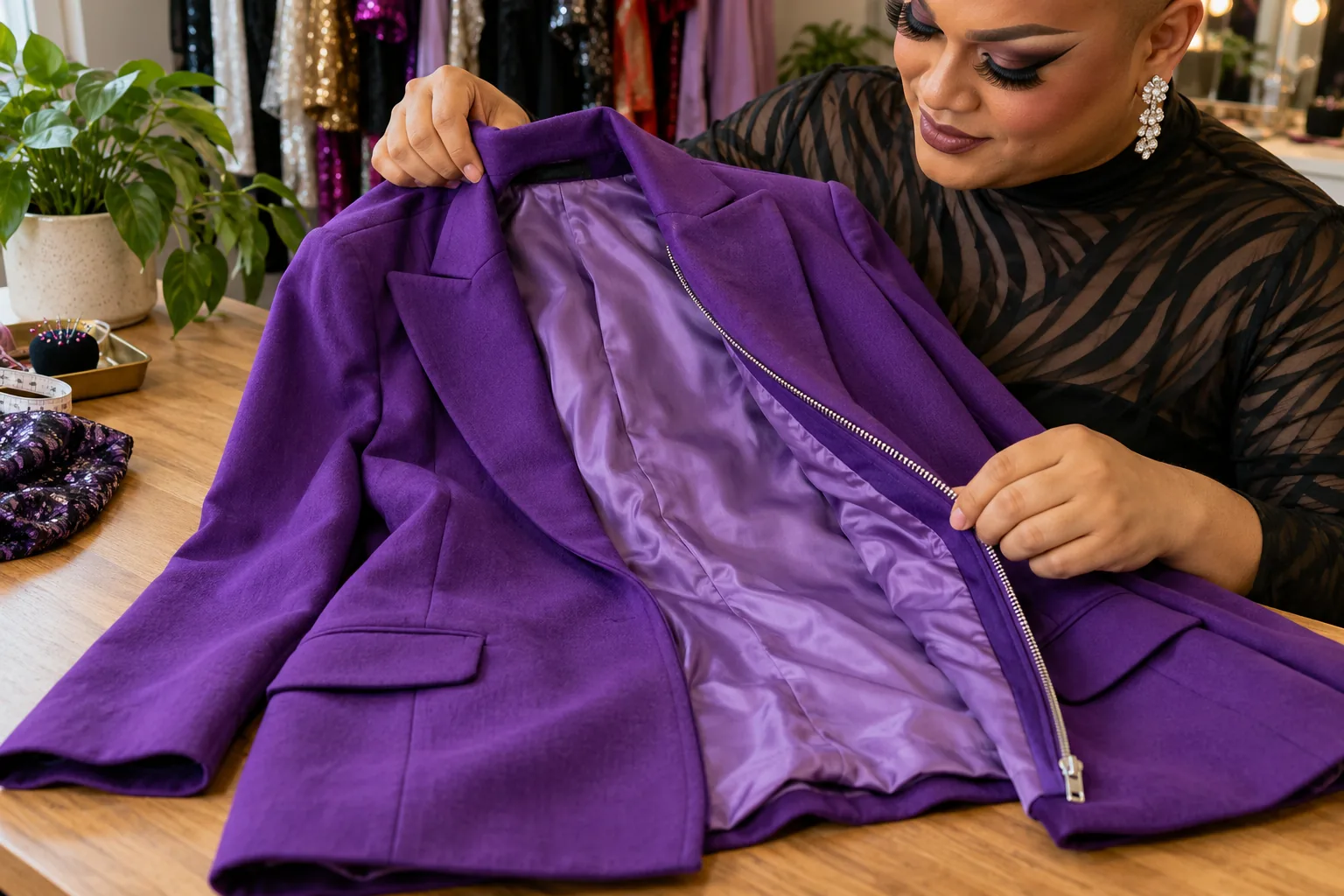
Write down the costs that apply to your situation. These may include purchase, delivery, alterations, cleaning, storage and transport. Next, separate one-off work from costs that return with each use.
Here is a deliberately invented example, not a current local price check. Suppose a secondhand jacket costs 20 units, a repair costs 12 and delivery costs 5. Its starting cost is 37 units. A 35-unit jacket needing no repair could therefore be the cheaper ready-to-use option.
The calculation helps you ask better questions. It does not predict the life of either garment or prove which is better quality.
Build budget drag fashion combinations
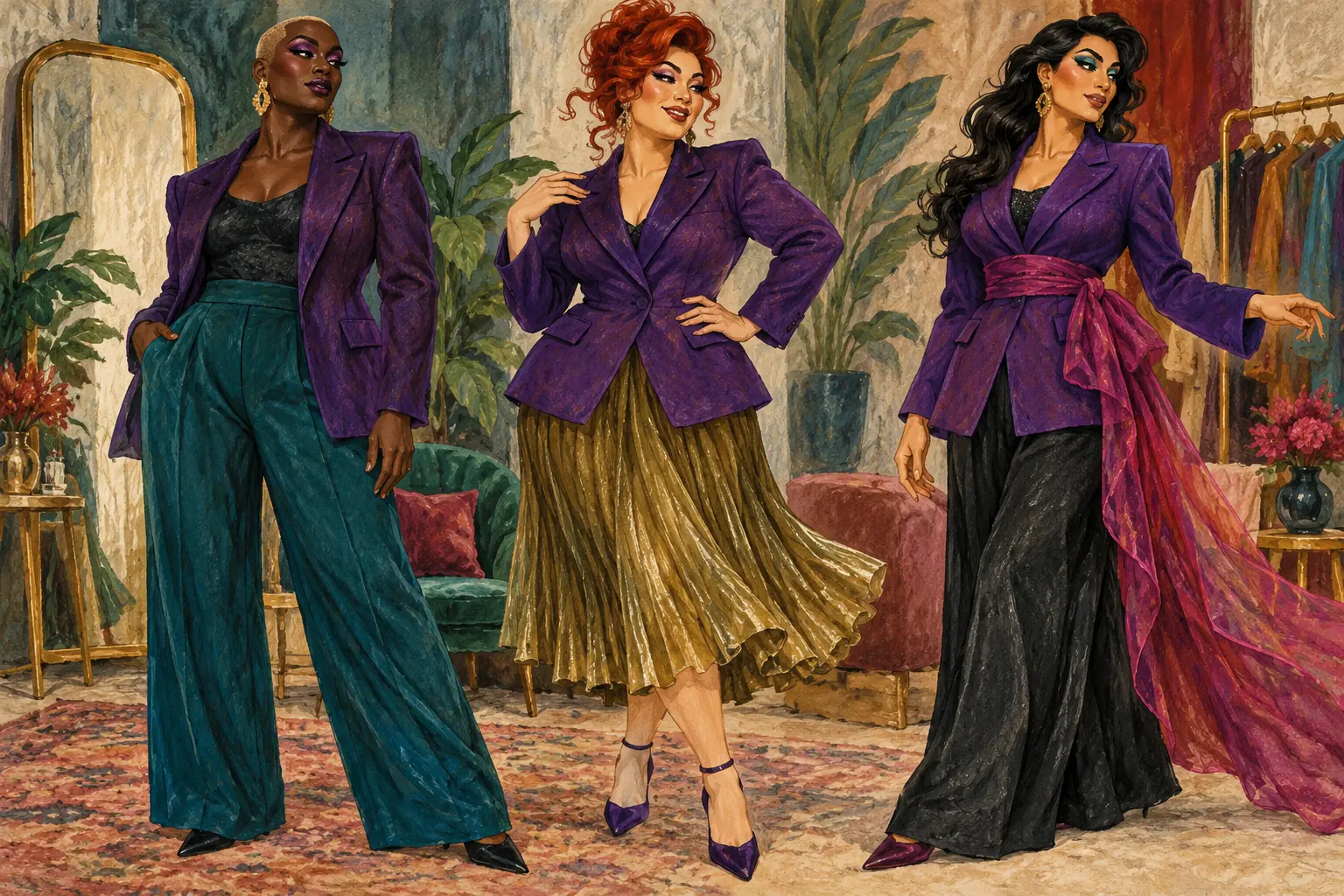
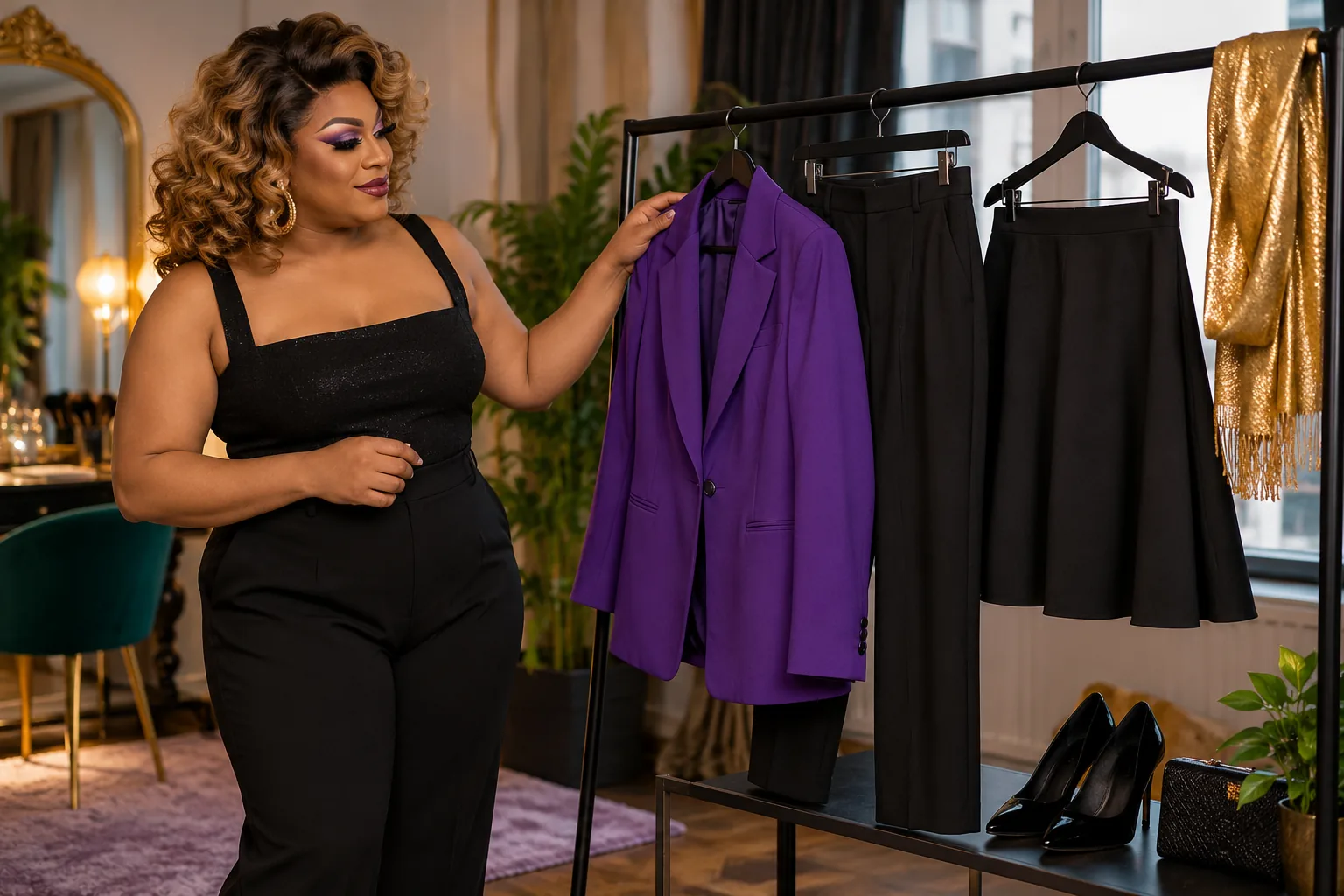
Try one jacket with more than one lower half. Then change a removable sash, collar or outer layer rather than rebuilding the entire look. A coherent colour relationship helps the combinations feel deliberate.
| Keep | Change | Practical benefit |
|---|---|---|
| Reliable jacket | Trousers or skirt | Different outline without another jacket |
| Plain base | Removable cape | New entrance with manageable packing |
| Main colour | One accent | Clear variation without many accessories |
| Comfortable footwear | Upper layers | Less rehearsal spent adapting to a new shoe |
Recent posts
The latest stories and guides from DragSale.



Take a photograph of each combination. Next, check that every version is complete enough to wear. A theoretical combination with a missing fastening is still a project.
Borrow or swap with clear expectations
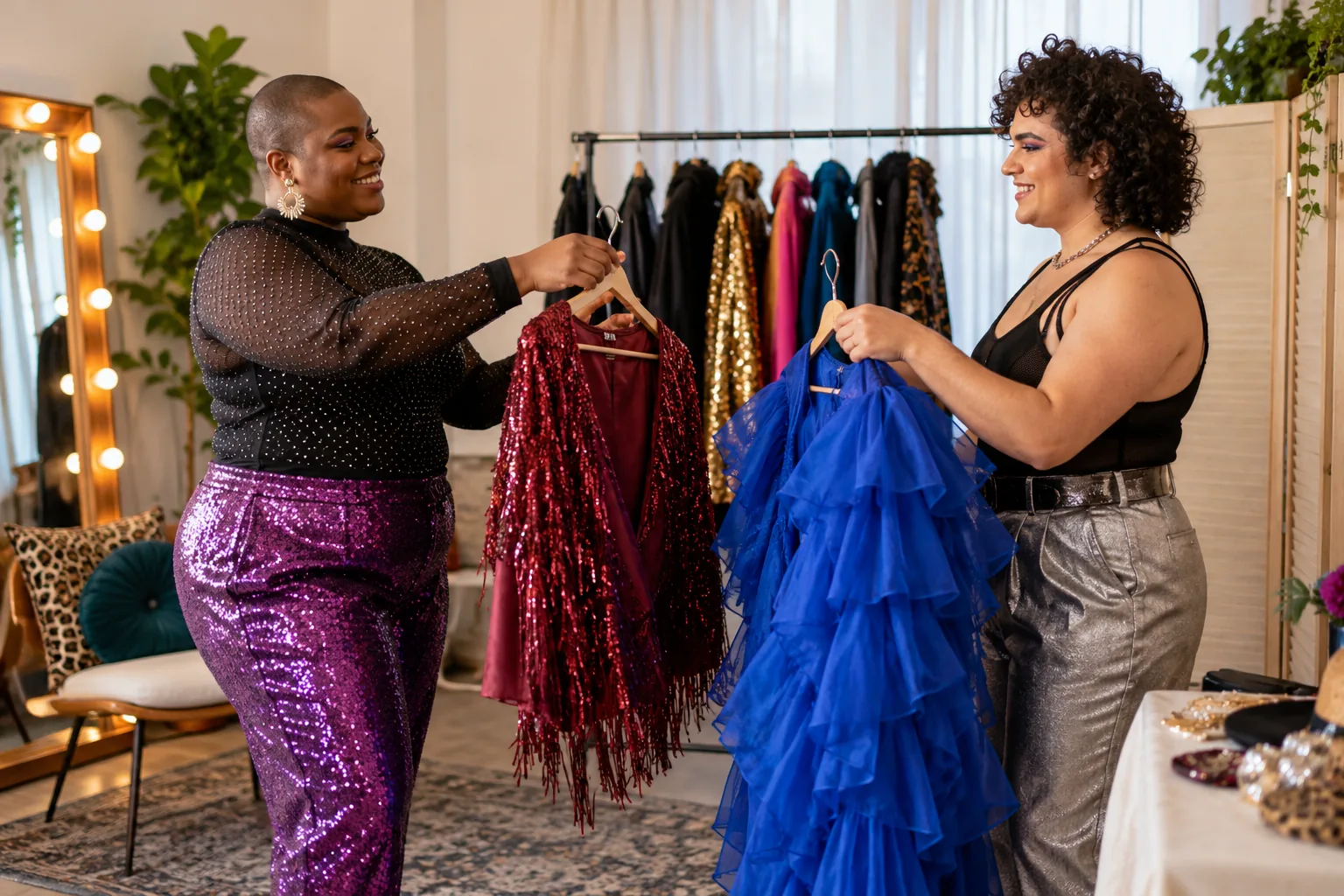
Agree what is being borrowed, when it returns and how it should be cared for. Next, discuss alterations before making them. Permission to wear a piece is not permission to cut, dye or glue it.
Check its condition together and take a simple record if useful. This is a way to avoid misunderstandings, not a reason to make an informal exchange feel hostile.
Also have a backup if the borrowed item is essential. Budget drag fashion works better when it does not depend on a last-minute favour that another person may be unable to provide.
Learn one useful repair at a time
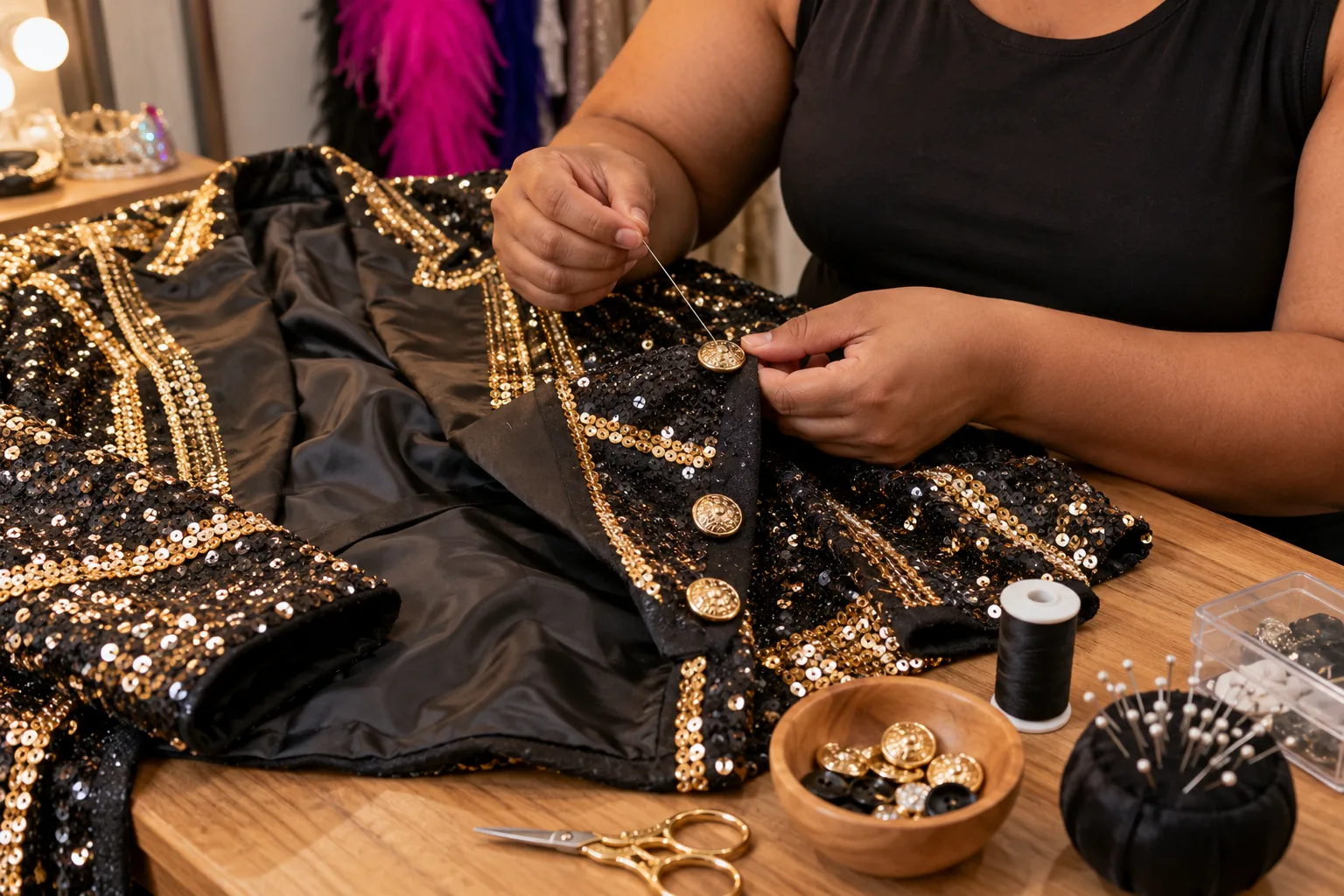
Start with a manageable task, such as replacing a simple button on a garment laid flat. Practise on an expendable sample first if the technique is new. Then decide whether your actual costume needs more skilled help.
Do not leave sharp pins as a permanent answer to a fit problem. Likewise, decorative glue does not replace every sewing method. The fabric, trim, movement and care instructions all matter.
For care-symbol meanings, use the GINETEX reference. When the materials are uncertain, get appropriate advice before experimenting with heat or cleaning products.
Stop buying when the look is ready
Set a rehearsal date, not just a shopping deadline. Next, check the complete look through the actual movements and packing routine. Record the changes that genuinely affect use.
If the remaining idea is only “more,” pause. An extra accessory may not improve the act, and the money may be more useful for transport, cleaning or a repair.
Keep your budget drag fashion notes after the show. They can reveal which pieces earn their place and which purchases repeatedly create extra work.
Questions about spending less on drag clothes
Is secondhand budget drag fashion always cheaper?
No. Compare the full ready-to-use cost, including alterations and care. A cheap piece with major damage may be poor value for your project.
Should I buy a sewing machine immediately?
Only if it fits the work you plan to learn and your budget. Start by understanding the repairs you actually need. Some tasks may be better handled by an alterations service.
Can one outfit cover several performances?
Often, yes, if it supports the movement and mood of each act. Removable layers can add variety. However, rehearse each combination rather than assuming it behaves the same.
What is the first spending priority?
Fix the gap that prevents a complete, comfortable and reliable look. If you already have that, you may not need another purchase yet. The beginner checklist can help you review what is missing.
All monetary figures above are illustrative. Visuals are original AI-assisted illustrations and fictional generated scenes, not evidence of product testing or a resale offer.
Find your next guide
A useful answer to the next question.

Recent posts
The latest stories and guides from DragSale.