
Performance · The DragSale journal
Lip-Sync Performance Planning: Build a Drag Number That Tells a Story
Plan a clear drag lip-sync number: choose a track, learn phrasing, map movement, rehearse in costume and prepare a reliable audio handoff.

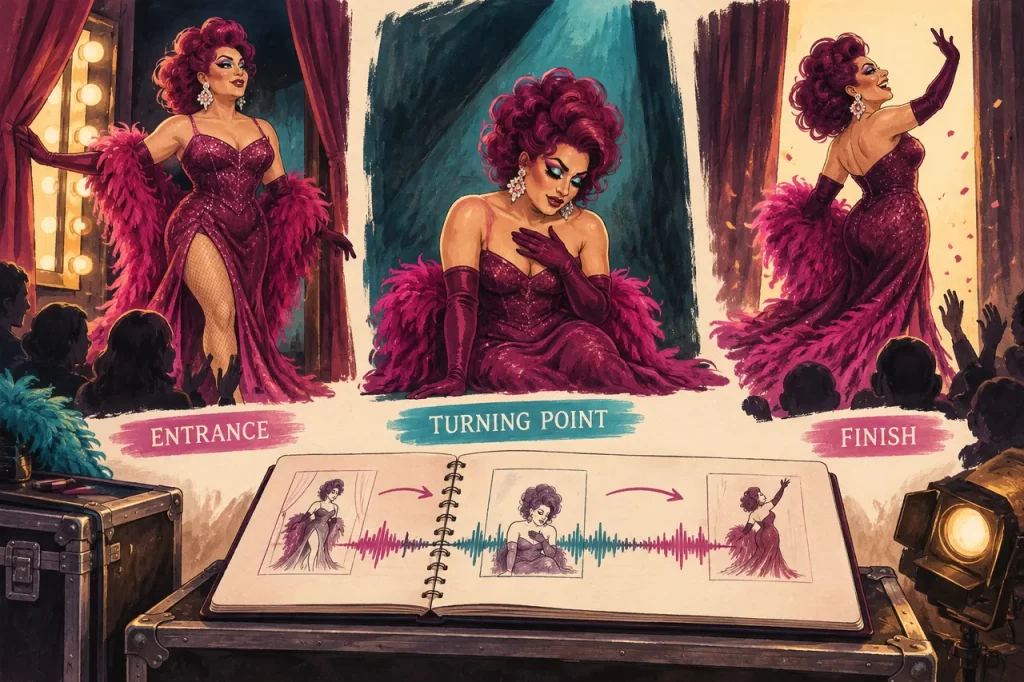
You do not need a spectacular reveal to make a lip-sync number worth watching. You need a recording you can perform clearly, a reason for the number to change, and a finish that looks chosen rather than abandoned when the audio ends.
Start by building a small act you can repeat. Learn a short section, decide what your character wants, place two or three visible changes, then test the whole number in the space and footwear it will actually use. Add complexity only when the simple version communicates.
This guide is for planning that number, not for learning risky tricks. A grounded, precise performance is a complete option. For the wider process of preparing for a show, keep the drag artist’s handbook nearby.
Choose a recording you can actually play
Loving a track and having an act for it are different things. Listen once without planning choreography. What happens emotionally? Is the voice trying to persuade, accuse, celebrate, remember or escape? Does that intention change? A number with one clear turn can be easier to communicate than an elaborate mix that needs an explanation.
Next, check the recording rather than your memory of the song. Note the version, introduction, pauses, spoken interruptions and ending. A live recording may phrase a familiar line differently. An edit can remove the breath you were using as a movement cue.
Finally, match the track to the room. A quiet facial detail might work in a seated cabaret and disappear on a distant platform. An entrance that needs a long aisle is not portable to every venue. Choose a version that fits the actual set-length brief, including your opening and finish.

Try this: write one sentence beginning, “In this number, my character tries to…” If you can only name a mood, choose an action within it. “Looks glamorous” is a description; “tries to persuade someone to stay” gives you something to play.
Learn the recorded phrasing, not just the words
Break the track into short sections. Listen for the start and release of each phrase, where a word is stretched, and where the performer says nothing. Practise slowly enough to notice what your mouth is doing. Do not force a larger expression into every syllable; an accent, delivery or character may call for a different choice.
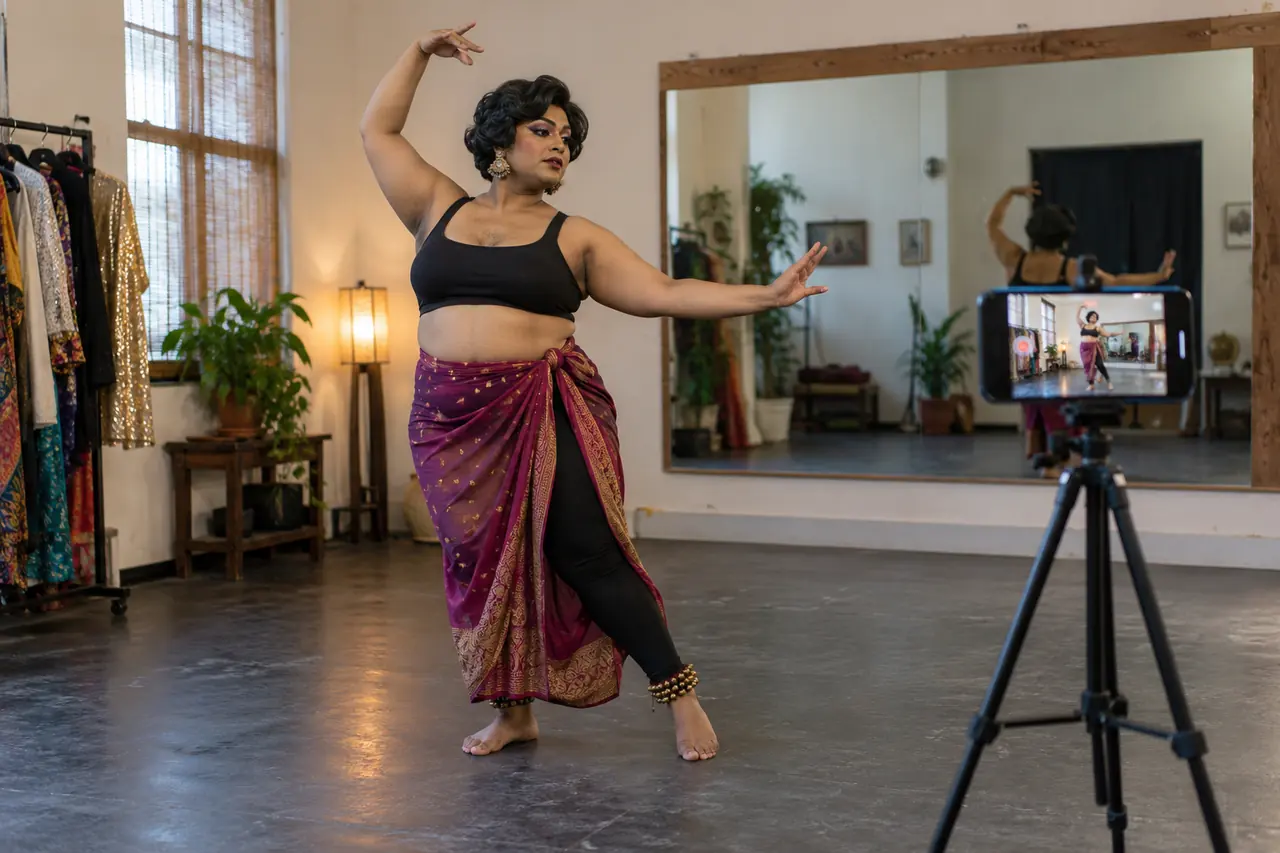
Film a close rehearsal pass for your own review. Check one difficult phrase rather than judging your entire face. Are you beginning a word after the recorded sound has already happened? Do you keep moving your mouth through a pause? Have you substituted the version you know for the one you are using?
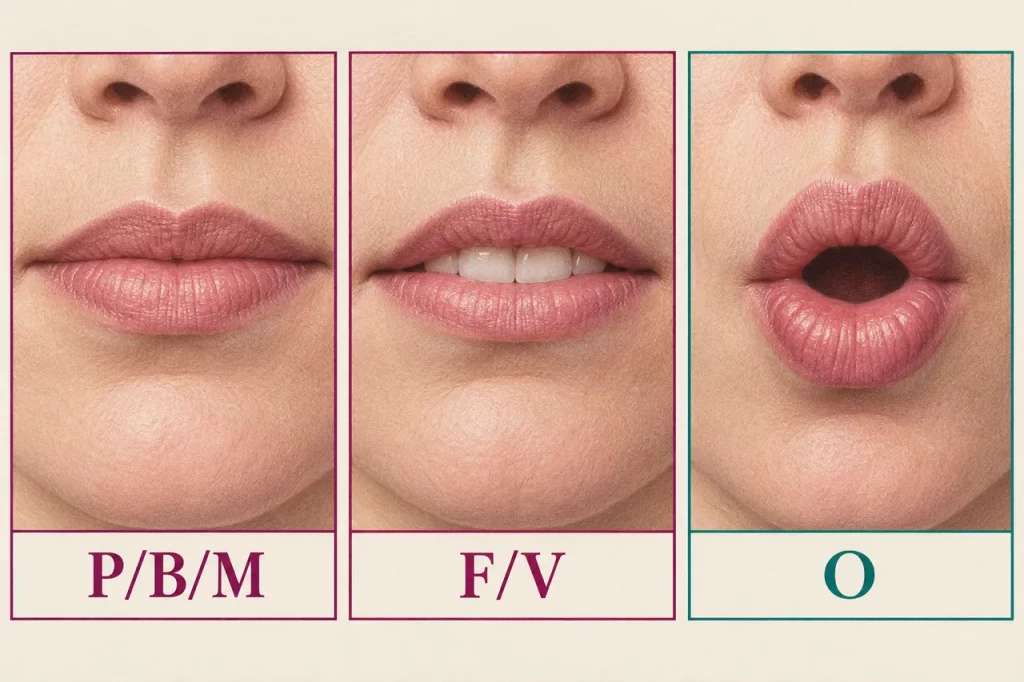
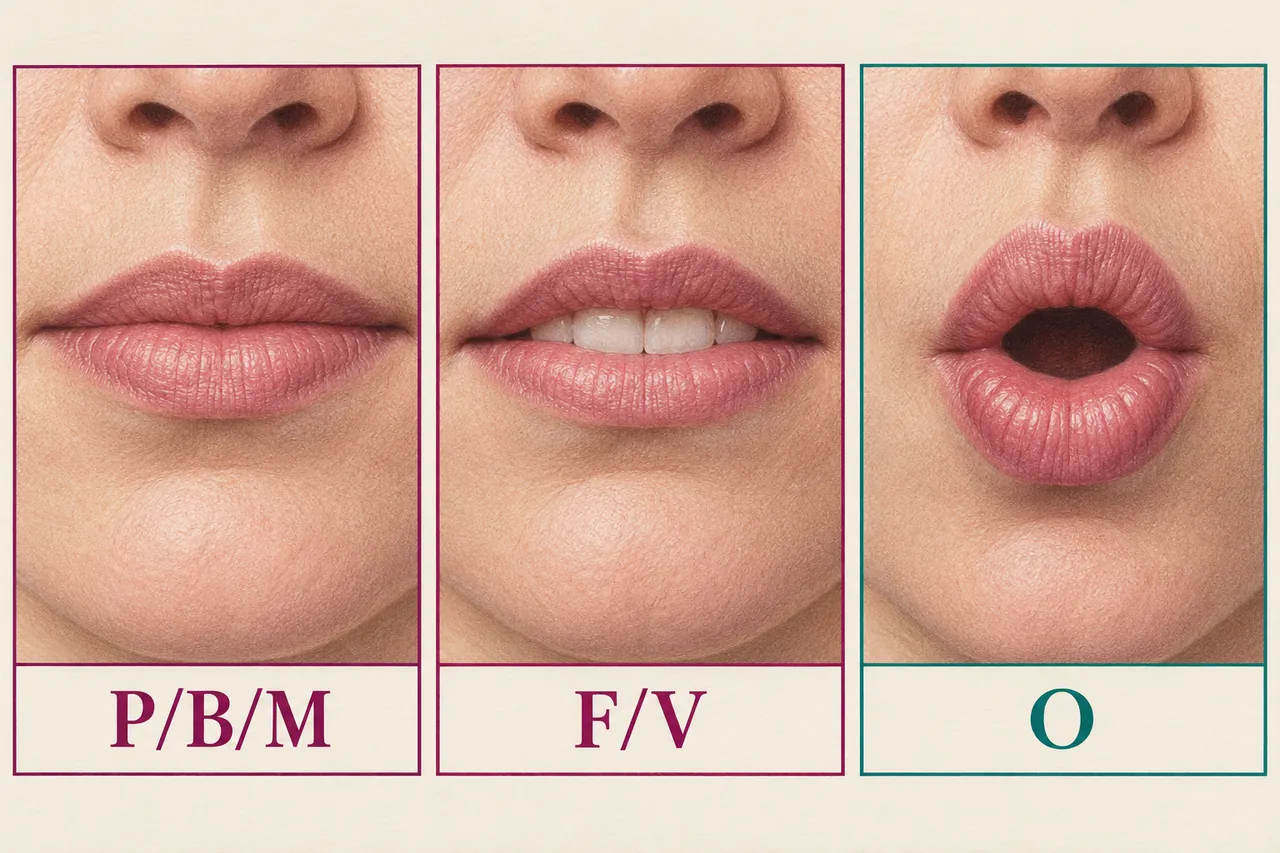
The mouth study below is a way to notice differences, not a universal pronunciation chart. A brief closed-lip moment and a rounded vowel are visibly different. Match what you hear and what you can comfortably make legible; do not exaggerate until the face loses the character.
When one section fails, isolate it. Repeat the lead-in, phrase and release together. Starting exactly on the troublesome word can hide the timing problem that happens just before it. Return to the complete track once the small section feels reliable.
Find the pulse without forcing everything into counts
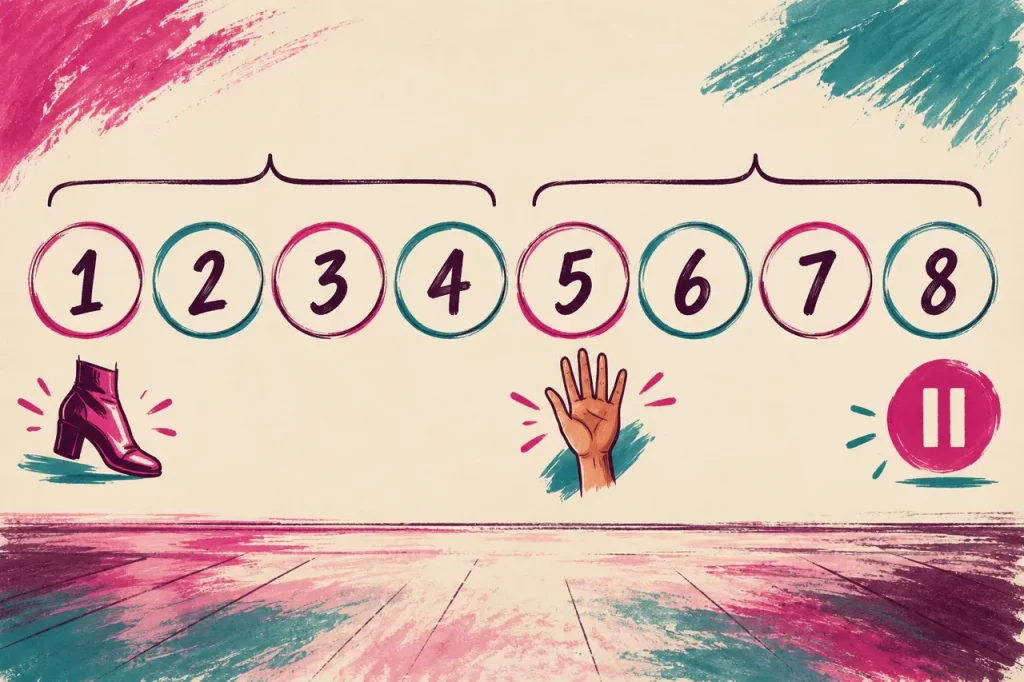
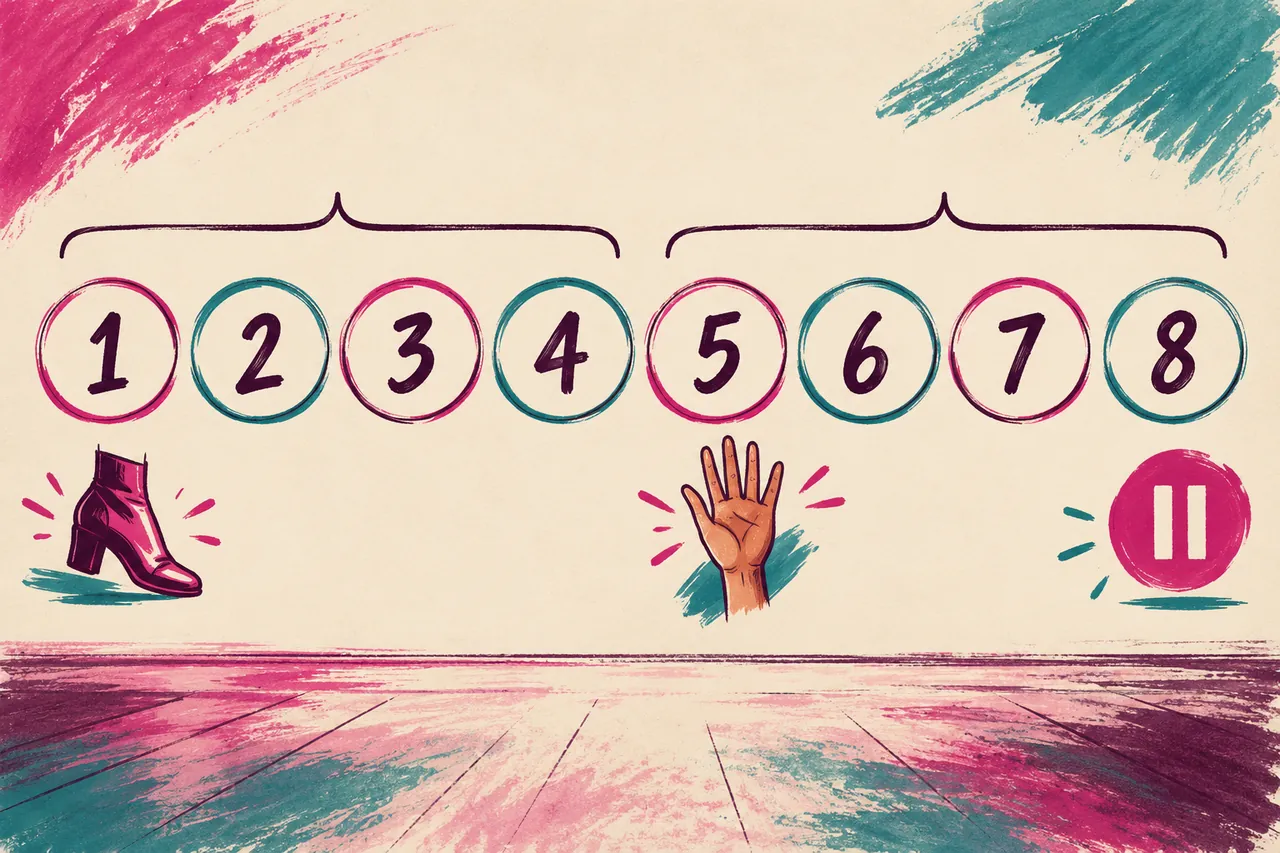
For a passage with a clear four-beat pulse, an eight-count can help organise rehearsal: two groups of four, with a small action attached to a chosen point. It is a practice tool, not a rule that every piece of music follows. Spoken word, tempo changes, pauses and irregular phrases may need different cues.
Mark a few landmarks you can hear: the first strong beat, a sudden silence, a change in instrumentation, a clear spoken entrance. Those landmarks are often more useful than trying to remember a long chain of numbers while performing.
Begin with one action on the first count, another on the fifth and a settled finish. The point is to learn how an action lands, not to fill all eight positions. If the count makes you miss a vocal detail, return to listening.
| Rehearsal problem | A useful cue to test |
|---|---|
| You begin the entrance too early | A specific sound immediately before the entrance |
| A gesture arrives after its musical accent | The preparation for the gesture, not only its endpoint |
| You lose track during a pause | A clear still position and a known re-entry sound |
| Counting takes over your expression | Fewer counted actions; more audible landmarks |
Give movement one job at a time
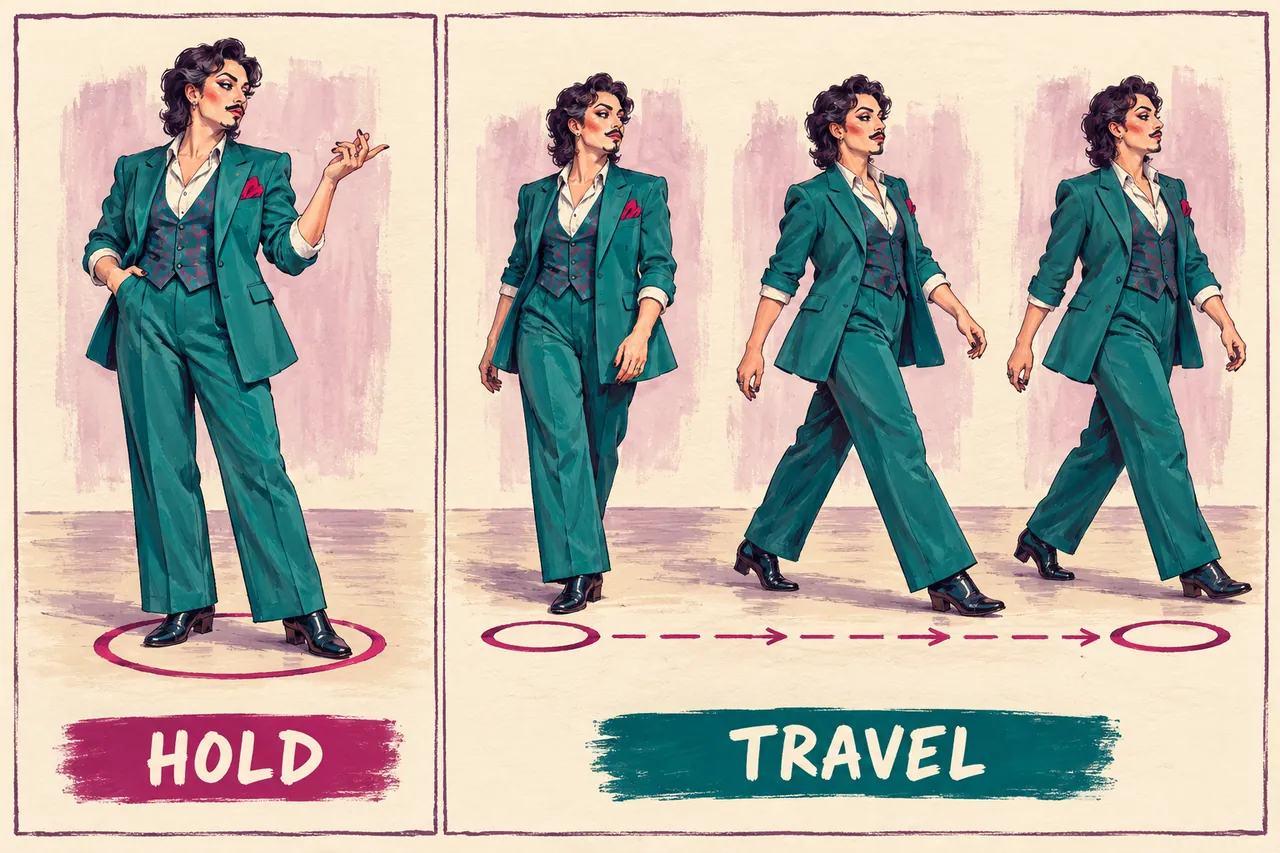
Movement can change distance, show a decision, direct attention or prepare a prop. It does not have to do all four at once. Pick one short phrase and perform it while staying on a floor mark. Repeat it with one controlled walk. Which version makes the intention easier to read?
Constant travel can make a small stage feel busy without making the story clearer. Stillness can give a detailed lip-sync or a tiny change of expression somewhere to land. Equally, a deliberate move towards or away from the audience can say something a hand gesture cannot.
Plan where you stop as carefully as where you go. Rehearse the route with enough space for the actual costume. A wide sleeve, train or case placed at the edge of a room changes the usable area. Ask the venue about the real playing space rather than estimating it from a promotional photograph.
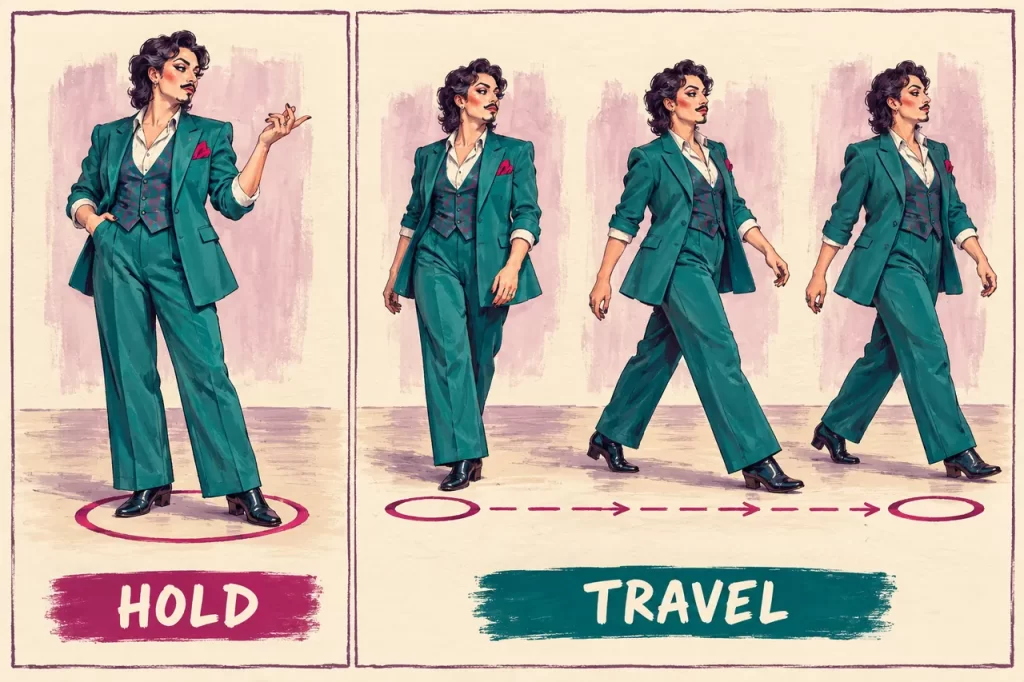
Try this: remove half your gestures from one phrase. Keep only the ones that change what the audience understands. If the phrase becomes clearer, you have discovered an editing choice, not failed to do enough.
Build an entrance, a turning point and an ending
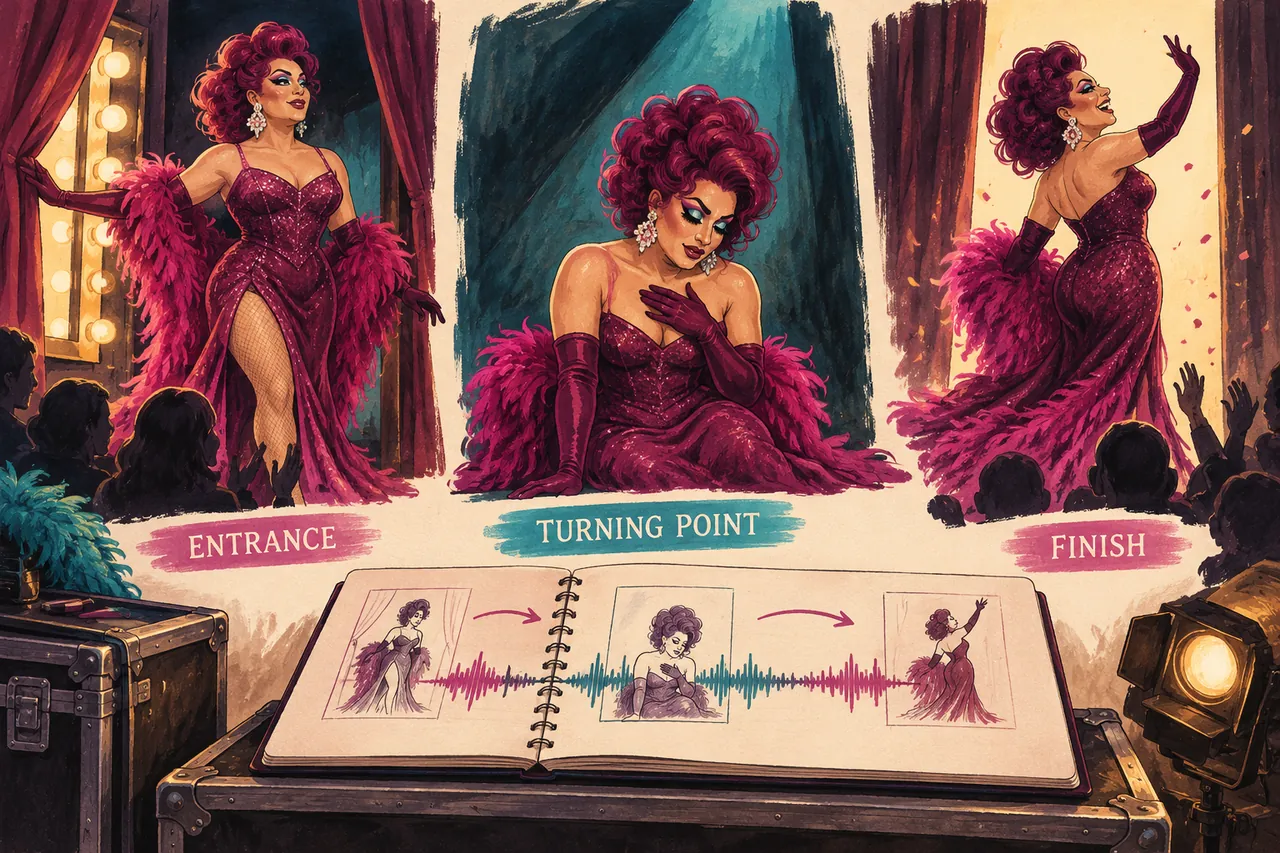
An audience should not need a biography to follow the number. Give them a readable starting situation. Then make one choice change: the character realises something, switches tactics, loses composure or decides to stop asking for approval. Let the finish show where that leaves them.
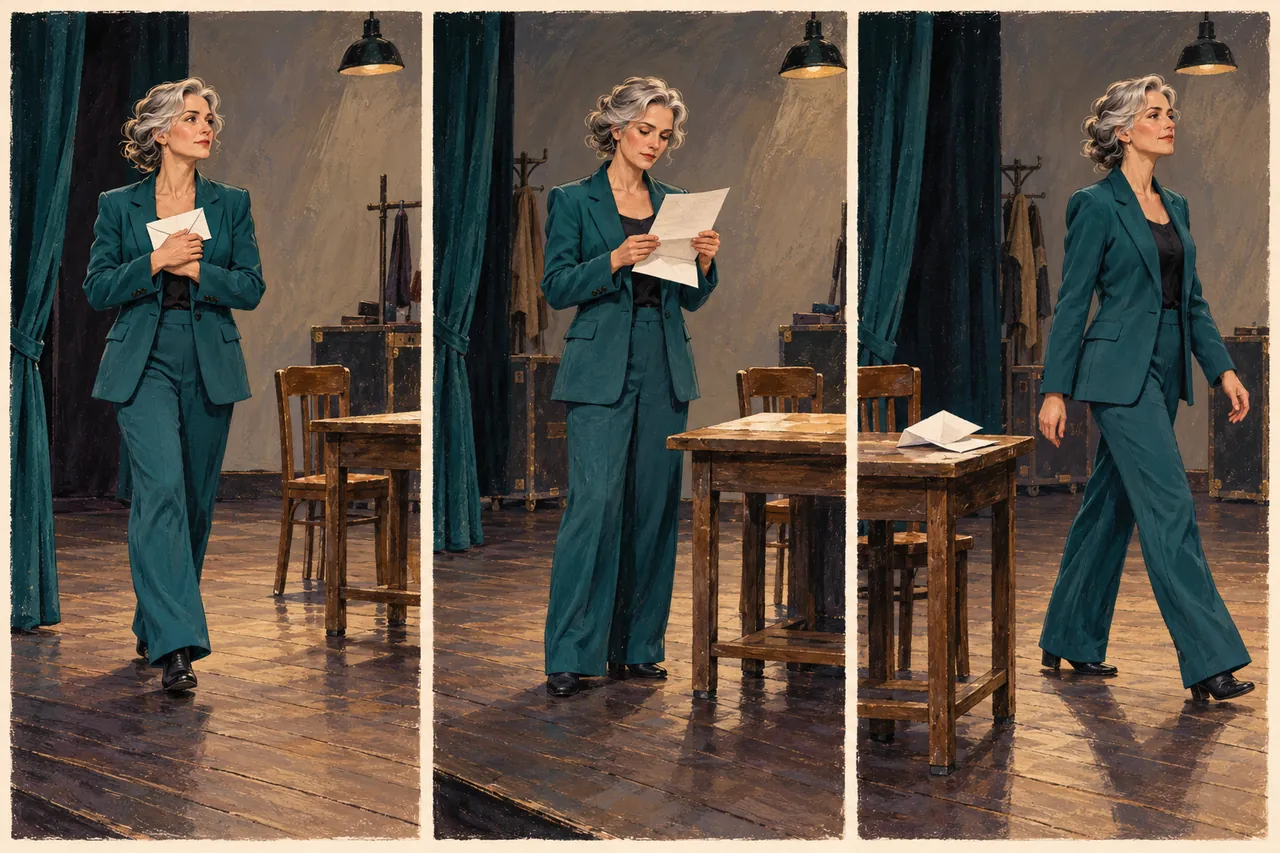
For an entirely invented rehearsal example, imagine a character carrying an unopened letter. The entrance protects it. The turning point is the decision to open it. The ending is the character putting it down and leaving without it. None of those actions needs an expensive reveal, and the same prop has a job throughout.
The idea is not automatically a good act. Test whether the action remains visible from the back of the room, whether opening the prop works reliably, and whether you can complete it without sacrificing the lip-sync. If the letter needs three paragraphs of explanation, simplify the choice.
Recent posts
The latest stories and guides from DragSale.


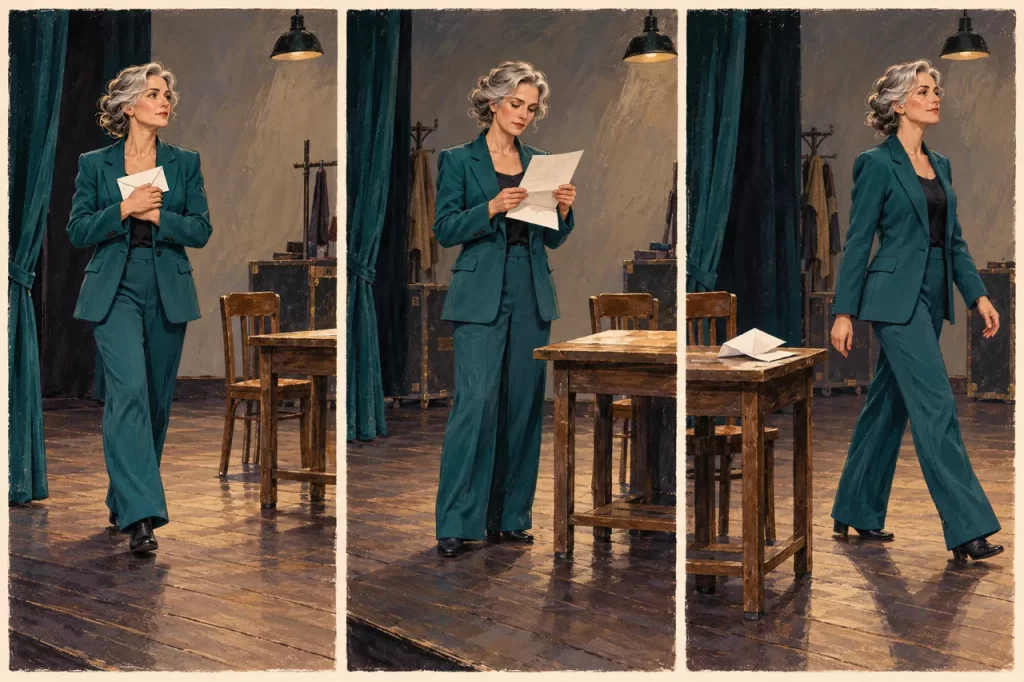
Write a three-line plan: what the audience sees first, what changes, and the final image. Keep that plan short enough to remember backstage. A second surprise should earn its place by sharpening the first idea, not merely extending the number.
Record a complete run that lets you see the problem
Use a fixed camera position with your whole body and planned route in frame. A close-up is useful for phrasing; it cannot tell you whether your exit drifts out of the playing area. Check that the beginning and ending are recorded, not only the section you already enjoy performing.
Review one question at a time. First watch for timing. Then watch without sound for the visible story. Finally, listen without watching to check whether your planned cues really exist in the audio. These are different checks; do not expect one replay to answer everything.
If asking someone for feedback, make the question specific: “At what moment did the character change their mind?” is more useful than “Was it good?” Describe a rehearsal as a rehearsal if you later use a clip to demonstrate your act. Do not present it as footage from a booked show.
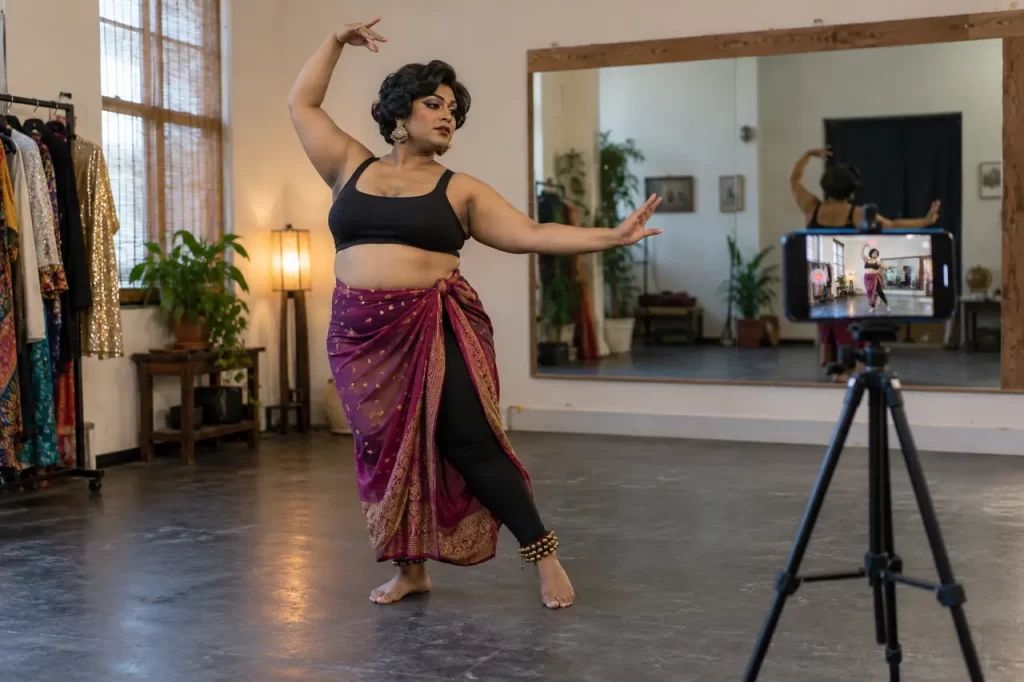
Keep a short note after each run: one thing to retain, one thing to change and the next test. Avoid rebuilding the whole act after every imperfect attempt. You need a stable version long enough to learn what an adjustment actually does.
Prepare the audio handoff before show day
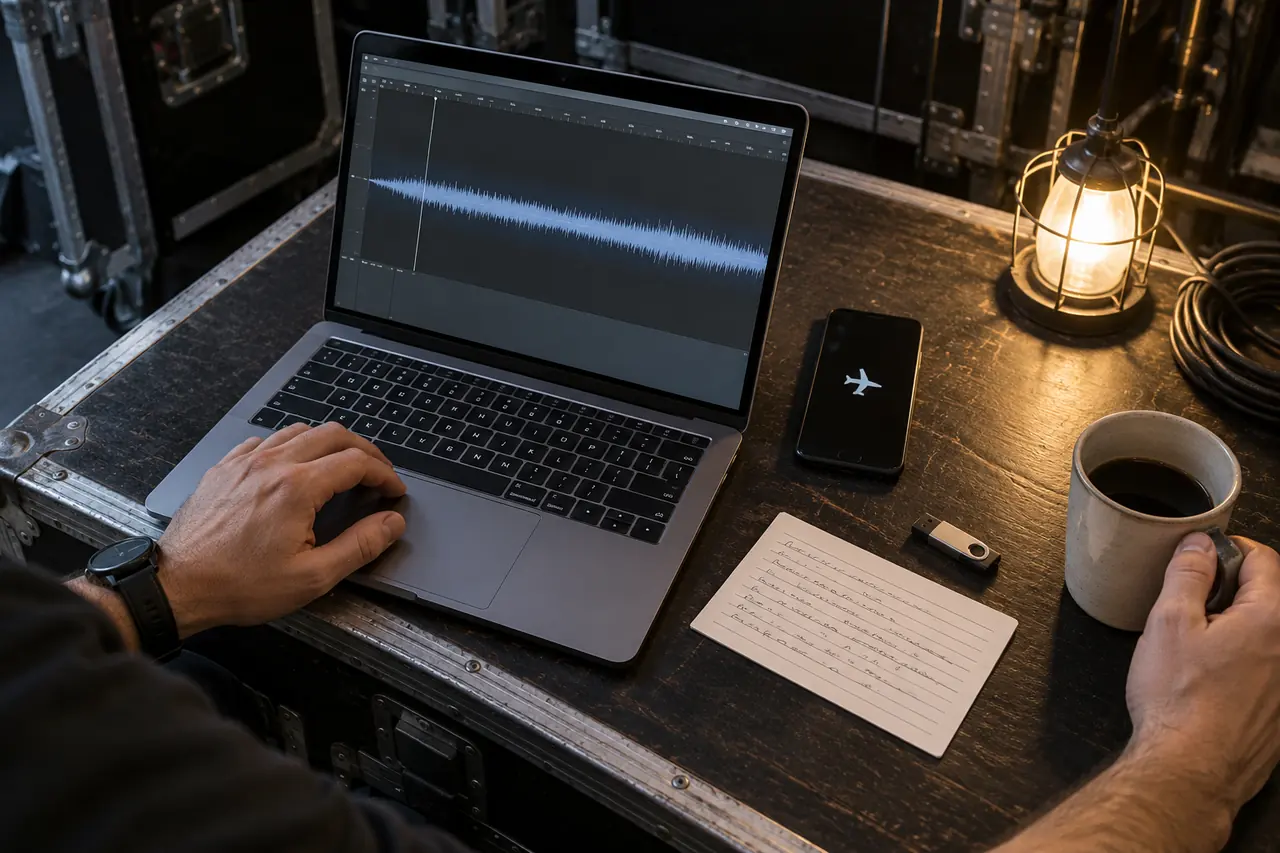
Ask the person running sound how they want the file delivered, what format they accept, and when they need it. Do not assume a streaming link, a phone, a USB drive or a file type is suitable just because it worked in another room. Keep a local backup in a format the venue has agreed to use.
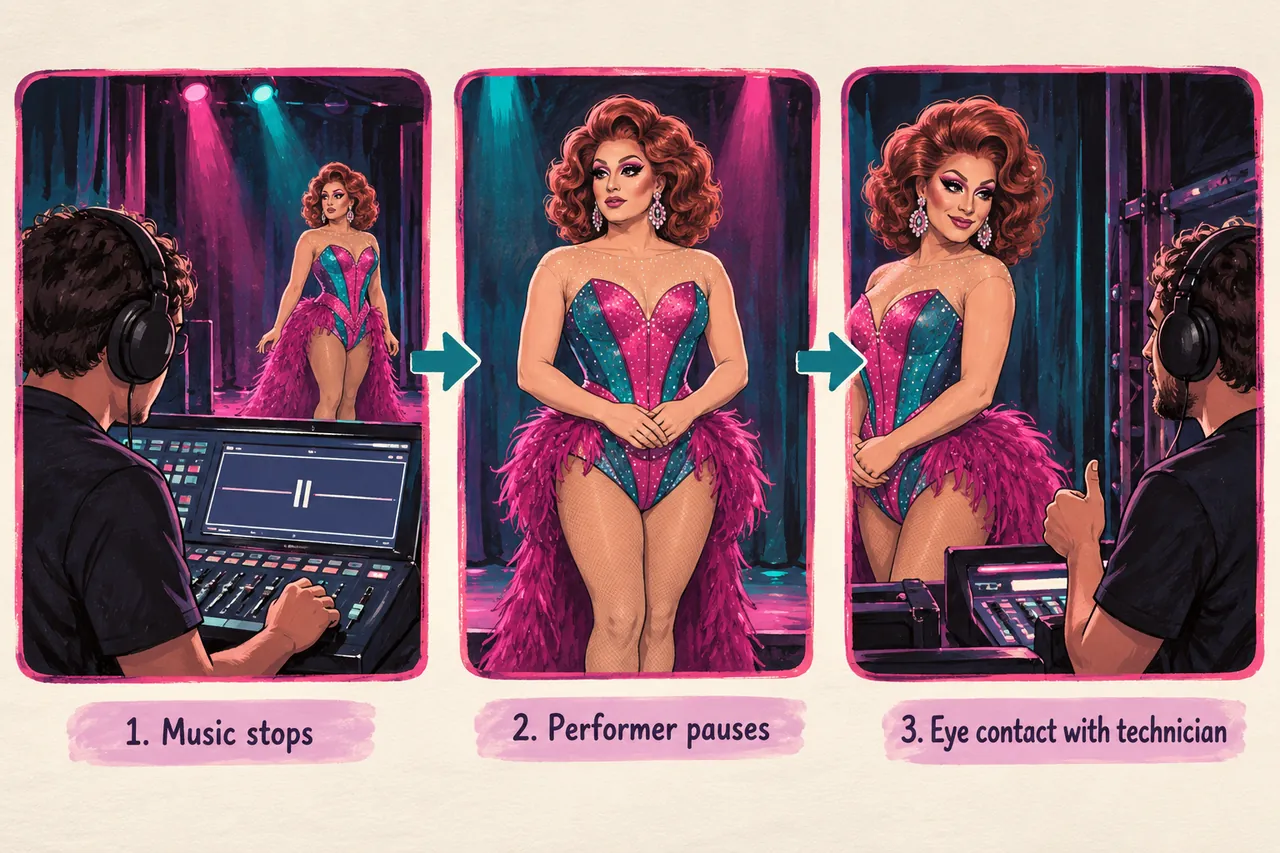
Use a filename that identifies you and the correct version. Tell the operator what starts the number, whether the track contains an intentional silence, and how it ends. A cue such as “start when I am settled on the mark and give a clear nod” is more usable than a note saying “you’ll know.” Agree the actual cue together.
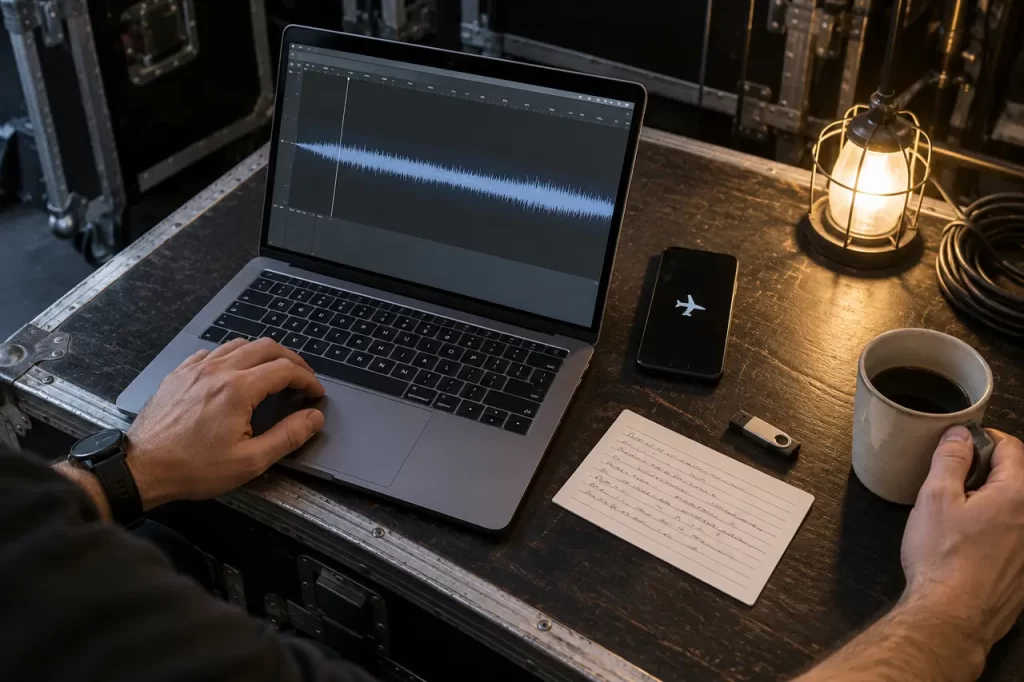
Keep the message brief and the file unambiguous. If you change the edit after sending it, identify the replacement and ask for confirmation that the old version is no longer the show file. A neat folder is useful only if everyone knows which item it contains.
Venue music arrangements and permission to publish footage are separate questions. Check the applicable arrangements with the venue and relevant rights holders; do not assume that being allowed to perform a track also gives you permission to post any recording of it.
Test the costume, shoes and prop together
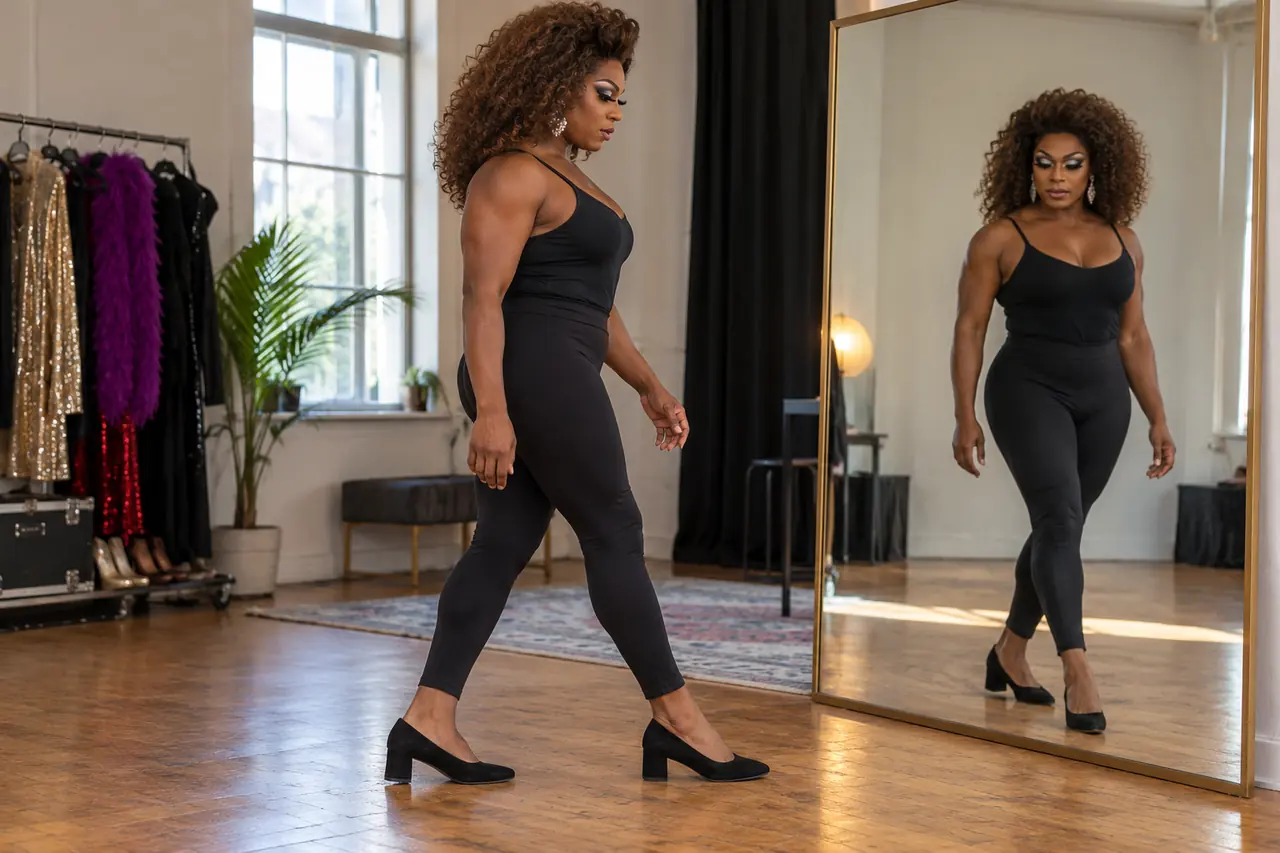
Do a complete run with the items that alter your movement or timing. Footwear, sleeves, a headpiece and a prop can each change a simple turn or exit. Test on a suitable clear floor and stay within movements you can perform reliably. This guide does not teach drops, lifts or other tricks requiring separate instruction.
Decide where each prop starts, who moves it and where it goes afterwards. An object left on the floor becomes someone else’s problem during the next changeover. If the act needs help, confirm that help explicitly rather than assuming a host or technician will improvise it.
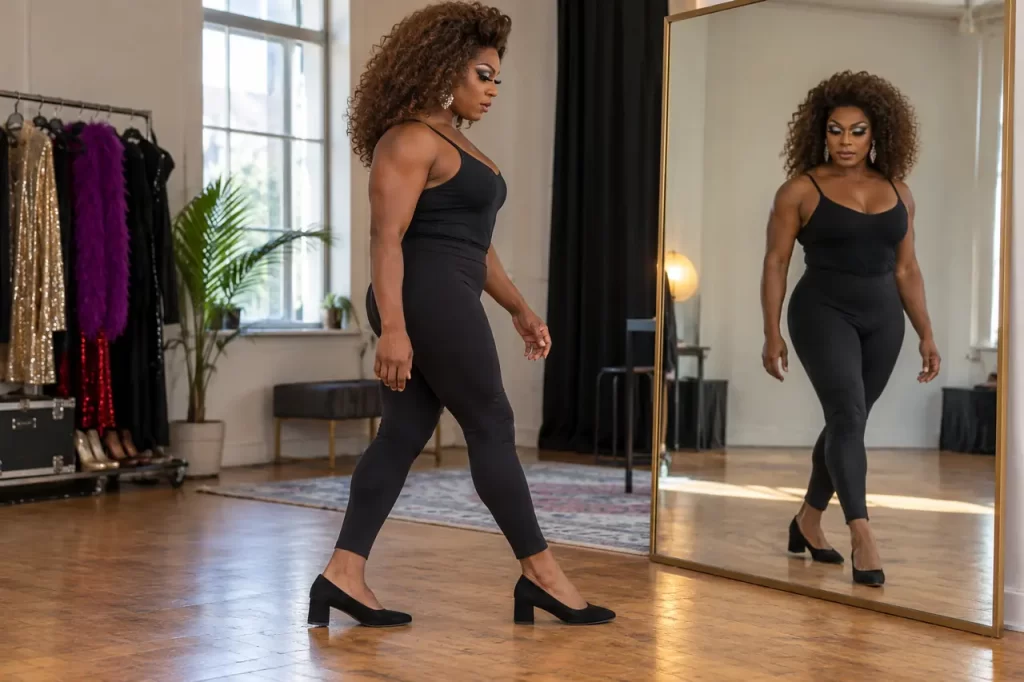
If a costume element prevents you seeing, breathing comfortably or completing the route, change the design or the movement. The aim is a playable act. You do not owe the number a more difficult version merely because the idea looked exciting in your notebook.
Rehearse recovery as well as success
Ask what happens if the file does not start, stops or begins at the wrong point. Agree how you will signal a problem and whether the operator should restart, pause for instruction or wait for the host. Different rooms handle interruptions differently.
Practise returning to a composed neutral position. You do not need to invent a joke every time something fails. A calm pause and a clear technical check can be more effective than speaking over the problem or trying to continue a number whose cues have disappeared.
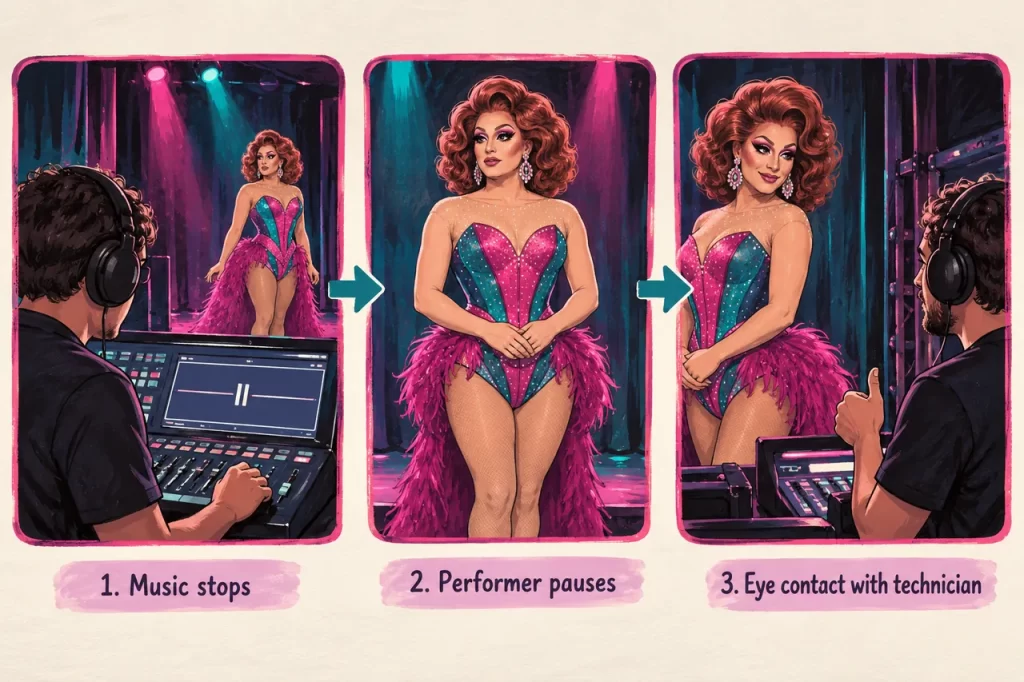
Before leaving rehearsal, check six things: the correct audio version, a visible starting position, one readable change, a chosen finish, a workable prop reset and an agreed technical recovery. That is a useful complete number to build on.
Do I have to dance throughout a lip-sync?
No. Movement is one tool. Timing, focus, character and stillness can carry a number. Choose actions that work for your body and the room instead of copying somebody else’s physical vocabulary.
How long should the number be?
Use the booking brief and the piece’s actual structure. Shortening a track is not just cutting seconds: preserve the cues and ending your act needs, and check that you can use the resulting recording in the intended setting.
What if I keep forgetting one phrase?
Check the exact recording, practise the phrase with its lead-in, and film a short pass. If the phrase still consumes all your attention, choose a different edit or track rather than letting it control the whole act.
A useful next step
Choose one phrase today and test it in two versions: still and travelling. Record both from the same position. Keep the one that communicates your character’s intention more clearly. Then return to the full number with one precise improvement, not ten new ideas.
For practical booking context, read finding drag opportunities. For the money and travel behind the slot, use the performance budgeting guide.
Sources and scope
The exercises and invented act example are DragSale editorial suggestions, not a standard syllabus or a promise of a booking. For a professional reference on clarifying a live engagement, see Equity’s one-off live-performance guidance. It is UK-specific; arrangements elsewhere differ. All generated teaching scenes are illustrative, not photographs of documented shows.
Find your next guide
A useful answer to the next question.


Recent posts
The latest stories and guides from DragSale.