
Performance · The DragSale journal
Stage Presence for Drag Artists: Make Your Choices Read Across the Room
You do not have to fill every beat with movement. Make the audience understand what you are doing, where you are looking and why the moment matters.

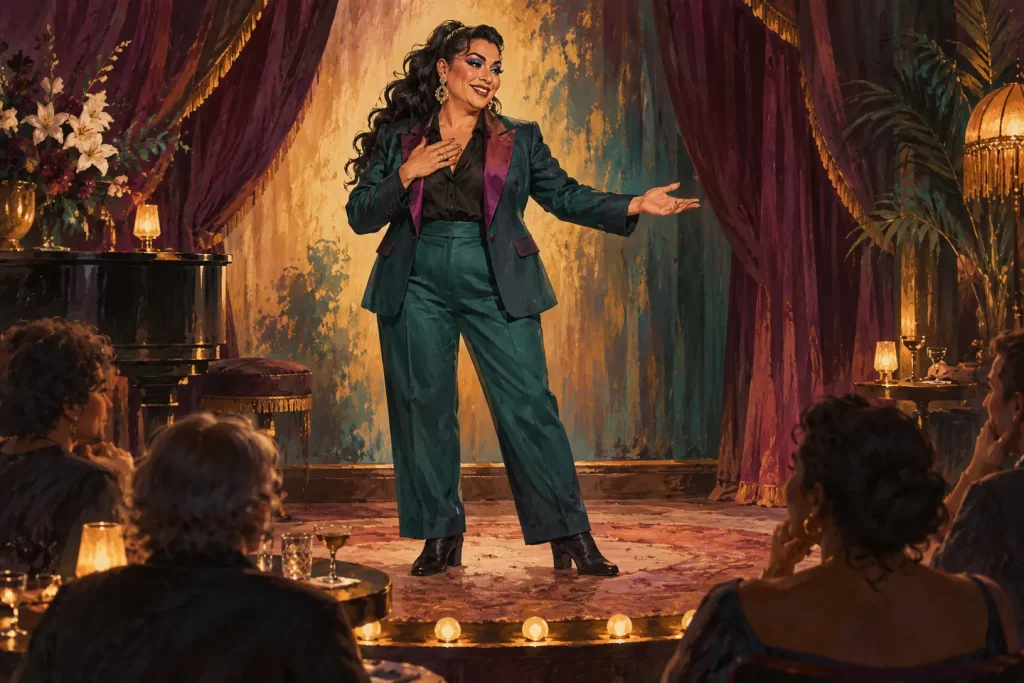
Stage presence is not a demand to be louder, move faster or look fearless for every second of an act. It is the way your choices make sense to the people watching. Where are you looking? What are you doing with the moment? What does the audience understand when you change?
A quiet character can hold attention. A small gesture can have a clear intention. A performer with limited movement can make purposeful use of focus, timing and expression. The useful question is not whether you look like somebody else’s idea of a star, but whether the room can follow what you are offering.
Use the short exercises below to test one part of that communication at a time. They are rehearsal tools, not rules about the only acceptable drag body, personality or style.
Make the moment readable before making it bigger
Choose a small part of your act: an entrance, a line, a musical change or the last image. Describe what is happening in plain language. “I am trying to look unbothered, but I am clearly furious” gives you more to play than “I need more energy.”
Run the moment once and ask what the audience could actually see. Your intention may feel very strong internally while the outward choice is difficult to read. The next step is not automatically a huge gesture. You might need a clearer eyeline, a more deliberate pause, a less cluttered action or a different position.
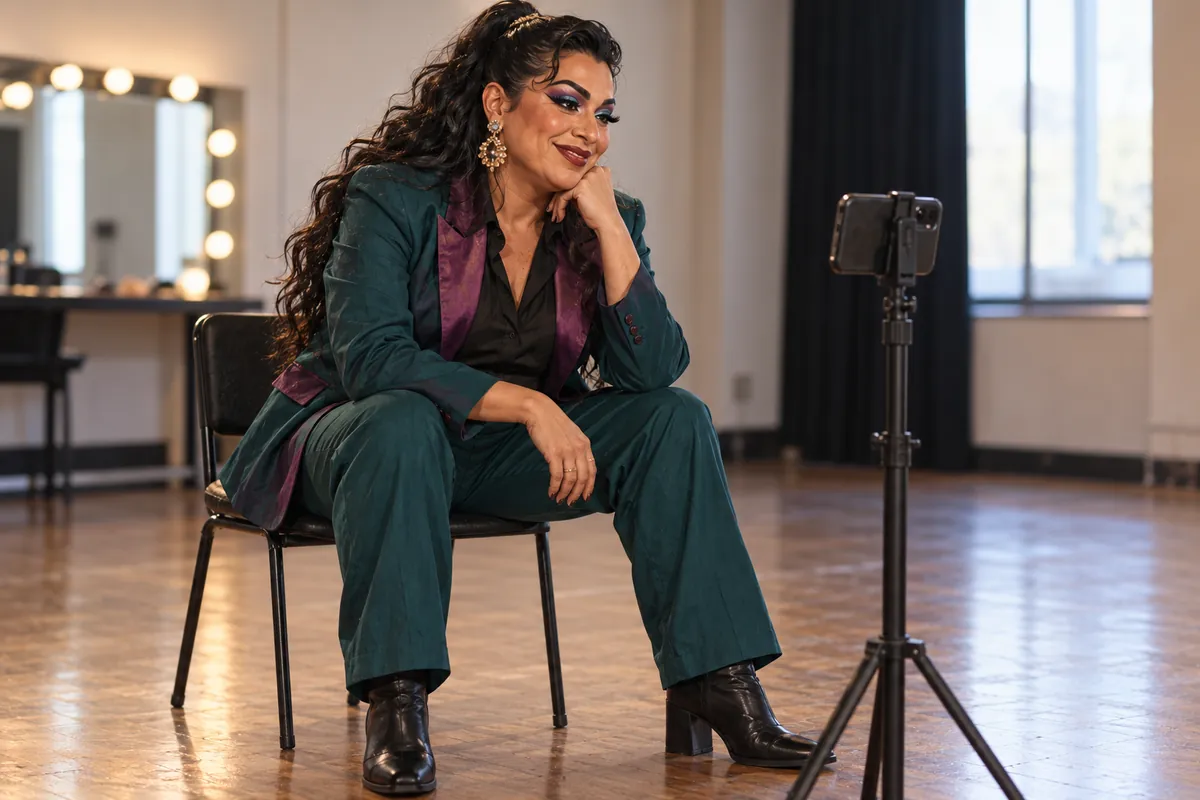
Distance matters. Review a full-body rehearsal recording from roughly the kind of viewing distance you can reasonably reproduce. Then look closer if facial detail is the issue. A close-up can flatter a small expression while hiding an unclear posture or a confusing sequence of actions.
For the wider act—including the track, costume and venue arrangements—start with the performance collection and the artist’s handbook. This guide stays with presence and audience communication rather than repeating the whole production plan.
Practise stillness as a decision
Stillness is useful when it belongs to the character or moment. It is not useful merely because someone told you that confident people stand in a particular pose. Choose a position you can use comfortably and sustainably, then give it a reason.
Try a short entrance exercise:
- Enter the rehearsal area using a route appropriate to your space.
- Arrive at a chosen point and let yourself see an imagined audience.
- Hold the situation long enough to complete one clear thought or musical idea.
- Make the next action because something changes—not because standing still starts to feel embarrassing.
Repeat it with a different intention. Perhaps the character expects admiration, is hiding a mistake, or has just noticed someone surprising. Keep the physical scale manageable and notice how the meaning can change without adding several moves.
If holding still is not physically suitable for you, adapt the exercise. The aim is a readable, intentional moment, not the absence of all movement. A seated performance, a supported stance or a small repeated action can carry the same rehearsal question: is the audience getting a clear choice rather than a stream of unrelated adjustments?

Give your focus a destination
Focus can disappear when you spend the act checking the floor, searching for approval from one friend or following every small movement in the room. Decide where your attention belongs within the number.
One rehearsal method is to imagine several audience areas rather than a single blank wall. Direct a specific moment toward one area, then change when the act gives you a reason. This is not an instruction to sweep left, centre and right on a fixed timer. The focus should still serve the character and material.
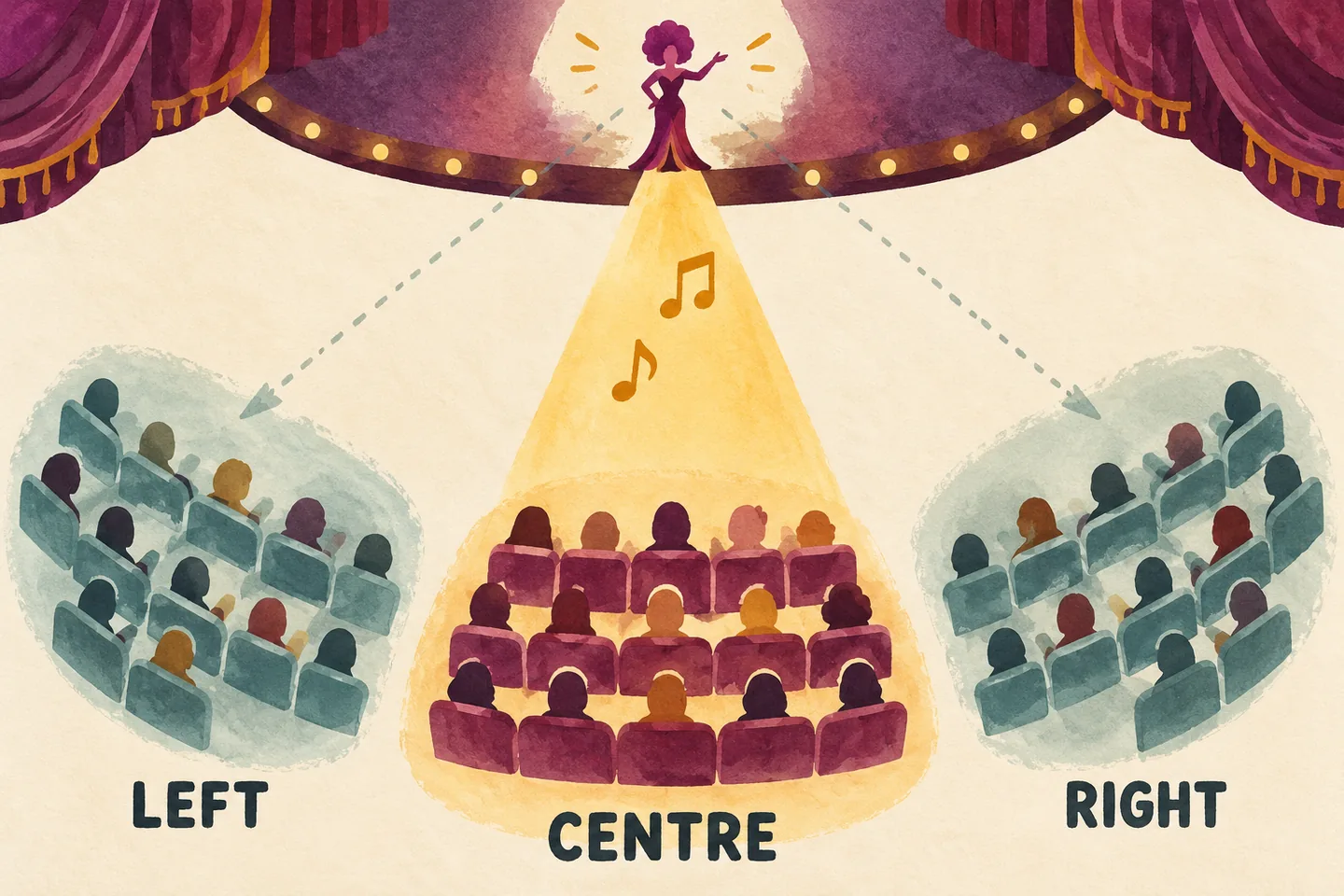
Try this: Run the same short moment twice: once while looking around continuously, then once with a chosen destination. Ask which version makes your intention easier to follow.
Compare these two versions of the same moment. In one, you look around continuously because you feel you should acknowledge everybody. In the other, you finish one thought toward one area before choosing the next. Notice which version makes the action easier to understand. You are testing clarity, not proving that one eyeline pattern works in every room.
You do not need to stare directly at an individual to create connection. The size of the room, lighting, audience comfort and style of the act all affect the choice. Respect boundaries and the venue’s arrangements; audience participation is not the same thing as permission to touch someone or put them on the spot.
In a very intimate space, a smaller expression may read easily. In a larger room, your position, shape and timing may need to carry more of the intention. Try changing one element rather than simply making everything larger.

Choose gestures that mean something
A gesture earns its place when it communicates a thought, character relationship or change. Repeated pointing, hair touching or random arm movement can become a habit that sits on top of the number without helping it.
Take one short phrase or musical section and choose a single action. You might offer something, dismiss something, conceal something or wait for a response. Those verbs give the movement a job. They do not require the same gesture from every performer.
Run the section with the action, then without it. If the meaning becomes clearer without the movement, keep investigating. You may need less action, a different gesture, or a clearer reason for it. If the movement helps, practise how it begins and ends rather than treating the final pose as the whole event.
Notice what the rest of your body is doing while the main action happens. A shoulder adjustment, a search for a costume piece or a glance at your feet can compete with a small deliberate gesture. Some of those actions may be necessary. Rehearse them so they do not arrive as an unrelated surprise.
Recent posts
The latest stories and guides from DragSale.


Your outfit affects what reads. A sleeve can hide a hand; a strong silhouette can make a smaller movement legible. Check with the actual garment or a suitable rehearsal equivalent, and use the performance outfit guide when fit and movement are part of the problem.

Build contrast instead of adding constant energy
If every moment is the biggest one, the audience has fewer clues about what matters. Contrast can come from scale, speed, focus, position or the relationship between the character and the music. It does not have to mean an expensive reveal.
Try one short section in three versions: an intentionally contained version, a more outward version, and a version that changes between the two at a meaningful point. Keep the work within movements you can comfortably perform in a suitable space. Then ask which version serves the idea rather than which version uses the most effort.
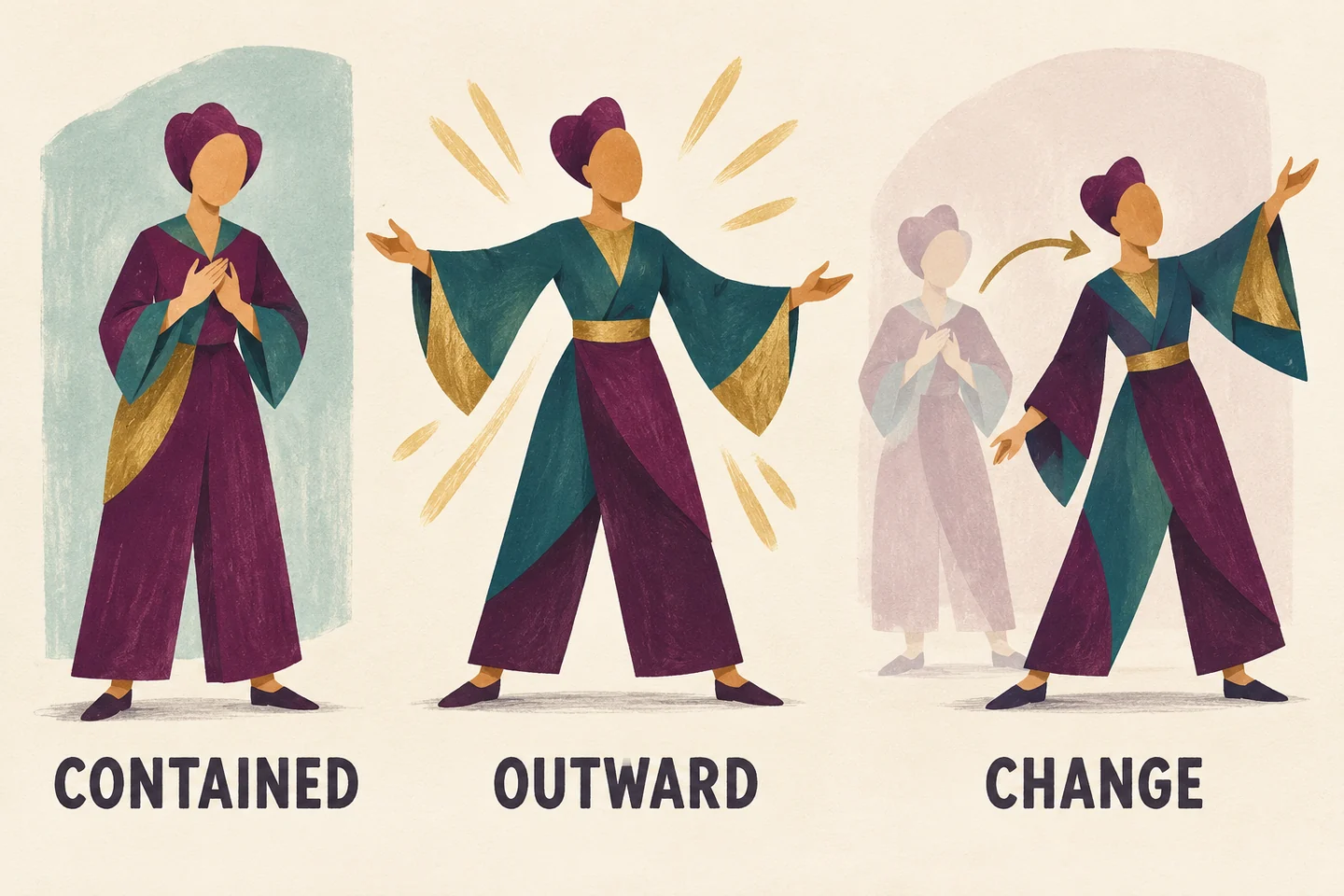
Try this: Record those three versions from a useful viewing distance. Keep one choice that reads clearly, and remove one extra movement that competes with it.
A held reaction before a change can give the next action more meaning. A return to stillness can let a joke or feeling land. Equally, a character may deliberately sustain a particular quality. The test is whether that sustained choice remains specific, not whether your act obeys a universal pattern of peaks.
Timing is part of the choice. If you rush away from the moment you most want the audience to notice, adding another gesture is unlikely to solve the problem. Practise finishing the thought before beginning the next one.
Review a recording with one question at a time
A recording is useful when it turns into a practical note. It becomes less useful when you watch the entire run repeatedly looking for reasons to dislike yourself. Choose a question before pressing play.
| Review pass | What to look for | A useful note |
|---|---|---|
| Focus | Where does your attention go at the important moments? | “Choose the next eyeline before turning away” |
| Gesture | Which actions help the meaning, and which appear habitual? | “Keep the offer; remove the extra pointing” |
| Timing | Do the changes and ending have room to read? | “Finish the final thought before the exit” |
| Shape/position | Can the important action be seen at this distance? | “Move the chair so the hand is not hidden” |
| Connection | Is the audience being included in a clear relationship? | “Complete the reaction toward the room, not the floor” |
Watch once without sound if you want to examine visual choices, then watch with the actual track to check how they relate to the material. Neither view is the complete performance on its own. A visual joke may depend on a sound cue; a gesture that looks unusual in isolation may make sense inside the character.
If someone is available to give feedback, ask a focused question. “What did you think I noticed here?” is more actionable than “Do I have stage presence?” Keep the feedback connected to the act’s intention so the conversation does not become a demand to adopt the other person’s performance style.
Choose one change for the next run and keep something that already works. You are developing an act, not trying to repair every habit in one session.
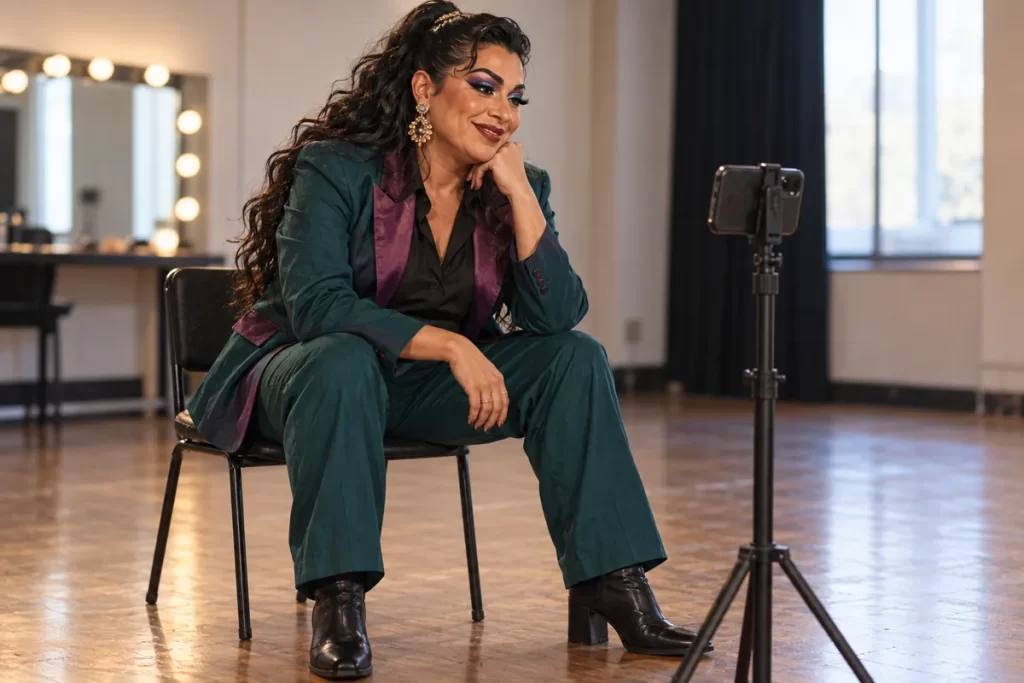
Adapt the communication to the actual room
Find out what the audience can see before assuming the rehearsal version will transfer unchanged. A floor-level bar area, a raised stage and a seated theatre have different sightlines and routes. Lighting can also change which facial details are visible.
Make practical adjustments with the organiser’s agreement. You may need a clearer position, a different prop angle or a smaller travel pattern. More movement is not automatically the answer, particularly if the usable area is narrow or shared. Confirm a suitable, clear performance space rather than treating the audience’s attention as a reason to ignore the physical setup.
For an act with unusual risks or specialist elements, seek the appropriate venue/professional guidance rather than copying an online image. Equity’s health-and-safety material is one professional starting point; it does not replace the requirements of your actual booking or location.
Stage-presence questions
Can I have stage presence if I am shy or quiet?
Yes. A deliberate quiet character, clear focus and meaningful timing can communicate without a loud offstage personality. Practise the decisions the audience can follow rather than trying to become a different person between performances.
Should I make eye contact with everybody?
No fixed pattern suits every act or venue. Direct attention intentionally around the room when appropriate, respect audience comfort, and let changes in focus serve the material rather than become a continuous scanning habit.
What is the quickest useful rehearsal exercise?
Choose one short entrance or musical moment. Give it a specific intention, arrive at a clear position, complete the thought, then make the next action for a reason. Record it from a useful distance if possible and review one question.
Does a bigger gesture always read better?
No. Scale matters, but so do clarity, timing, costume, position and the room. A larger version of an unclear choice can still be unclear. Test what the gesture is communicating before increasing it.
Further reading and rehearsal approach
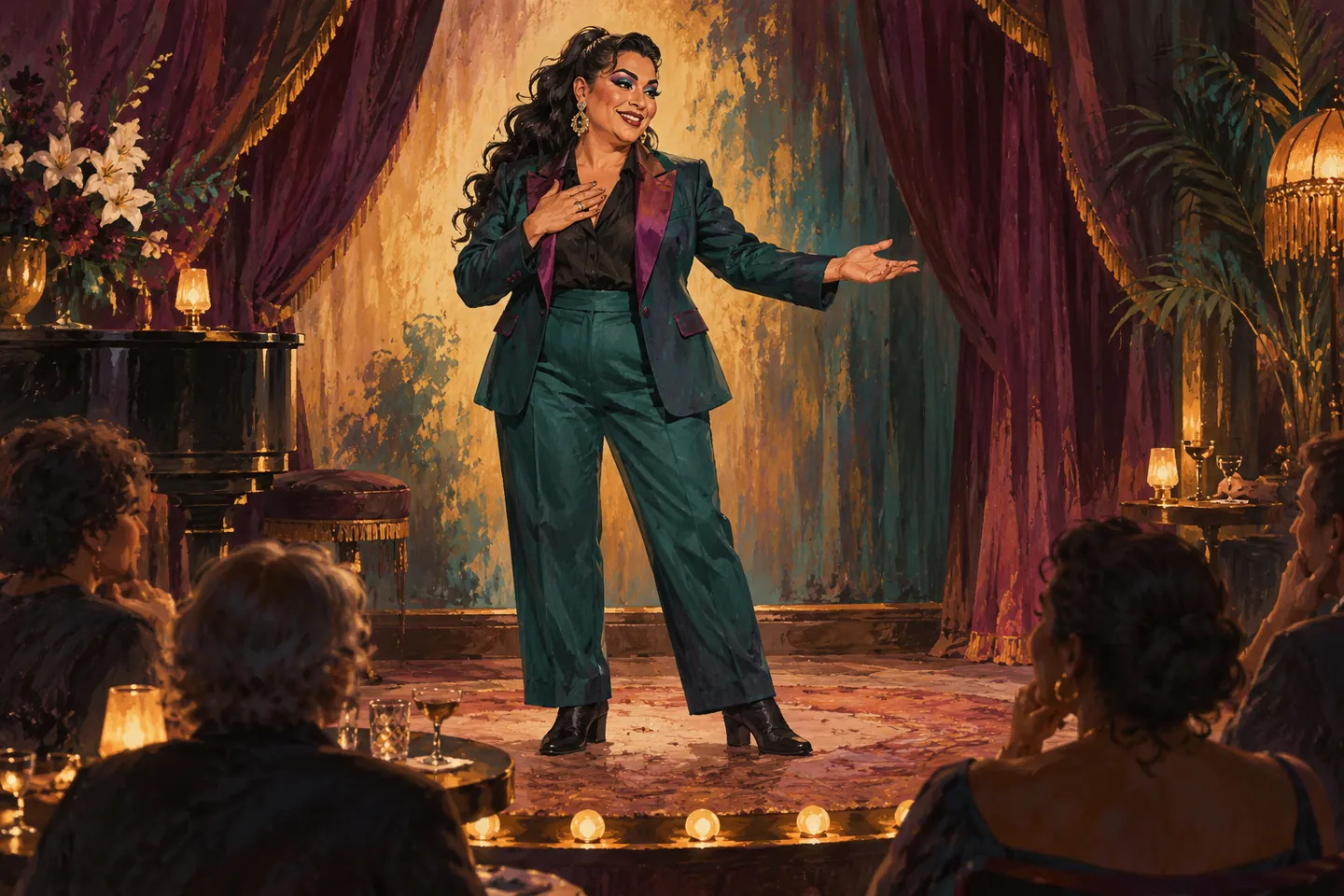
The exercises here are adaptable editorial practice suggestions, not a personal coaching programme or a guarantee of bookings. Berklee Online’s audience-engagement course provides formal educational context for intentional performance and reflective practice. Venue preparation is also informed by the linked Equity resources. Sources checked on 17 October 2026. Photographic-looking visuals are generated editorial scenes, not documentation of a real rehearsal or show.
Find your next guide
A useful answer to the next question.




Recent posts
The latest stories and guides from DragSale.