

Makeup · The DragSale journal
Best Foundation and Highlighting for Drag: Choose Your Base by the Job
Compare cream and liquid foundation options for drag, find your shade, separate matte highlight from shimmer, and test your base before an event.


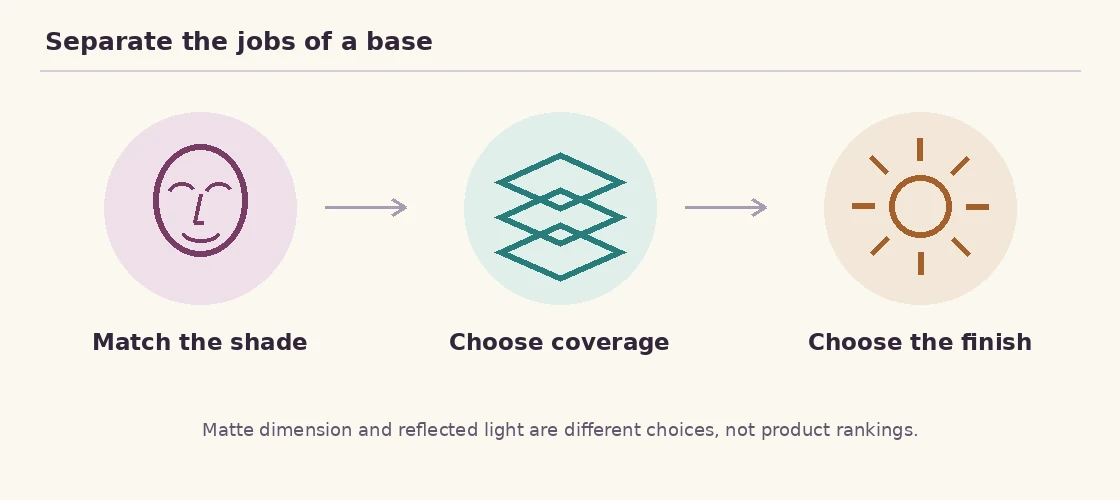
The best foundation for drag is not automatically the thickest one. It is the foundation that gives you the coverage you want, matches the skin you intend to show and stays workable when you add contour, powder and expression.
For an opaque cream-base approach, compare Kryolan TV Paint Stick and Mehron CreamBlend Stick. For a buildable liquid approach, consider MAKE UP FOR EVER HD Skin. For highlighting, separate matte brightness from reflective shine: a lighter compatible complexion shade shapes the face, while a product such as e.l.f. Halo Glow Highlight Beauty Wand adds glow. Those are different jobs, and buying one will not necessarily solve the other.
This is an editorial shortlist based on product format, manufacturer descriptions and practical application needs—not a hands-on laboratory test or a promise that one formula suits everyone. We do not rank products by invented wear scores. Prices, shades and stock vary by country; check the current local listing and ingredient label before buying.
Compare the shortlist by the job you need done
| Product | Why consider it | Main decision before buying |
|---|---|---|
| Kryolan TV Paint Stick | A full-coverage cream-stick route for a deliberately opaque base | Can you find a comfortable shade and control a dense layer? |
| Mehron CreamBlend Stick | A highly pigmented cream stick with a dedicated complexion-shade range | Does the local range include your depth and undertone? |
| MAKE UP FOR EVER HD Skin | A buildable liquid foundation described as medium-to-full coverage with a semi-matte finish | Do you prefer liquid application rather than a dense stick? |
| A lighter compatible complexion shade | Matte highlight that changes the apparent planes of the face | Is the undertone right, without becoming chalky? |
| e.l.f. Halo Glow Highlight Beauty Wand | A liquid reflective highlight for selected high points | Do you want shine rather than extra opaque coverage? |
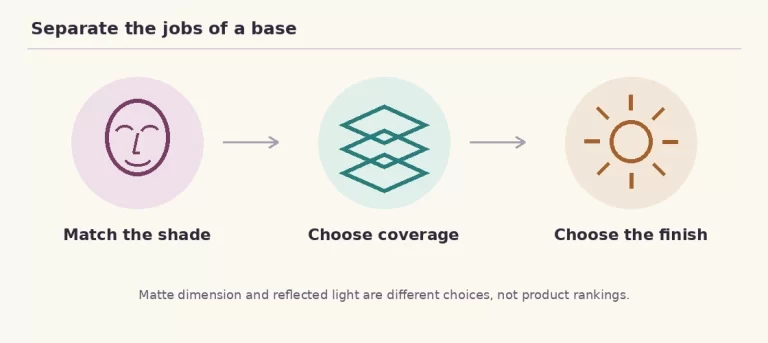
The first three are alternatives, not a shopping list. You do not need all of them. Start by deciding whether you want a dense cream canvas or a more adjustable liquid application, then narrow the choice by shade, comfort, local availability and the total cost of making it work.
For the complete order of application, use our beginner drag makeup guide. This article focuses on choosing and using the complexion products rather than repeating an entire face tutorial.
Kryolan TV Paint Stick: consider it for an opaque cream canvas
TV Paint Stick is Kryolan’s full-coverage foundation-stick option. Its cream format makes it a relevant candidate when you want to build a deliberately painted complexion and work with other cream products. That does not mean a thick all-over coat is required.
The practical advantage of a stick is controlled access to a concentrated product. Take a little onto a clean palette and work from there, or follow the manufacturer’s application directions for personal use. Spread a small amount over the areas that need evening, then add coverage selectively. This approach gives you more control than drawing heavy stripes across the whole face.
The trade-off is that a dense cream can become visibly heavy if you use foundation, concealer, cream highlight and contour at full strength in the same area. If you dislike feeling makeup on the skin, or you want only a light evening of colour, a dense stick may not be the easiest starting point. That is a format preference, not a criticism of your skill.
Before buying, check the current regional shade chart and, ideally, obtain a hygienic shade match or sample through an authorised seller. Do not choose a much lighter foundation simply because you intend to contour. The base should still have a clear relationship to your neck and exposed skin unless your design is intentionally a fantasy colour.
Mehron CreamBlend Stick: another cream route worth shade-matching
Mehron CreamBlend Stick in complexion shades is described by Mehron as highly pigmented, full-coverage cream makeup. The complexion range is the relevant place to start for a skin-tone base; do not confuse it with the separate bold-colour options when comparing shades.
This is worth considering if you prefer a cream-stick routine and can access a good local match. The important comparison with TV Paint Stick is not which name sounds more theatrical. It is which shade, feel and application method work with your skin and the other products you already own.
Use a modest amount and allow the surrounding preparation to settle before application. If a cream base moves when you add contour, reduce the quantity and try pressing rather than scrubbing. A very mobile foundation layer can make every subsequent product feel difficult, even when the individual products are perfectly usable.
Manufacturer language about performance conditions is a claim about the product, not a guarantee that your face will look unchanged through a hot venue, rubbing costume and repeated touch-ups. Rehearse your full routine. Also check the current label for your chosen shade and region, particularly if you avoid specific ingredients or have reacted to cosmetics before.
MAKE UP FOR EVER HD Skin: consider it if you prefer a buildable liquid
HD Skin liquid foundation is described by MAKE UP FOR EVER as offering medium-to-full buildable coverage with a semi-matte, natural-looking finish. Make sure you are looking at the liquid foundation discussed here; the HD Skin name also appears on other complexion formats.
A liquid route can suit someone who wants to start with a thinner layer and build coverage only where necessary. Apply a small amount, even it out, then examine the areas that still need help. If only a small discoloured patch is visible, targeted concealer may be more efficient than another layer over the whole face.
The potential limitation is straightforward: if your goal is an extremely opaque painted finish, a medium-to-full liquid may require a different application strategy from a concentrated cream. Do not keep piling it on simply to make it behave like a stick. Decide whether its finish is actually the look you want.
The brand makes long-wear and resistance claims, but this guide does not independently verify those claims on your skin or in a drag performance. Powder, skincare, movement and friction change the result. Choose it because the format and finish fit your needs, then test the entire routine before relying on it for an event.
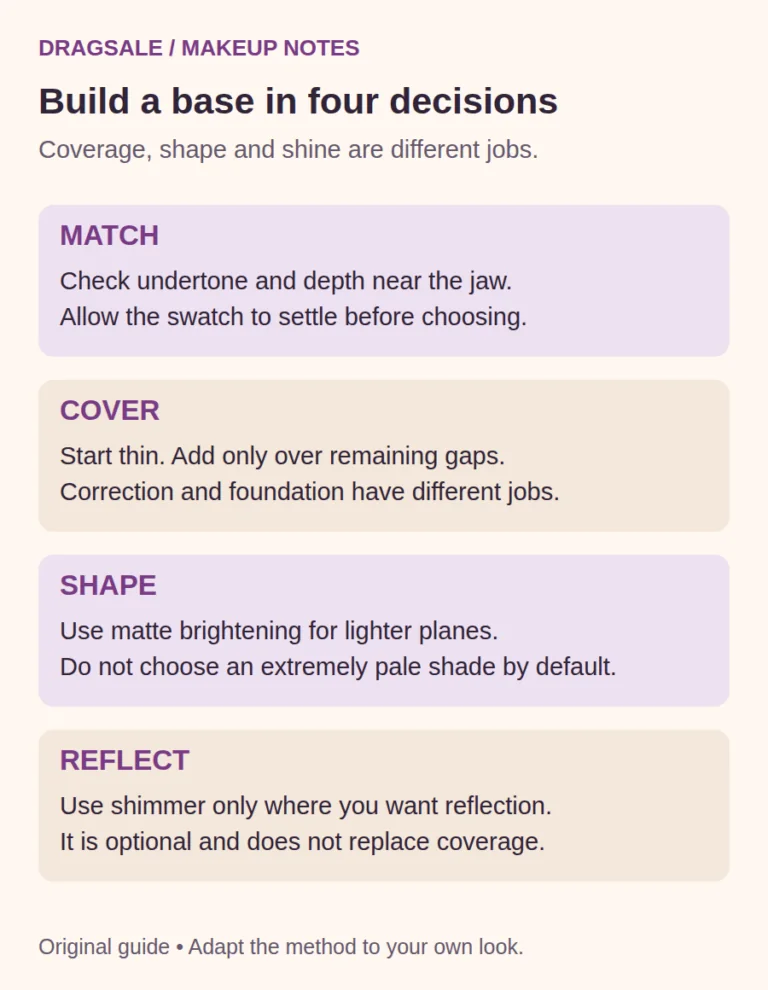
Choose matte highlight and shimmer separately
A matte highlight is a lighter area of complexion colour. It can suggest a raised cheek plane or bring attention to the centre of the face. A reflective highlighter catches the light. It may be sheer and luminous without offering enough coverage to change the underlying colour.
For matte highlighting, a lighter shade of a compatible foundation or concealer can be a practical first choice. You do not need the palest product in the range. Compare it beside your base and check the blended boundary. A moderately lighter shade in a suitable undertone often creates more useful dimension than a large white triangle.
For reflective highlighting, e.l.f. Halo Glow Highlight Beauty Wand is a liquid option with a cushion-tip applicator. Consider it when you want a small luminous accent, not when you need an opaque matte highlight. The linked regional page is a manufacturer reference; use your own region’s listing for purchase details.
Start with a very small amount on a clean tool and tap it onto the intended area. Avoid dragging a wet applicator across a heavily powdered cheek. Test whether the formula layers cleanly over your chosen base before placing it on both sides. A liquid highlight can disturb an incompatible or overloaded layer underneath.
On deeper complexions, very pale reflective pigments can leave a visible cast from some angles. On fair complexions, a deep gold may read as a stripe. Shade depth and reflect matter as much as the word glow. Look straight ahead and turn your face; a highlight should make sense when the light is not hitting it directly.
Recent posts
The latest stories and guides from DragSale.




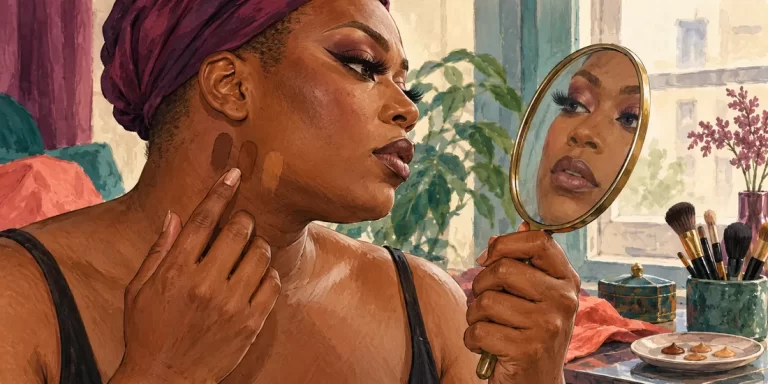
Shade-match in a way that survives leaving the shop
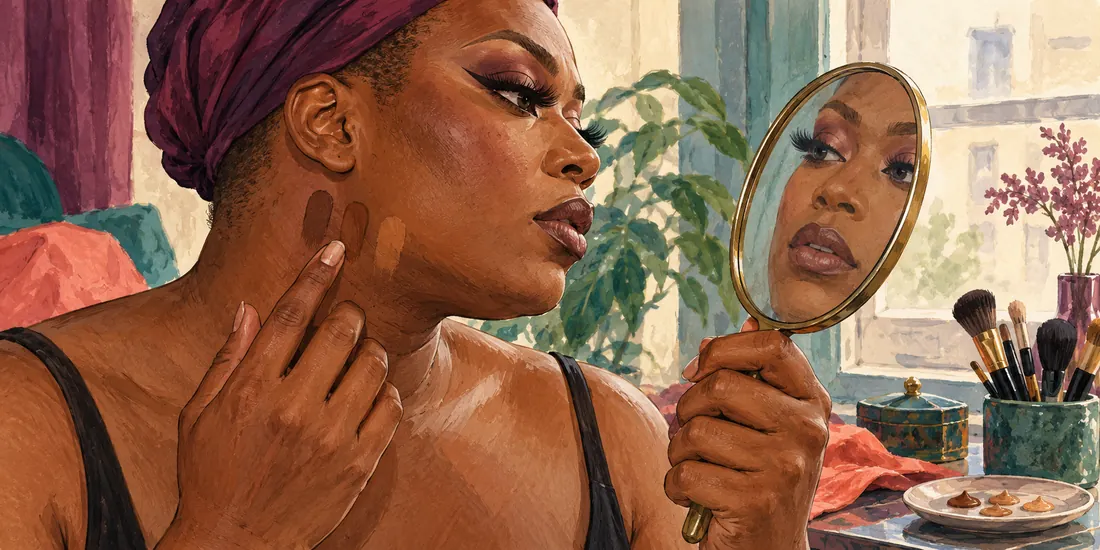
- Choose the area you are matching. Consider the face, neck and chest that your costume exposes, not only the back of your hand.
- Compare a few nearby options. Vary undertone as well as depth. A shade that is almost right in brightness can still be too orange, pink or grey.
- Let the swatches settle. Judge the dried result, not only the wet stripe.
- Look in neutral light. Strong yellow, pink or blue lighting can hide a mismatch.
- Test the complete finish. Your powder or highlight can change the colour even when the foundation alone matches.
A broad shade range is useful, but the number of shades does not prove that a brand has your undertone. Equally, an online model photograph cannot show exactly how a shade will look on you. A return policy, sample service or in-person match may be worth more than a small apparent saving on an unreturnable bottle.
If you need to mix two complexion shades, keep the method reproducible and hygienic. Mix on a clean palette for that application rather than pouring products into their original containers. Avoid adding skincare or water to the bottle: you can change preservation and performance without knowing it.
Corrector is a separate decision. If a blue-grey shadow remains, use a small amount of an appropriate corrector in that area before adding more foundation. The appropriate colour depends on both the discolouration and your skin depth. A vivid orange layer across the whole lower face can create a new problem instead of solving the first one.
Adjust the technique to your skin, not a blanket label
Dry or textured areas
Keep preparation comfortable, let it settle and apply thinly. Heavy buffing can lift dry flakes; heavy powder can make them more visible. Try pressing product gently and reducing layers in the places that move or feel tight. No foundation can remove physical texture, and texture does not make the look unsuccessful.
Oily or combination skin
Do not assume the solution is to strip the skin and use maximum powder. A lighter moisturiser where appropriate, controlled base application and targeted setting may be easier to maintain. Treat an oily nose differently from a dry outer cheek. One face can need more than one setting strategy.
Deeper skin tones
Check for grey cast from foundation, pale powder and overly light concealer separately. If the face looks ashy only after setting, changing the foundation may miss the real cause. Choose contour and blush with enough depth to remain visible beside the base rather than trying to rescue the result with repeated layers.
Sensitive or reactive skin
Use familiar preparation and check the full ingredient label. Fragrance-free or other marketing terms do not guarantee that a product will suit you. Follow trial-use instructions, stop if irritation occurs and seek qualified advice for persistent reactions. Do not introduce several new complexion products on the day of an important event.
Use a simple wear test before spending more
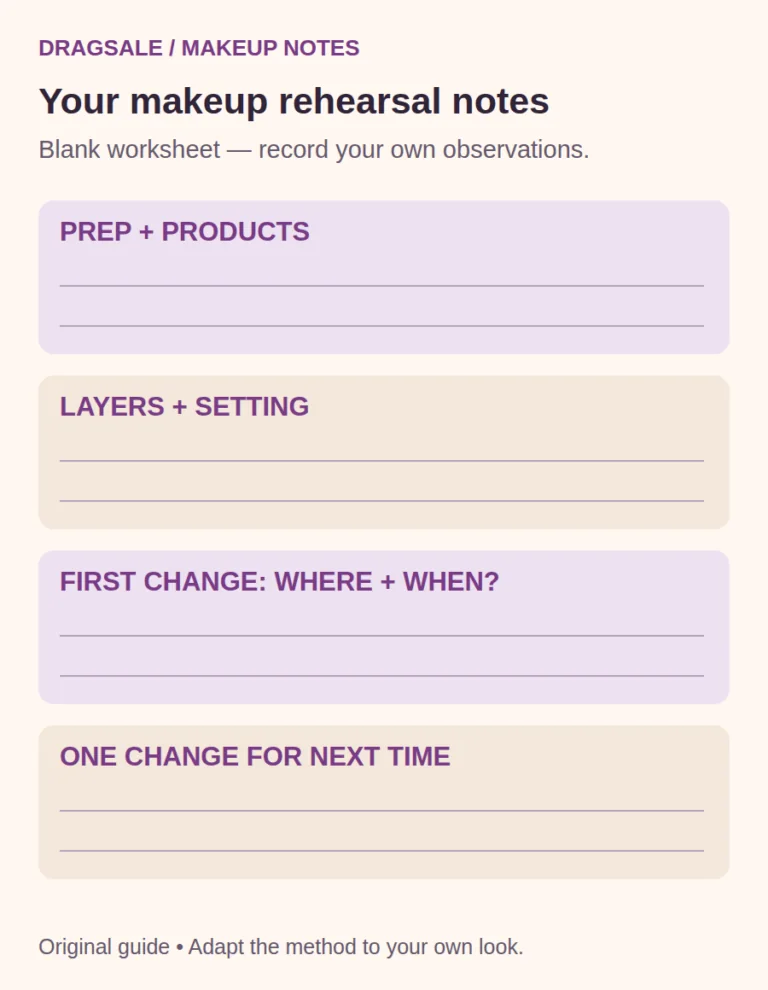
Keep the rest of the routine consistent when comparing foundations. Use similar preparation, tools and coverage on separate practice sessions, and note where the result first changes. A half-face comparison can be informative, but faces are not perfectly symmetrical and one side may receive more touching or heat.
Check immediately after application, after the routine has settled and after a realistic period of comfortable wear. Photograph the same angles in the same light. Record creasing, colour change, separation and comfort rather than a vague “lasted well.” Include speaking and smiling, because your complexion needs to move.
| Record | Useful detail |
|---|---|
| Preparation | Moisturiser, primer if used, and time allowed to settle |
| Application | Tool, number of thin layers and targeted concealer |
| Setting | Powder shade, amount and spray if used |
| First change | Where it happened, when and whether there was friction |
| Next adjustment | One change, such as less base around the nose |
For separation and touch-up decisions, use the long-lasting drag makeup guide. For placement after the base is ready, use our contour and highlight technique guide. Buying a different foundation will not automatically correct an overloaded under-eye or a poorly placed shadow.
Choose the least complicated purchase that solves your problem
If your existing foundation matches but lacks coverage in one place, try a targeted technique or concealer before replacing it. If it covers well but feels heavy, use less before assuming a premium formula is necessary. If the undertone is wrong, no amount of expensive setting spray will fix that mismatch.
Compare total usable cost: foundation, required shade mixers, suitable powder, delivery and whether you can return a mismatch. A lower-priced product that requires several corrective purchases may not be the economical choice. This is why the shortlist avoids a universal “best budget” label without local price and availability checks.
Buy through an authorised or otherwise reputable seller with clear product information. Keep packaging instructions and opening dates where useful. Do not stretch a questionable product’s life by adding liquids to it, and keep cream products and tools clean.
Foundation and highlighting questions
Do I need a lighter foundation for drag?
Not as a default. Match the base to the intended overall complexion, then use selected lighter areas for dimension. Deliberately pale or fantasy makeup is a valid design, but it should not be confused with ordinary shade matching.
Can foundation double as contour and highlight?
Yes, when the shade, finish and permitted use suit the task. A coordinated cream family can simplify blending, but you still need the right undertone and enough contrast. Keep all products within their labelled application areas.
Is the most full-coverage option always best for stage?
No. A readable stage face depends on contrast, placement and lighting as well as coverage. Extra thickness can crease or transfer without adding useful definition. Build the coverage you need and use design to create impact.
Which shortlist option should I start with?
Start with the one whose format you prefer and whose shade you can verify. Choose one cream-stick candidate if you want an opaque cream approach, or investigate the liquid option if you prefer gradual coverage. Add a reflective highlighter only if shine is part of the look.
The useful result is not owning the winning foundation. It is having a repeatable base that matches, moves comfortably and gives your colour work a reliable starting point.
Find your next guide
A useful answer to the next question.



Recent posts
The latest stories and guides from DragSale.