
Makeup · The DragSale journal
Best Setting Powder for Drag Makeup: Choose the Finish, Then the Formula
Loose or pressed, tinted or colourless: choose a powder for your base and finish, then learn a small-amount application and touch-up routine.

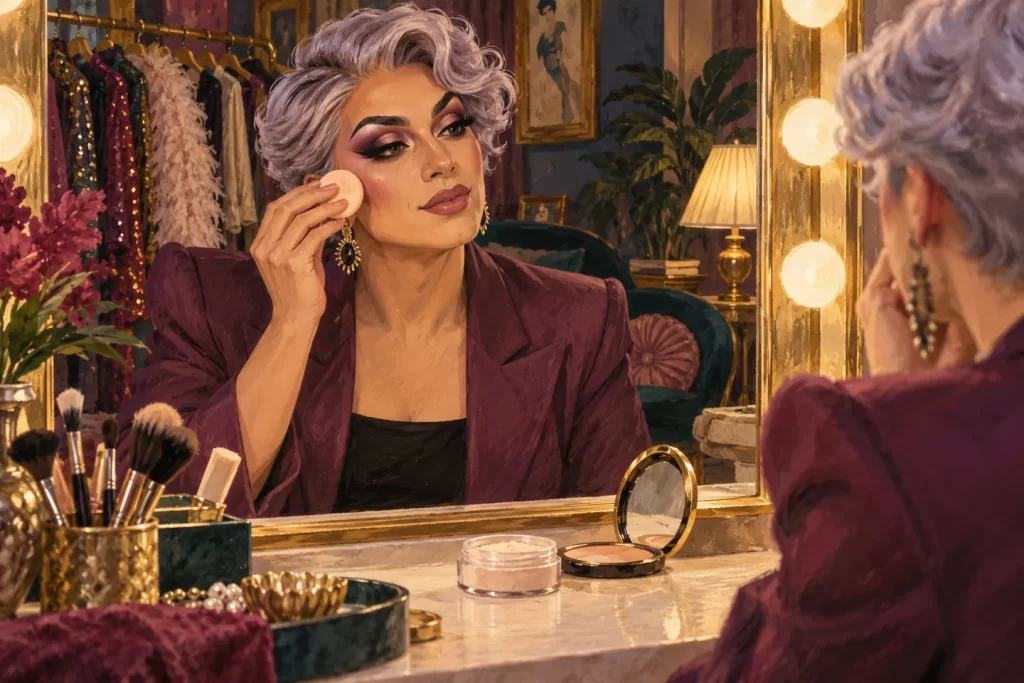
The best setting powder for drag is the one that works with your base, gives you the surface you want, and can be applied without turning the face into a layer of loose product. It is not automatically the palest jar, the largest tub or the powder described as “HD.”
Start with three decisions: format, colour and finish. Then test the actual combination on your own face in the light where you expect to wear it. That is more useful than treating “translucent,” “banana” or “no flashback” as a promise that every formula will behave identically.
Below is a decision guide with manufacturer-described examples—not a claim that DragSale has wear-tested and ranked these products. The application and rehearsal checks help you decide what makes sense for your particular routine.
First decide what the powder needs to do
Look at the base before choosing a powder. Do you want to reduce visible shine, help set a cream layer, add a small amount of colour, or carry something neat for a later touch-up? Those are related but different jobs.
Think about finish separately from coverage. You may want a mostly matte base with a reflective accent in one place. Or you may prefer a softer luminous surface. Buying a luminous powder and then trying to remove every sign of glow is a mismatch between the brief and the product—not proof that powder never works on your skin.
Also inspect how much base is sitting on the surface. If there is excess cream gathered in a fold, putting a thick layer of powder on top can preserve the buildup rather than solve it. Before the setting step, redistribute or remove excess gently with an appropriate clean applicator.
For problems that are really about the underlying routine, revisit the complexion product guide. Powder should be part of the plan, not a rescue purchase for every earlier decision.
Loose or pressed: choose the useful format
| Format | Why it may suit the job | What to watch |
|---|---|---|
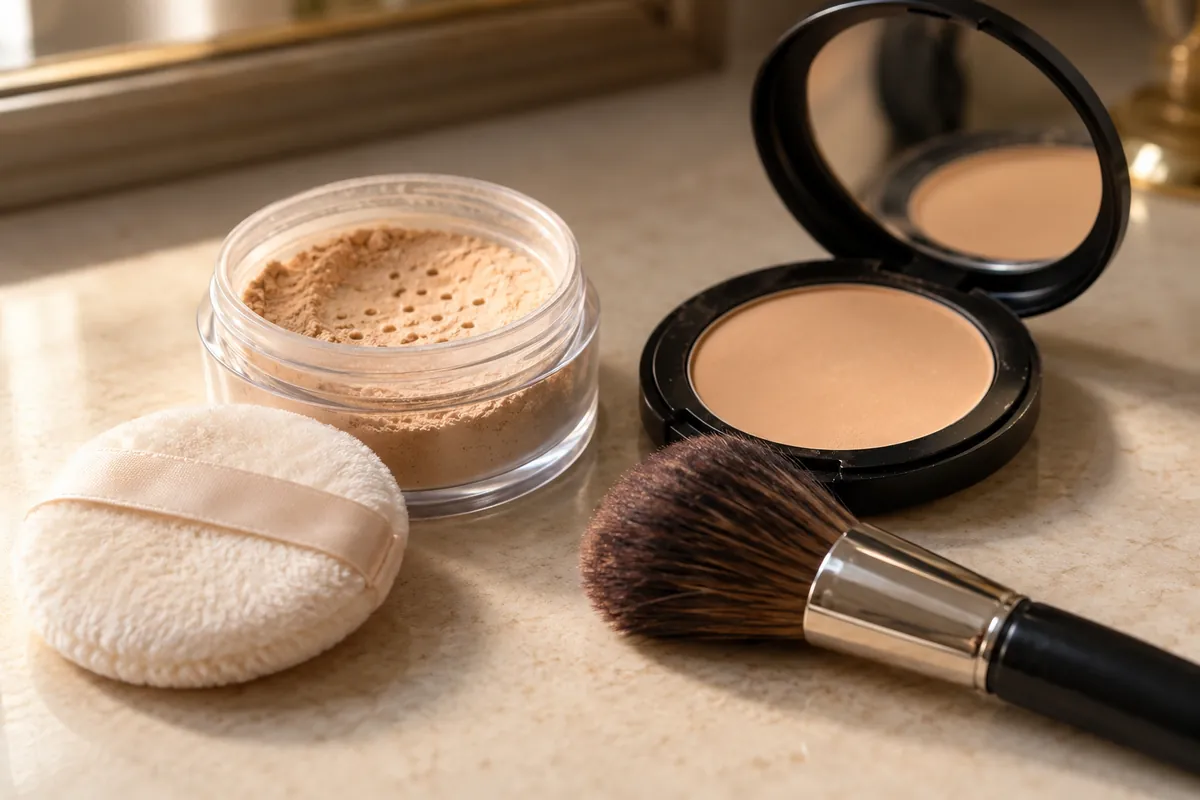
| Loose powder | Easy to dispense a small working amount for setting a base | It can spill or encourage overloading; control the amount and avoid creating a powder cloud |
| Pressed compact | Convenient to carry and handle for local touch-ups | Repeatedly rubbing a used applicator into the pan can make a tidy package less tidy in practice |
Loose and pressed are not quality grades. A large loose jar may be useful at a dressing table but awkward in a small evening bag. A compact may be practical for touch-ups without being the best way to apply your initial base. You may eventually choose both for different jobs; you do not have to buy both immediately.
If you already have a usable powder, learn its behaviour in a smaller quantity before deciding that a different format is essential. Packaging can change the convenience of the routine, but it cannot make an unsuitable colour or finish become suitable.
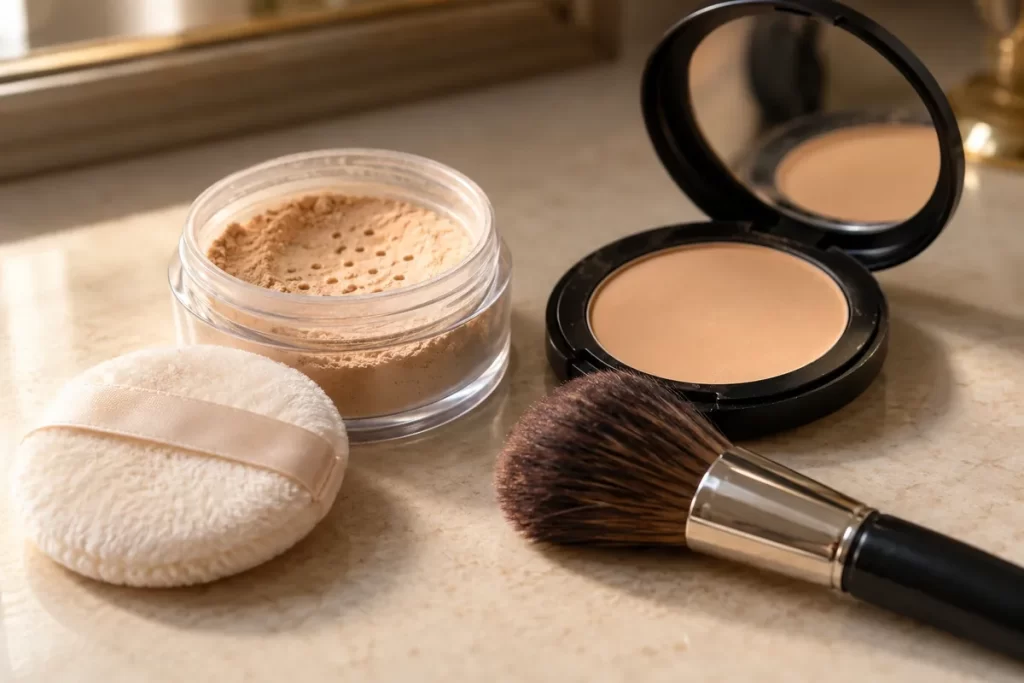
Colourless, tinted and luminous are not interchangeable
“Translucent” is a product description, not an instruction to use an unlimited amount. Check how the actual formula looks over your base in a controlled application. A visible pale layer may be a shade, quantity or application problem; the answer is not always to add more colour on top of it.
Similarly, a yellow-toned powder is not a compulsory drag purchase. A tint can be a deliberate choice if it complements the area and effect you want. It can also create a different cast from the one you intended. Choose by the visible result, not by a rule that everyone needs the same named shade.
Luminous powder and reflective highlighter also need separate expectations. A small luminous finish over the face is not necessarily the same effect as a concentrated reflective accent on a cheekbone. Read the product’s description and decide what role it would play in your routine before comparing it with a matte option.
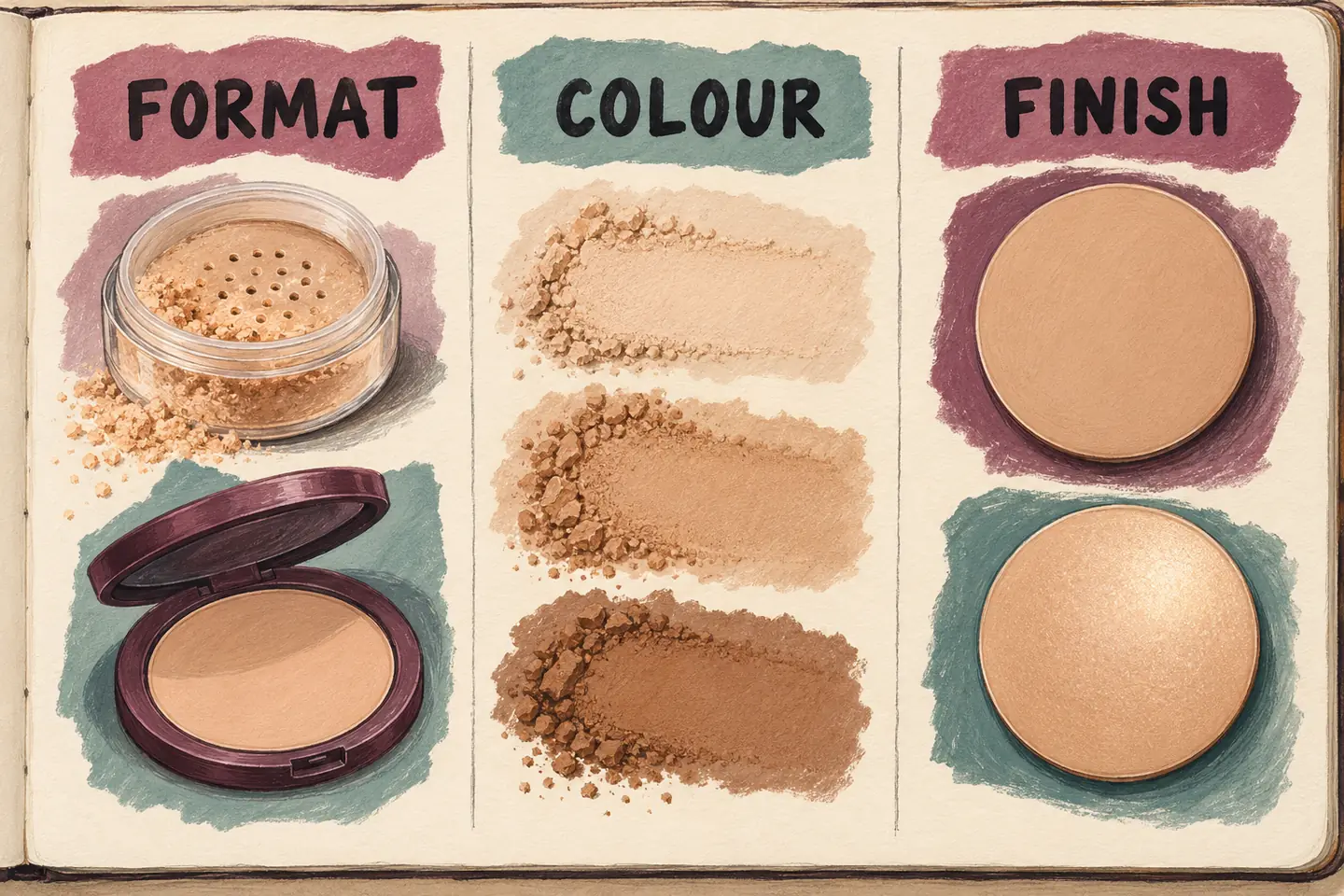
Try this: Write a three-part powder brief before comparing brands: format I can manage, colour effect I want, finish I want. Compare the product with that brief.
A short manufacturer-based comparison
These examples give you different briefs to investigate. Check the current product, label, ingredients, shade choices and local price before buying; package names and formulations can change.
| Powder | Manufacturer’s stated role | Why you might investigate it | What this guide cannot promise |
|---|---|---|---|
| Ben Nye Neutral Set | Ben Nye describes it as a colourless setting option and discusses its use for performers | You want to compare a classic colourless setting approach with your cream base | A universal wear duration or the right amount for your particular face |
| Ben Nye Colorless Luxury Powder | A colourless powder presented for setting and mattifying, including camera-oriented makeup | You want to compare a different colourless formula rather than assume every jar has the same finish | That it will look identical to Neutral Set over your products |
| RCMA “The Original” No-Color Powder | RCMA describes a powder without added pigment or perfume; the listed ingredients should be checked on the current product | You want to investigate a no-added-pigment setting option | The brand’s flashback claim as a guarantee for every application and camera setup |
| e.l.f. Halo Glow Setting Powder | A loose setting powder marketed for a soft-focus luminous finish | You deliberately want a glow-oriented option rather than a strictly matte brief | That a luminous finish is the right choice for every stage look or skin preference |
This is not a league table. A formula with an attractive description can still be the wrong purchase if its finish conflicts with your brief or you cannot obtain a useful shade locally. If you like your current powder but dislike carrying its jar, a travel-format decision may solve more than replacing the formula.
Apply a small amount where it is useful
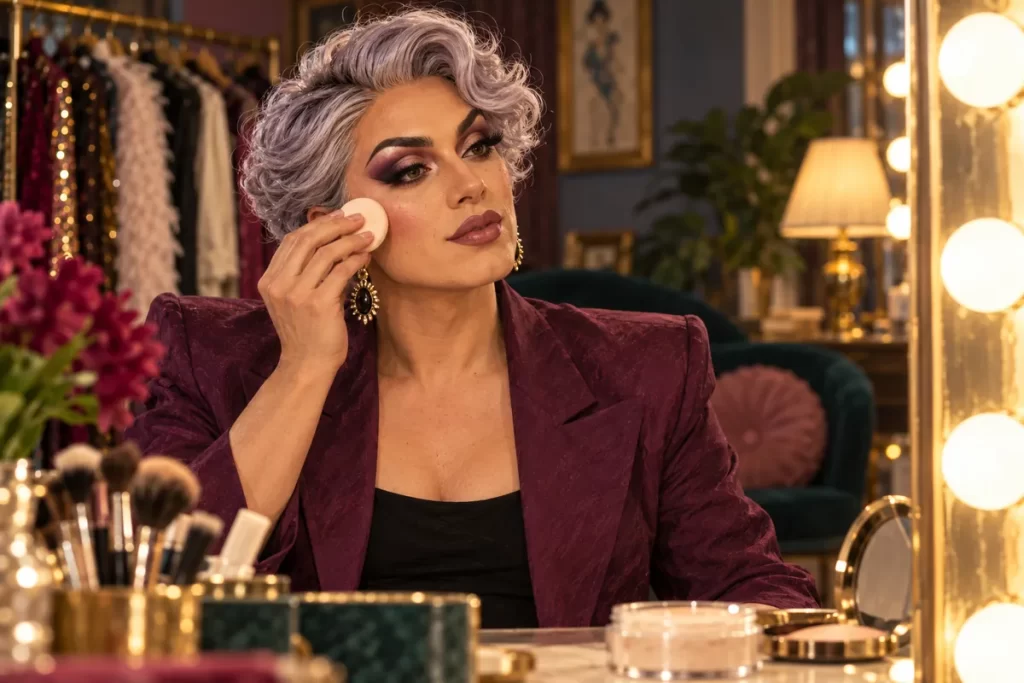
Work at a stable dressing table rather than in a moving vehicle or a crowded walkway. Keep containers and tools clean, and follow the actual product’s instructions. Avoid deliberately throwing fine powder into the air; the cloud adds mess without helping you control the application.
Recent posts
The latest stories and guides from DragSale.



- Inspect the cream layer. Look for excess product around folds or the nose. Gently tidy that before setting it.
- Dispense a small working amount. Close the main container rather than leaving it open beside the rest of the routine.
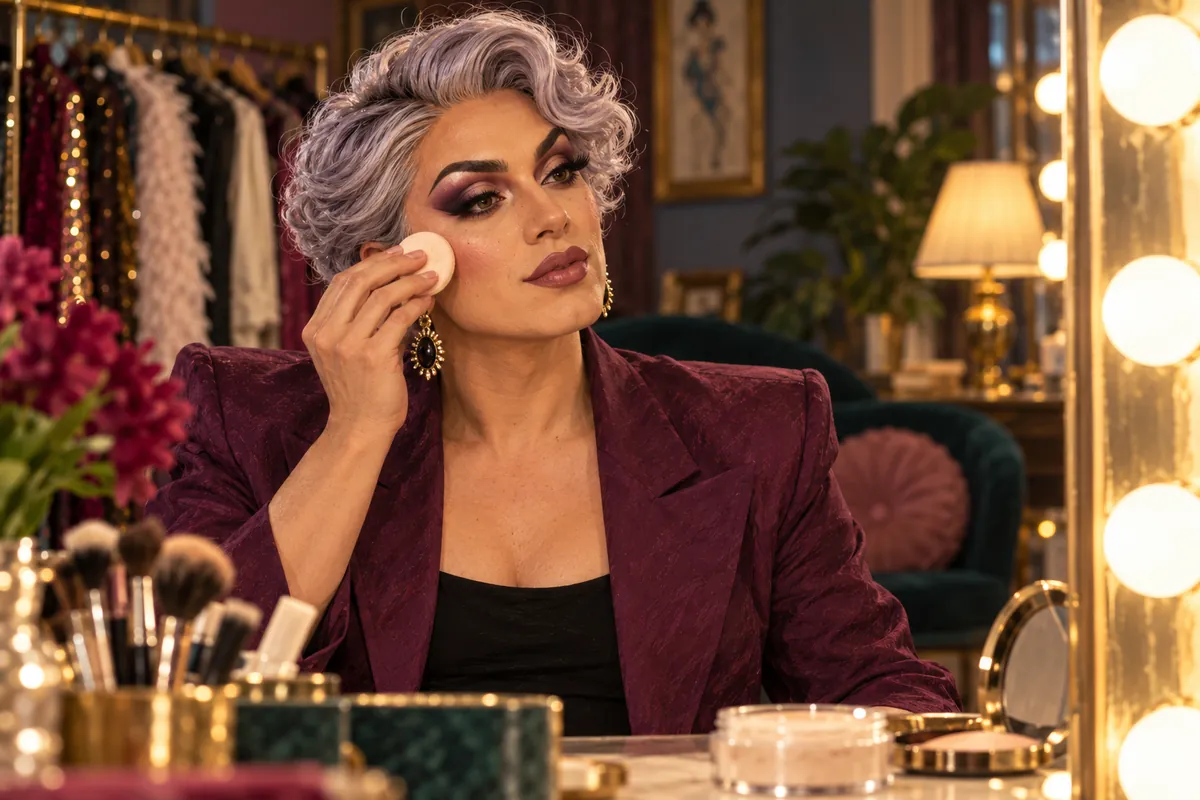
- Distribute the product through the applicator. Whether you use a puff or brush, avoid transferring a visible mound directly from the jar to the face.
- Press or apply lightly to the intended area. Start locally and follow the product’s directions. Do not treat more pressure or more product as automatic improvements.
- Check the result from normal viewing distance. Then decide whether another area needs anything. You can add a little; removing a heavy layer is usually less convenient.
For the eye area, follow intended-use and hygiene directions and keep powder and applicators out of the eye opening. A setting technique should not require discomfort. The FDA’s eye-cosmetic guidance is a useful reference for safe intended use and clean tools.
Treat baking as an optional technique, not the default
Leaving a larger quantity of powder on an area and removing the excess later is one technique, not a requirement for a convincing drag face. It may be an experiment you choose for a particular effect. It can also create more product to manage than your routine needs.
Before trying it across several areas, get comfortable with a smaller setting application. If you decide to experiment, compare the result at your next practice using the actual base, powder, timing and lighting you plan to wear. Notice whether you like the finish and whether it still looks comfortable when you move your face.
Do not copy the quantity in a close-up video without considering how that video was lit and edited. Your face, base and viewing distance may be different. A technique can be popular and still not be the most useful next step for you.
Check photographs without turning the check into a product myth
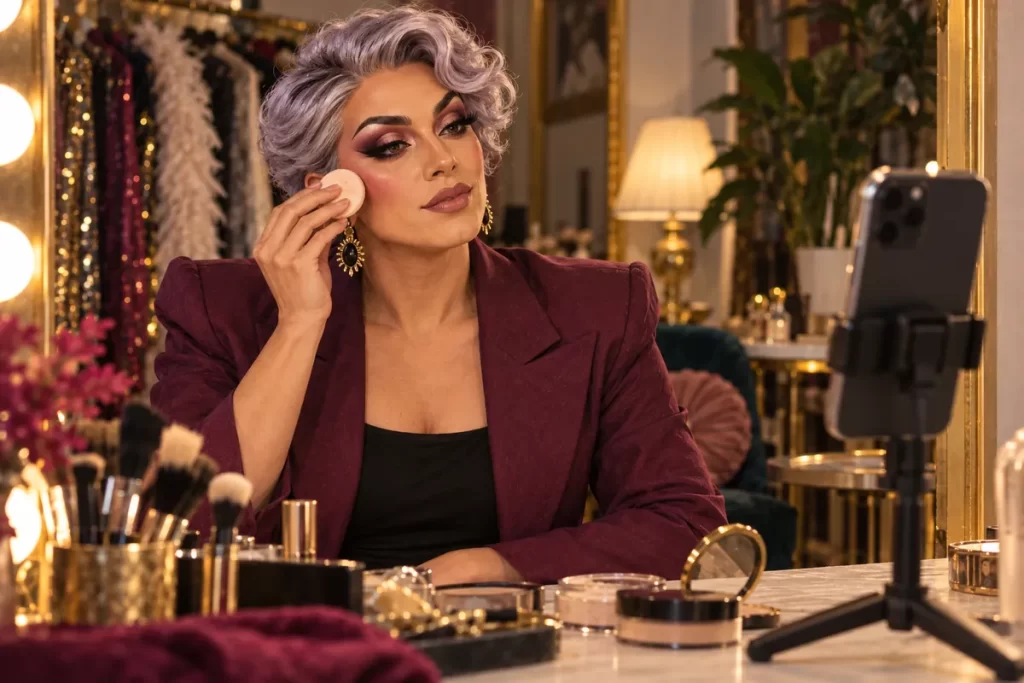
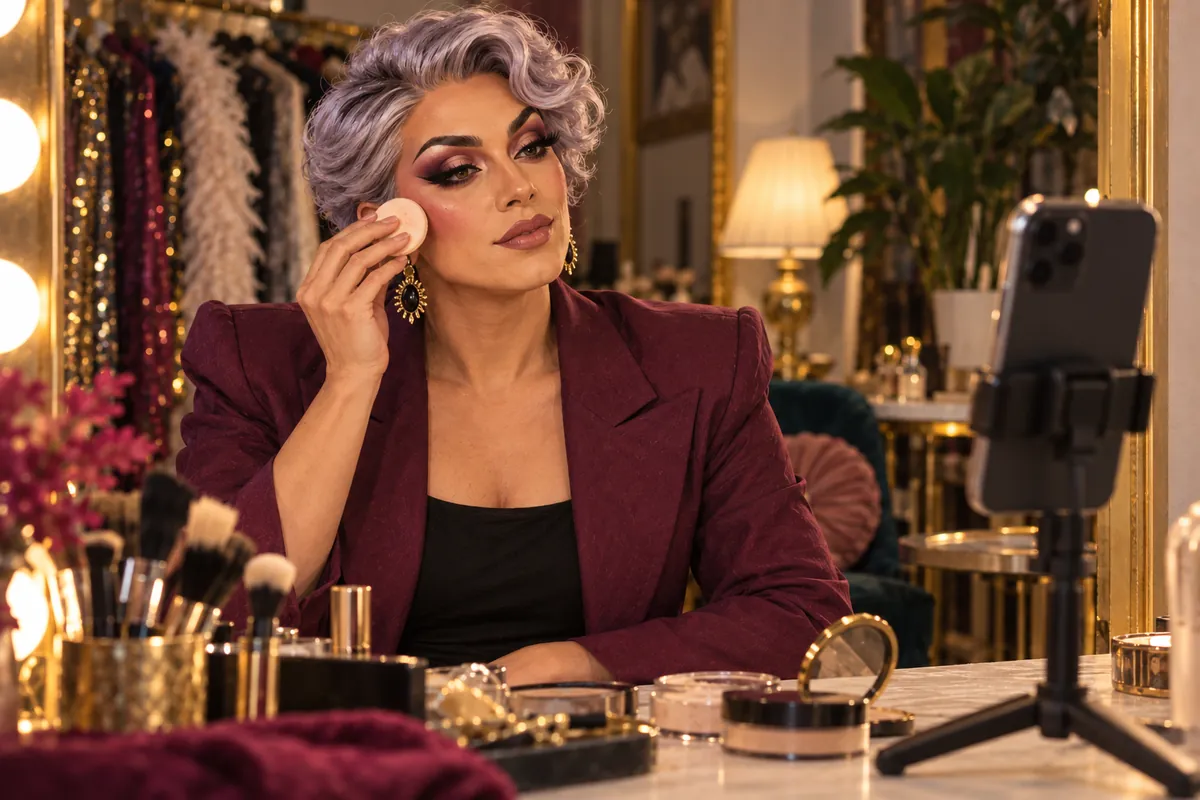
Before a camera-focused outing, make a simple rehearsal record in the lighting you can reasonably reproduce. Keep the base, powder amount and camera settings as consistent as possible between comparisons. Disable a beauty filter if your aim is to inspect the finish rather than preview a filter.
Look at the face as a whole, then at areas that matter to your look. Does the colour change unexpectedly? Is the surface more reflective or flatter than you intended? Do folds appear overloaded? Write down what you actually see instead of immediately deciding that a single ingredient is responsible.
If you change the powder, keep other variables stable where possible. Changing the foundation, powder quantity, lighting and camera all at once makes the result difficult to interpret. This is a personal rehearsal check, not a laboratory test or proof about every user of the product.
Touch up the problem, not the entire face
When a small area becomes shiny, pause before adding powder over the whole face. Use a clean suitable blotting material gently where needed and inspect what is left. If a patch has actually lost coverage, more powder alone will not restore the missing base.
Use the smallest relevant correction. You might need no more than blotting, a tiny local base repair, or a small amount of powder. Keep clean and used tools separate so the touch-up routine does not become a source of mess.
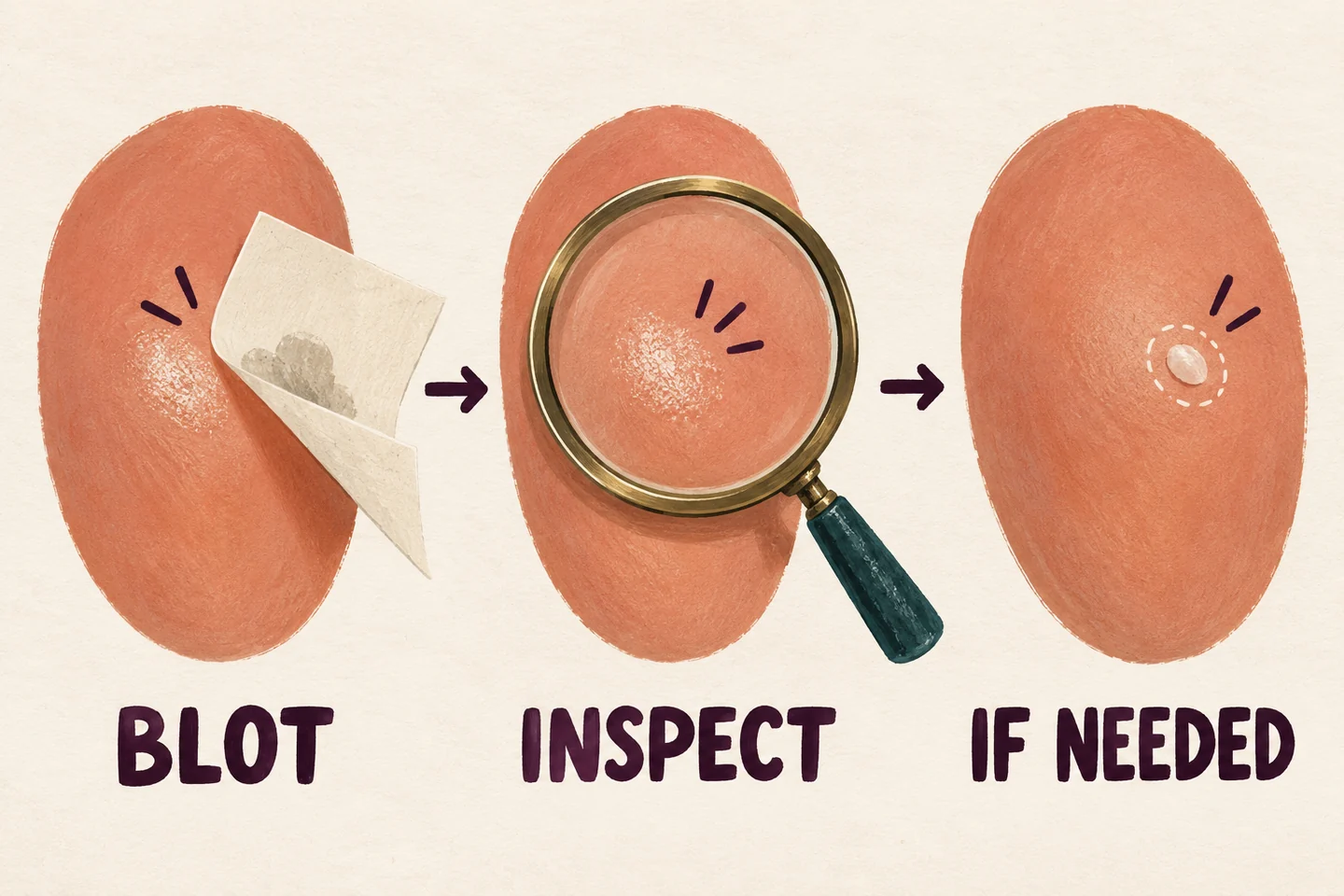
Try this: At your next touch-up, stop after blotting and look again. If coverage is missing, repair that spot before deciding whether any powder is useful.
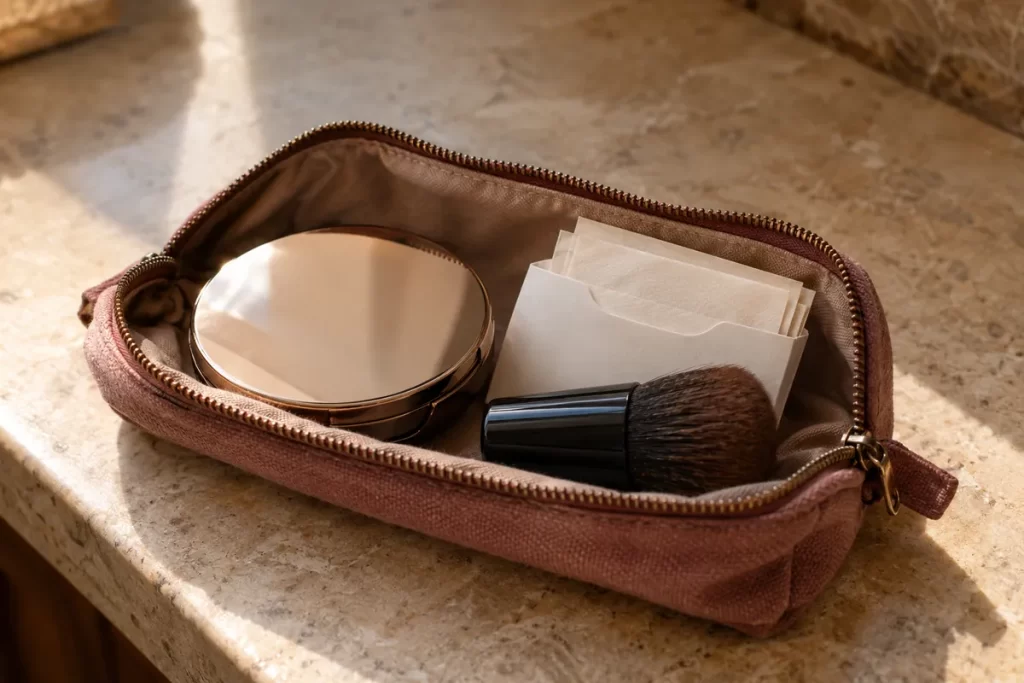
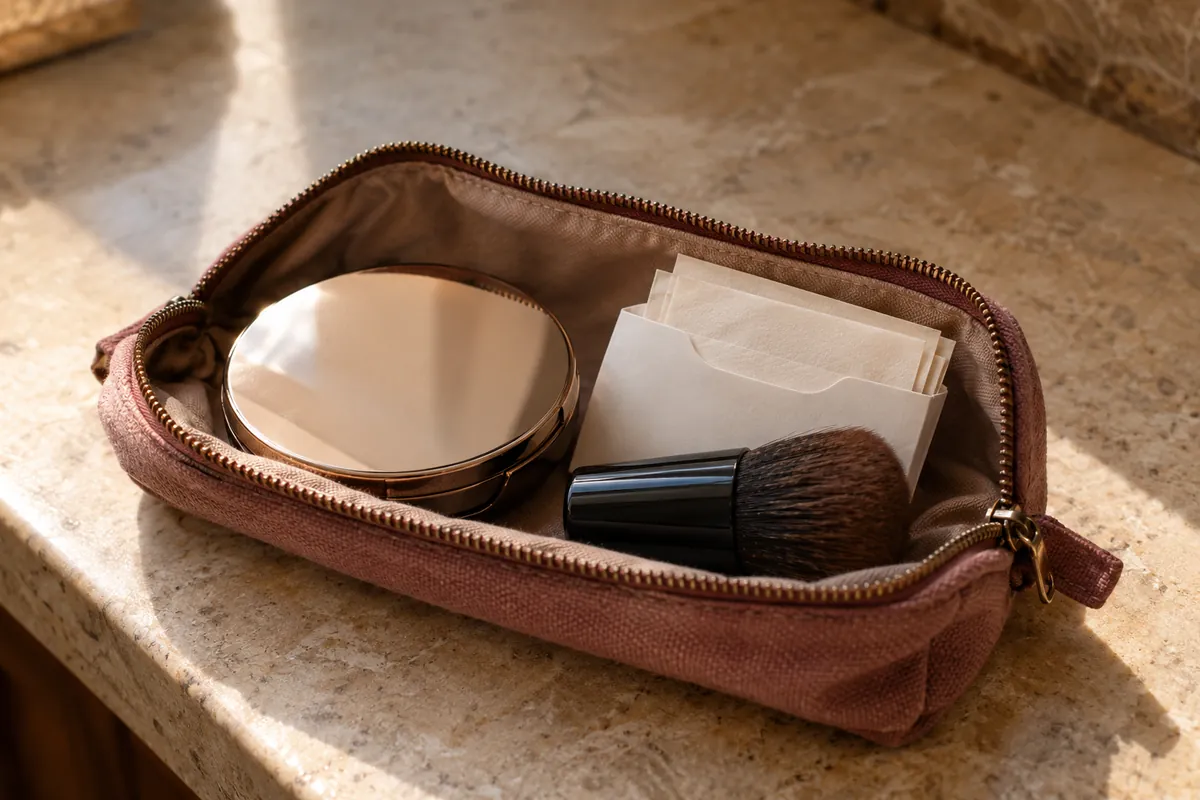
Pack for the likely job. A closed compact, clean applicator and a few blotting sheets can be more practical than carrying a large loose container because that is what you used at the dressing table. For a fuller symptom-by-symptom approach, see why drag makeup stops lasting.
Troubleshooting your powder choice
| Problem | Check before buying a replacement |
|---|---|
| The face looks pale | Shade/tint, how much was applied and how the underlying base matches |
| The finish looks too shiny | Whether the powder is deliberately luminous and whether a reflective product is underneath |
| Texture looks heavier | Excess cream, excess powder and repeated application to the same area |
| The compact is hard to use cleanly | Applicator condition, storage and how you return a used tool to the pan |
| The result changes under a camera | Your actual product combination, lighting, settings and application amount |
| The routine is messy | Dispensing method, packaging and whether you are using more than you need |
Setting-powder questions
Is loose powder better than pressed for drag?
Not automatically. Loose powder may suit the initial dressing-table application; a pressed compact may be easier to carry. Compare the actual colour and finish as well as the format.
Is colourless powder suitable for every skin depth?
It is intended to add little or no pigment, depending on the product. That does not remove the need to check a controlled application over your own base and under your own lighting. Avoid treating the word as a universal guarantee.
Do I need both powder and setting spray?
No rule requires both. They are different formulation choices with product-specific directions. Add a step when it has a clear job in your routine, not because every tutorial contains it.
Which powder guarantees that I will not get flashback?
This guide cannot make that guarantee. Manufacturer claims can help you choose an option to investigate, but your product combination, quantity and camera conditions still deserve a rehearsal check.
How the comparison was prepared
Product roles are drawn from the linked Ben Nye, RCMA and e.l.f. manufacturer pages checked on 17 October 2026. No first-person wear scores, test photographs, retail-price promises or guaranteed skin outcomes are claimed. The photographic-looking scenes are AI-generated editorial images. For general label, cleanliness and storage guidance, see FDA: Using Cosmetics Safely.
Find your next guide
A useful answer to the next question.


Recent posts
The latest stories and guides from DragSale.